Kimura Eiki, Kubo Ken-Ichiro, Endo Toshihiro, Ling Wenting, Nakajima Kazunori, Kakeyama Masaki, Tohyama Chiharu
Laboratory of Environmental Health Sciences, Center for Disease Biology and Integrative Medicine, Graduate School of Medicine, The University of Tokyo, Tokyo, Japan.
Center for Health and Environmental Risk Research, National Institute for Environmental Studies, Tsukuba, Japan.
PLoS One. 2017 Aug 18;12(8):e0183497. doi: 10.1371/journal.pone.0183497. eCollection 2017.
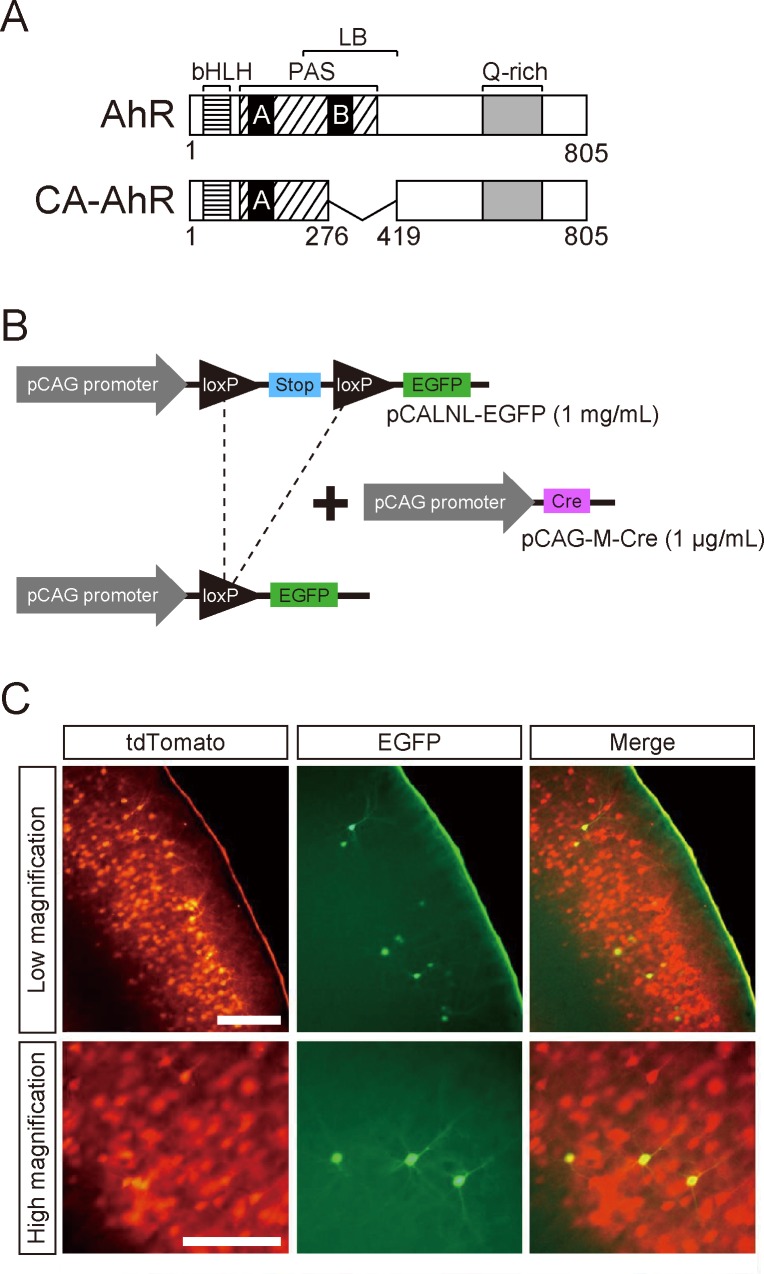
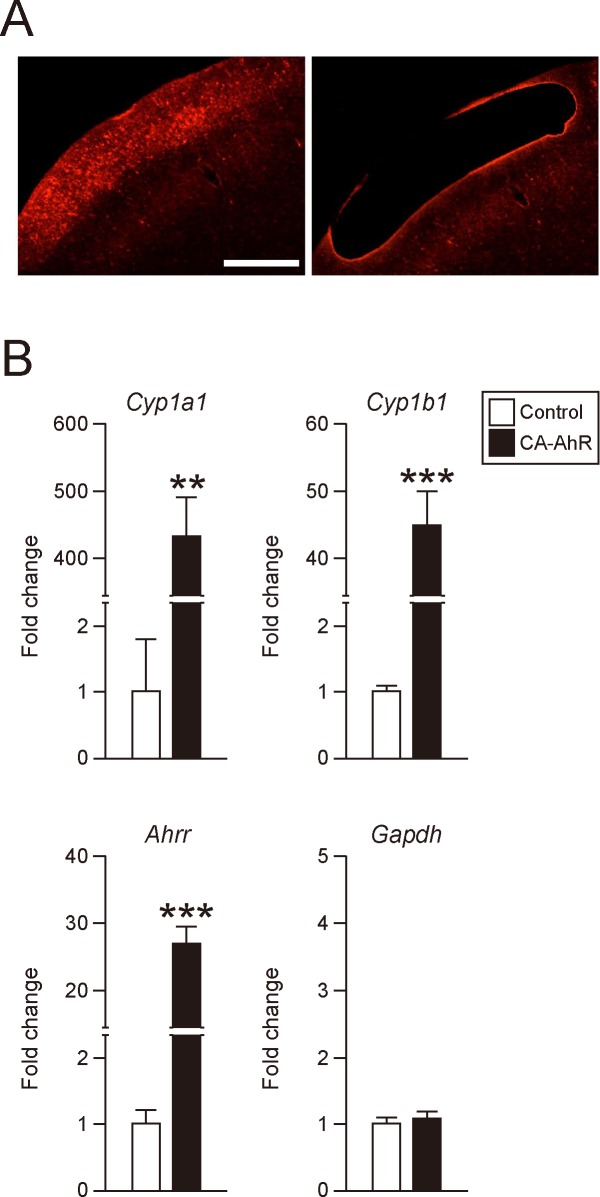
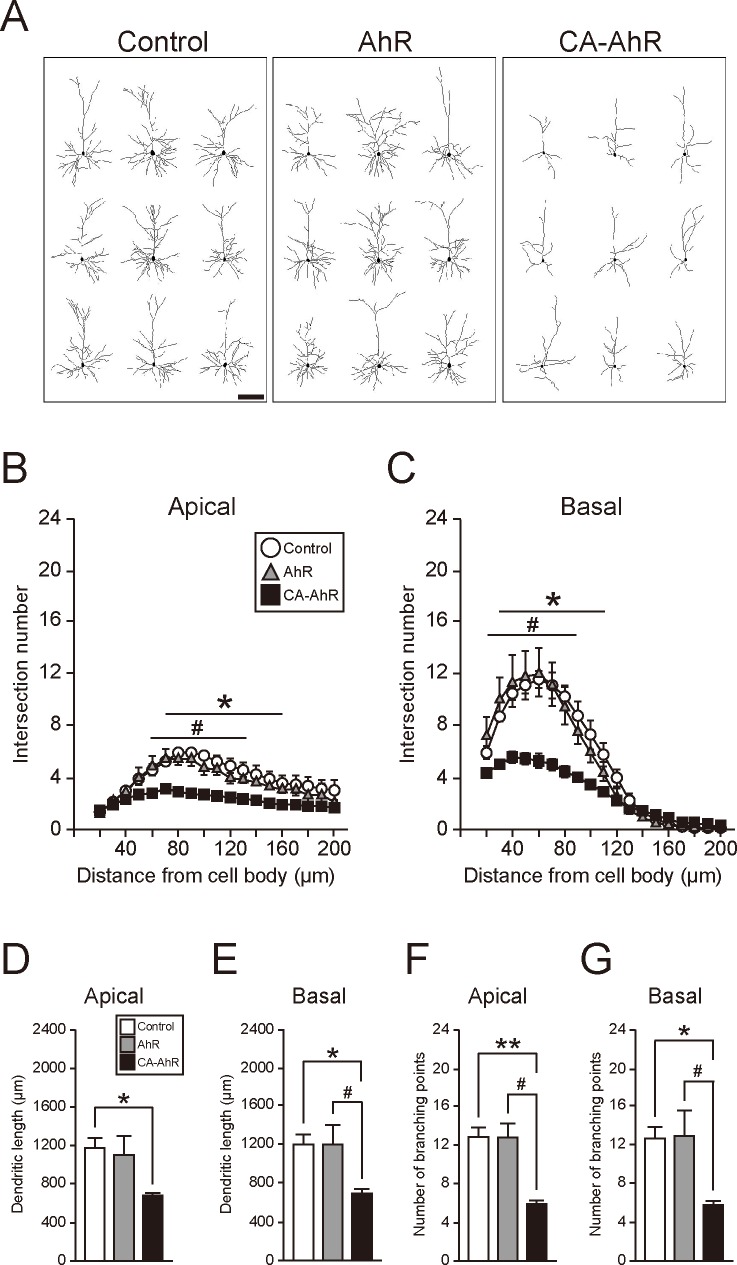
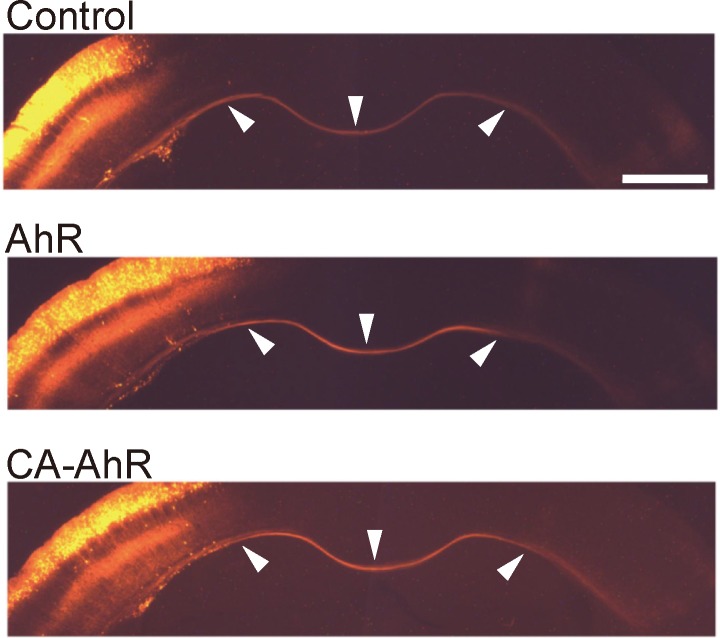
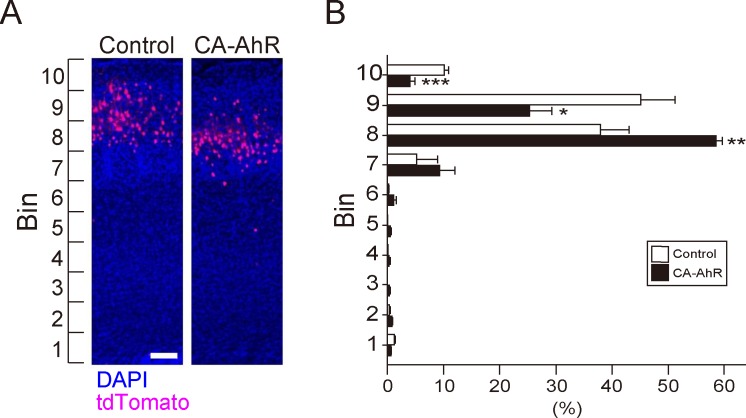
The basic helix-loop-helix (bHLH) transcription factors exert multiple functions in mammalian cerebral cortex development. The aryl hydrocarbon receptor (AhR), a member of the bHLH-Per-Arnt-Sim subfamily, is a ligand-activated transcription factor reported to regulate nervous system development in both invertebrates and vertebrates, but the functions that AhR signaling pathway may have for mammalian cerebral cortex development remains elusive. Although the endogenous ligand involved in brain developmental process has not been identified, the environmental pollutant dioxin potently binds AhR and induces abnormalities in higher brain function of laboratory animals. Thus, we studied how activation of AhR signaling influences cortical development in mice. To this end, we produced mice expressing either constitutively active-AhR (CA-AhR), which has the capacity for ligand-independent activation of downstream genes, or AhR, which requires its ligands for activation. In brief, CA-AhR-expressing plasmid and AhR-expressing plasmid were each transfected into neural stems cells in the developing cerebrum by in utero electroporation on embryonic day 14.5. On postnatal day 14, mice transfected in utero with CA-AhR, but not those transfected with AhR, exhibited drastically reduced dendritic arborization of layer II/III pyramidal neurons and impaired neuronal positioning in the developing somatosensory cortex. The effects of CA-AhR were observed for dendrite development but not for the commissural fiber projection, suggesting a preferential influence on dendrites. The present results indicate that over-activation of AhR perturbs neuronal migration and morphological development in mammalian cortex, supporting previous observations of impaired dendritic structure, cortical dysgenesis, and behavioral abnormalities following perinatal dioxin exposure.
基本螺旋-环-螺旋(bHLH)转录因子在哺乳动物大脑皮层发育中发挥多种功能。芳烃受体(AhR)是bHLH-Per-Arnt-Sim亚家族的成员,是一种配体激活的转录因子,据报道在无脊椎动物和脊椎动物中均参与调节神经系统发育,但AhR信号通路在哺乳动物大脑皮层发育中可能具有的功能仍不清楚。尽管尚未确定参与大脑发育过程的内源性配体,但环境污染物二噁英能有效结合AhR并导致实验动物高级脑功能异常。因此,我们研究了AhR信号通路的激活如何影响小鼠的皮层发育。为此,我们构建了表达组成型活性AhR(CA-AhR)的小鼠,CA-AhR具有独立于配体激活下游基因的能力,以及表达AhR的小鼠,AhR需要其配体进行激活。简而言之,在胚胎第14.5天通过子宫内电穿孔将表达CA-AhR的质粒和表达AhR的质粒分别转染到发育中的大脑的神经干细胞中。在出生后第14天,子宫内转染CA-AhR的小鼠,而不是转染AhR的小鼠,表现出II/III层锥体神经元的树突分支显著减少,并且在发育中的体感皮层中神经元定位受损。观察到CA-AhR对树突发育有影响,但对连合纤维投射没有影响,这表明对树突有优先影响。目前的结果表明,AhR的过度激活会扰乱哺乳动物皮层中的神经元迁移和形态发育,支持了先前关于围产期二噁英暴露后树突结构受损、皮质发育异常和行为异常的观察结果。