Zhang Yue, Salam Muhammad T, Berhane Kiros, Eckel Sandrah P, Rappaport Edward B, Linn William S, Habre Rima, Bastain Theresa M, Gilliland Frank D
Division of Epidemiology, Department of Internal Medicine, University of Utah, 295 Chipeta Way, Salt Lake City, UT, 84018, USA.
Department of Family and Preventive Medicine, University of Utah, Salt Lake City, UT, USA.
Environ Health. 2017 Aug 18;16(1):88. doi: 10.1186/s12940-017-0285-6.
The fractional concentration of exhaled nitric oxide (FeNO) is a biomarker of airway inflammation that has proved to be useful in investigations of genetic and epigenetic airway susceptibility to ambient air pollutants. For example, susceptibility to airway inflammation from exposure to particulate matter with aerodynamic diameter < =2.5 μm (PM) varies by haplotypes and promoter region methylation in inducible nitric oxide synthase (iNOS encoded by NOS2). We hypothesized that PM2.5 susceptibility associated with these epigenetic and genetic variants may be greater in children with high FeNO from inflamed airways. In this study, we investigated genetic and epigenetic susceptibility to airborne particulate matter by examining whether the joint effects of PM2.5, NOS2 haplotypes and iNOS promoter methylation significantly vary across the distribution of FeNO in school children.
The study included 940 school children in the southern California Children's Health Study who provided concurrent buccal samples and FeNO measurements. We used quantile regression to examine susceptibility by estimating the quantile-specific joint effects of PM, NOS2 haplotype and methylation on FeNO.
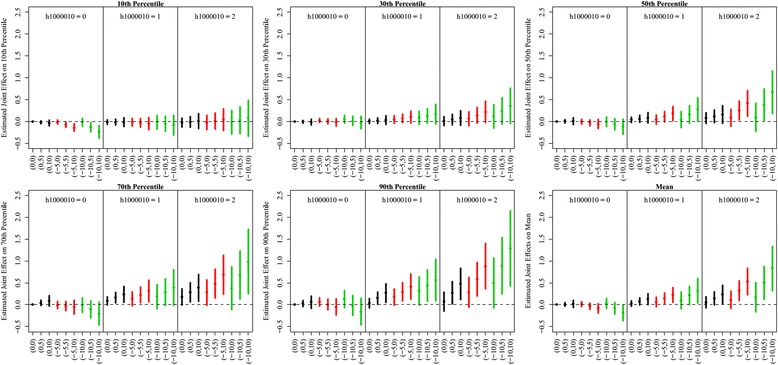
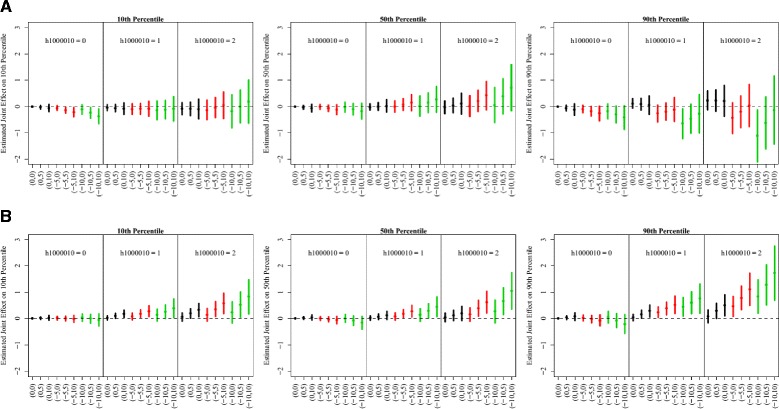
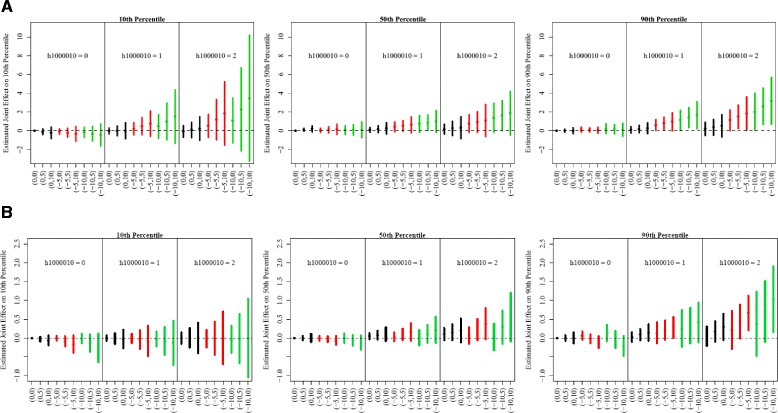
We discovered striking differences in susceptibility to PM in school children. The joint effects of short-term PM exposure, NOS2 haplotypes and methylation across the FeNO distribution were significantly larger in the upper tail of the FeNO distribution, with little association in its lower tail, especially among children with asthma and Hispanic white children.
School-aged children with higher FeNO have greater genetic and epigenetic susceptibility to PM, highlighting the importance of investigating effects across the entire distribution of FeNO.
呼出一氧化氮分数浓度(FeNO)是气道炎症的生物标志物,已被证明在研究遗传和表观遗传对环境空气污染物的气道易感性方面很有用。例如,暴露于空气动力学直径≤2.5μm的颗粒物(PM)引起的气道炎症易感性因诱导型一氧化氮合酶(由NOS2编码的iNOS)的单倍型和启动子区域甲基化而异。我们假设,与这些表观遗传和遗传变异相关的PM2.5易感性在气道发炎且FeNO较高的儿童中可能更大。在本研究中,我们通过检查PM2.5、NOS2单倍型和iNOS启动子甲基化的联合效应在学龄儿童FeNO分布中的差异,来研究对空气中颗粒物的遗传和表观遗传易感性。
该研究纳入了南加州儿童健康研究中的940名学龄儿童,他们同时提供了颊部样本和FeNO测量值。我们使用分位数回归,通过估计PM、NOS2单倍型和甲基化对FeNO的分位数特异性联合效应来检查易感性。
我们发现学龄儿童对PM的易感性存在显著差异。在FeNO分布的上尾部,短期PM暴露、NOS2单倍型和甲基化的联合效应显著更大,而在其下尾部几乎没有关联,尤其是在哮喘儿童和西班牙裔白人儿童中。
FeNO较高的学龄儿童对PM具有更大的遗传和表观遗传易感性,这突出了在FeNO的整个分布范围内研究效应的重要性。