Winckelmans Ellen, Nawrot Tim S, Tsamou Maria, Den Hond Elly, Baeyens Willy, Kleinjans Jos, Lefebvre Wouter, Van Larebeke Nicolas, Peusens Martien, Plusquin Michelle, Reynders Hans, Schoeters Greet, Vanpoucke Charlotte, de Kok Theo M, Vrijens Karen
Centre for Environmental Sciences, Hasselt University, Agoralaan gebouw D, B-3590, Diepenbeek, Belgium.
Department of Public Health & Primary Care, Leuven University, Leuven, Belgium.
Environ Health. 2017 Aug 18;16(1):87. doi: 10.1186/s12940-017-0292-7.
Due to their lack of repair capacity mitochondria are critical targets for environmental toxicants. We studied genes and pathways reflecting mitochondrial responses to short- and medium-term PM exposure.
Whole genome gene expression was measured in peripheral blood of 98 adults (49% women). We performed linear regression analyses stratified by sex and adjusted for individual and temporal characteristics to investigate alterations in gene expression induced by short-term (week before blood sampling) and medium-term (month before blood sampling) PM exposure. Overrepresentation analyses (ConsensusPathDB) were performed to identify enriched mitochondrial associated pathways and gene ontology sets. Thirteen Human MitoCarta genes were measured by means of quantitative real-time polymerase chain reaction (qPCR) along with mitochondrial DNA (mtDNA) content in an independent validation cohort (n = 169, 55.6% women).
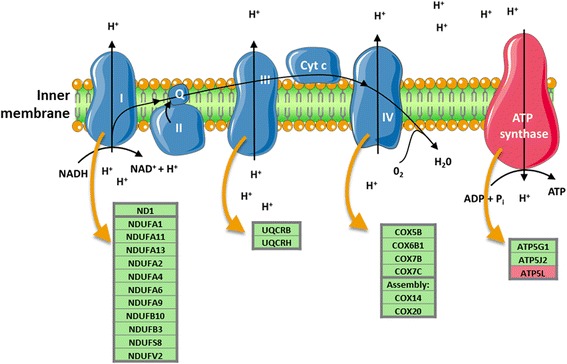
Overrepresentation analyses revealed significant pathways (p-value <0.05) related to mitochondrial genome maintenance and apoptosis for short-term exposure and to the electron transport chain (ETC) for medium-term exposure in women. For men, medium-term PM exposure was associated with the Tri Carbonic Acid cycle. In an independent study population, we validated several ETC genes, including UQCRH and COX7C (q-value <0.05), and some genes crucial for the maintenance of the mitochondrial genome, including LONP1 (q-value: 0.07) and POLG (q-value: 0.04) in women.
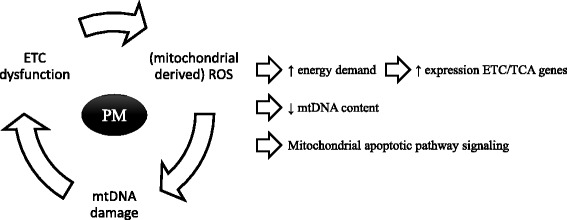
In this exploratory study, we identified mitochondrial genes and pathways associated with particulate air pollution indicating upregulation of energy producing pathways as a potential mechanism to compensate for PM-induced mitochondrial damage.
由于线粒体缺乏修复能力,它们是环境毒物的关键作用靶点。我们研究了反映线粒体对短期和中期颗粒物(PM)暴露反应的基因和通路。
对98名成年人(49%为女性)的外周血进行全基因组基因表达检测。我们进行了按性别分层并针对个体和时间特征进行调整的线性回归分析,以研究短期(采血前一周)和中期(采血前一个月)PM暴露诱导的基因表达变化。进行了过度表达分析(ConsensusPathDB)以识别富集的线粒体相关通路和基因本体集。在一个独立的验证队列(n = 169,55.6%为女性)中,通过定量实时聚合酶链反应(qPCR)测量了13个线粒体编码基因以及线粒体DNA(mtDNA)含量。
过度表达分析显示,短期暴露时,女性中与线粒体基因组维持和凋亡相关的通路显著(p值<0.05),中期暴露时与电子传递链(ETC)相关。对于男性,中期PM暴露与三羧酸循环有关。在一个独立的研究人群中,我们验证了几个ETC基因,包括UQCRH和COX7C(q值<0.05),以及一些对维持线粒体基因组至关重要的基因,包括女性中的LONP1(q值:0.07)和POLG(q值:0.04)。
在这项探索性研究中,我们确定了与颗粒物空气污染相关的线粒体基因和通路,表明能量产生通路的上调是补偿PM诱导的线粒体损伤的一种潜在机制。