Xu Feifei, Zhou Weixian, Cao Jianxiang, Xu Qingqing, Jiang Dechen, Chen Yun
Nanjing Medical University, Nanjing, 211166, China.
Nanjing University, Nanjing, 210023, China.
Theranostics. 2017 Jul 8;7(11):2849-2862. doi: 10.7150/thno.19113. eCollection 2017.
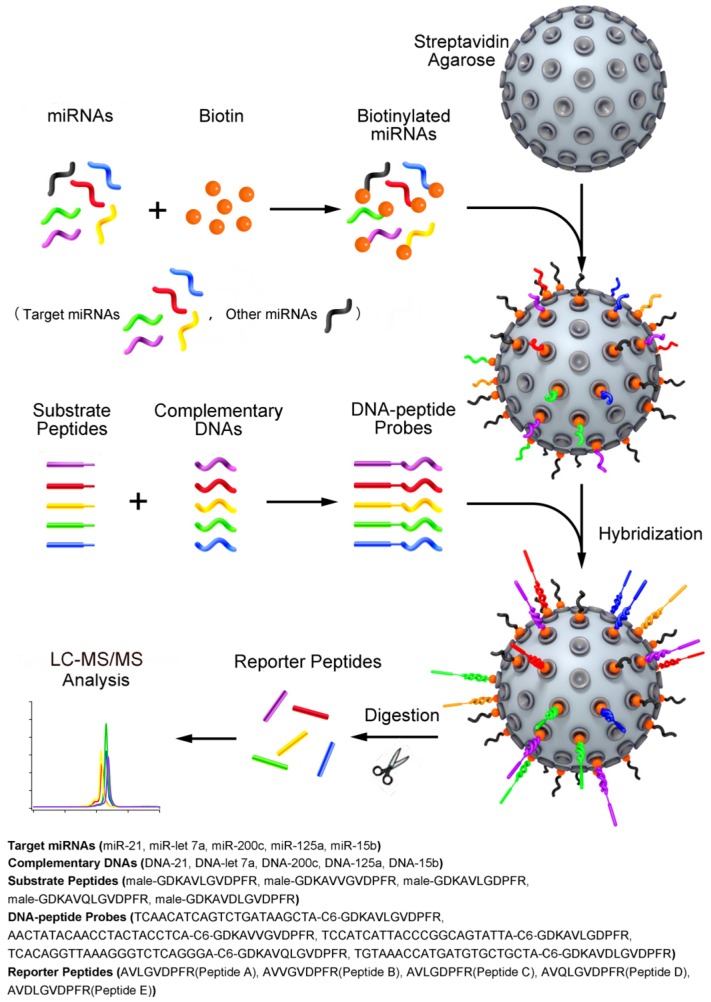
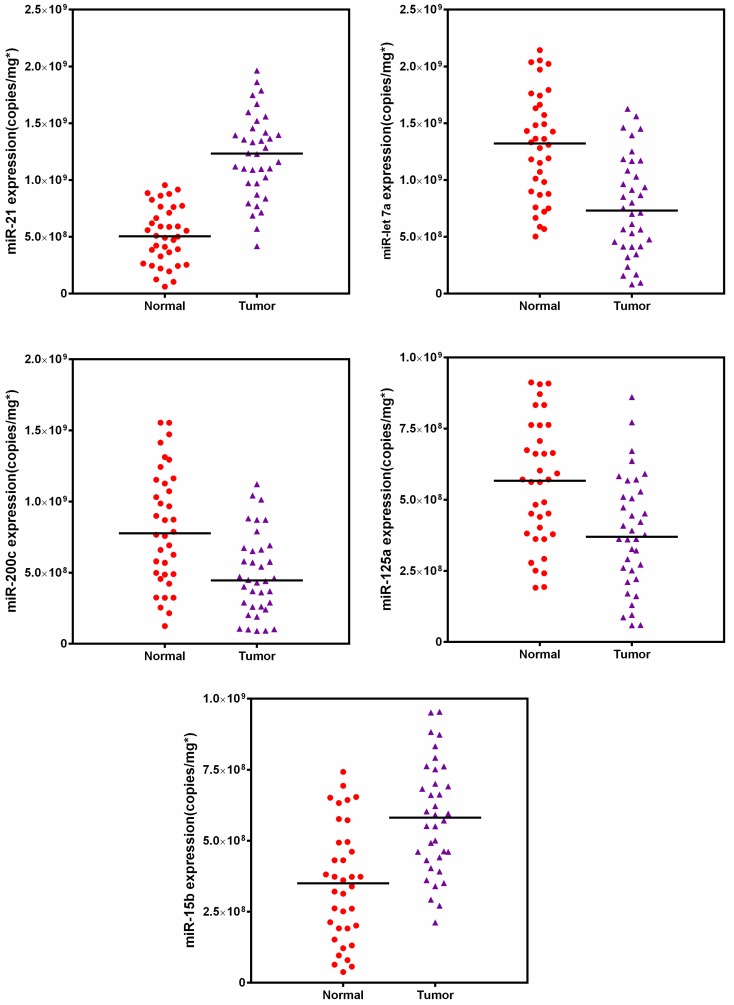
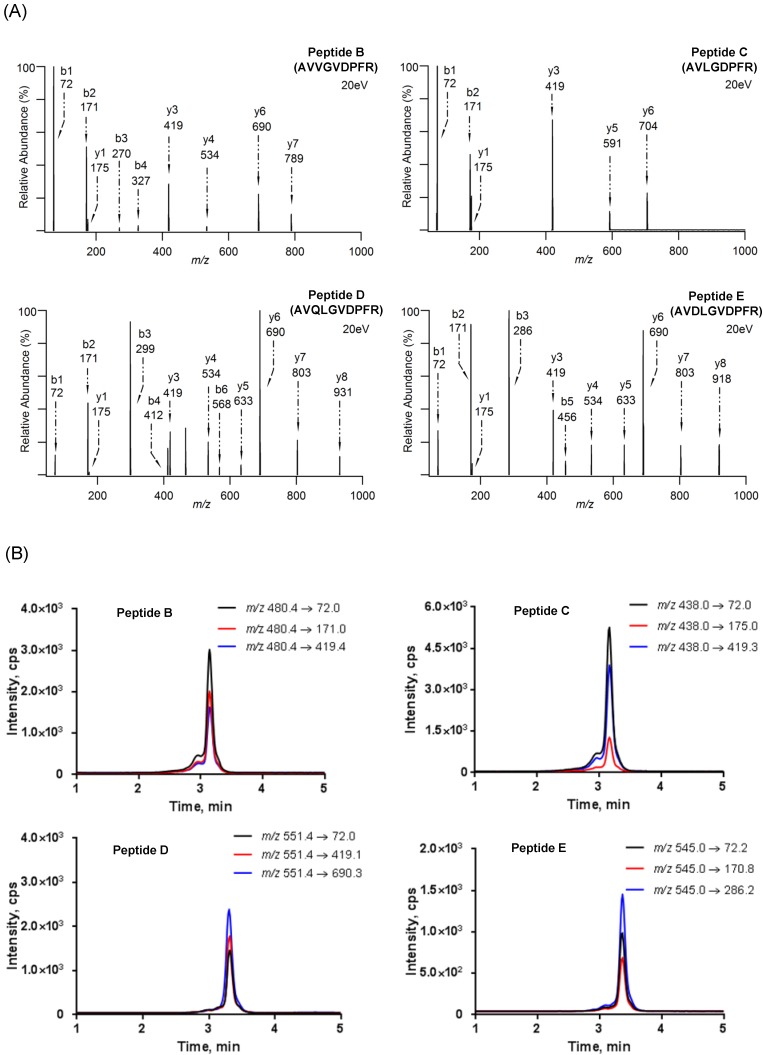
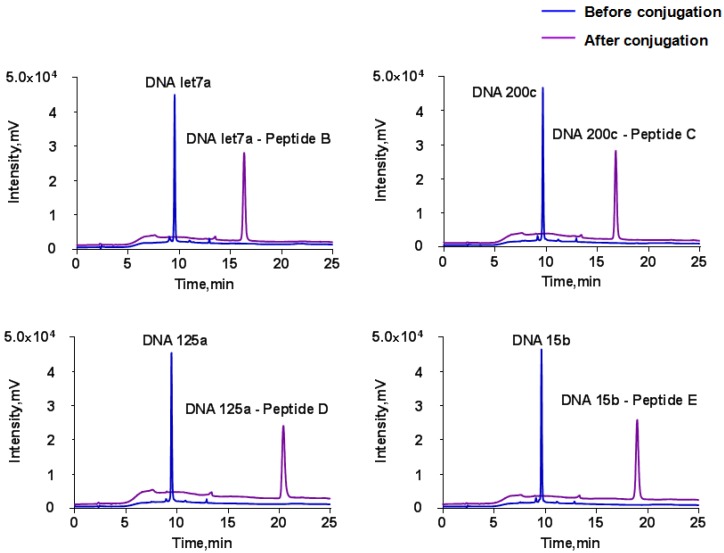
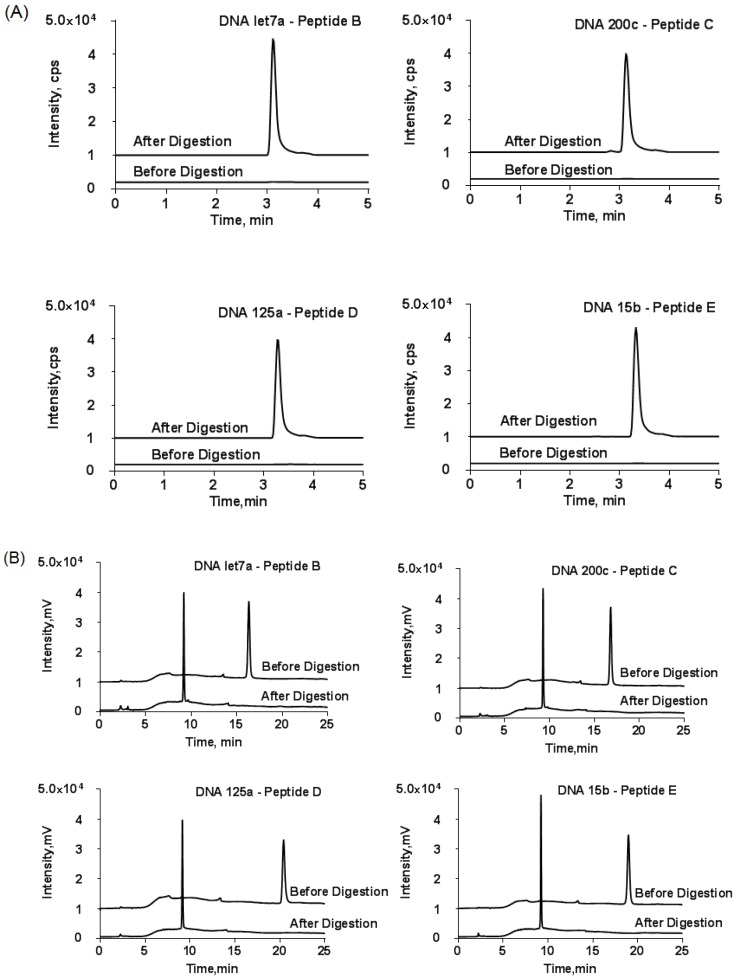
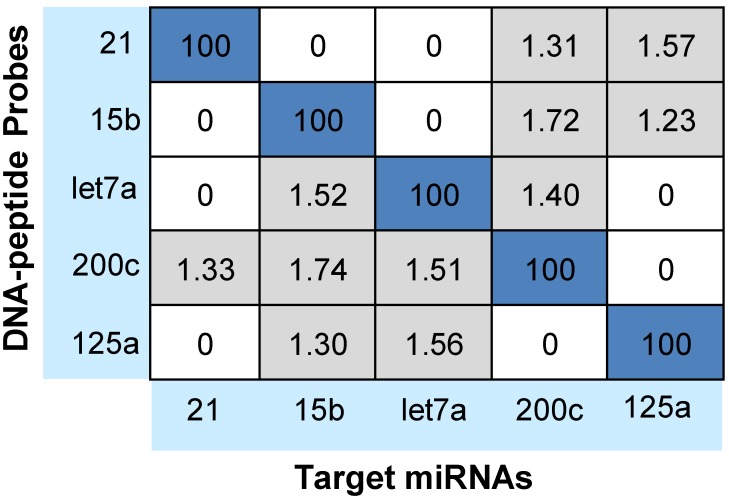
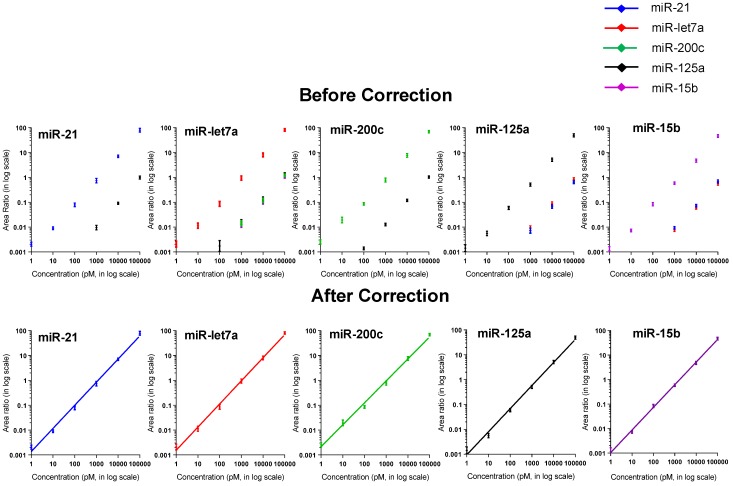
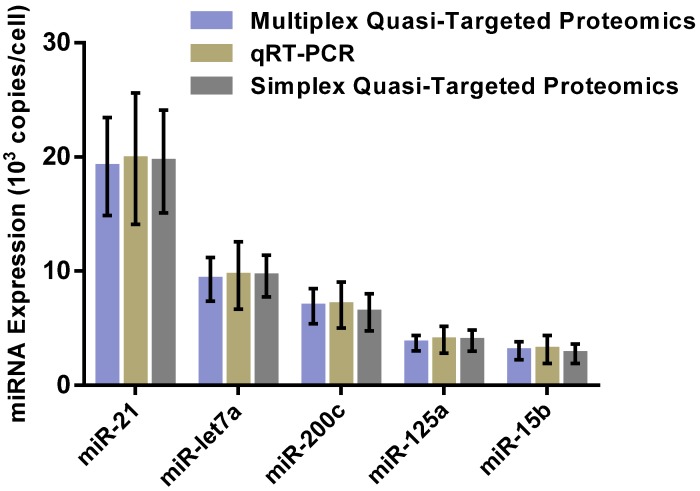
The distorted and unique expression of microRNAs (miRNAs) in cancer makes them an attractive source of biomarker. There is much evidence indicating that a panel of miRNAs, termed "miRNA fingerprints", is more specific and informative than an individual miRNA as biomarker. Thus, multiplex assays for simultaneous quantification of multiple miRNAs could be more potent in clinical practice. However, current available assays normally require pre-enrichment, amplification and labeling steps, and most of them are semi-quantitative or lack of multiplexing capability. In this study, we developed a quasi-targeted proteomics assay for multiplexed miRNA quantification by a combination of DNA-peptide probes and liquid chromatography-tandem mass spectrometry (LC-MS/MS). Specifically, the signal of target miRNAs (i.e., miR-21, miR-let7a, miR-200c, miR-125a and miR-15b) was converted into the mass response of reporter peptides by hybridization of miRNAs with DNA-peptide probes and subsequent tryptic digestion to release the peptides. After a careful optimization of conditions related to binding, conjugation, hybridization and multiple reaction monitoring (MRM) detection, the assay was validated for each miRNA and the limit of quantification (LOQ) for all the miRNAs can achieve 1 pM. Moreover, crosstalk between DNA-peptide probes in multiplex assay was sophisticatedly evaluated. Using this quasi-targeted proteomics assay, the level of target miRNAs was determined in 3 human breast cell lines and 36 matched pairs of breast tissue samples. Finally, simplex assay and qRT-PCR were also performed for a comparison. This approach grafts the strategy of targeted proteomics into miRNA quantification and may offer a new way for multiplexed miRNA profiling.
微小RNA(miRNA)在癌症中呈现出扭曲且独特的表达模式,这使其成为极具吸引力的生物标志物来源。有大量证据表明,一组被称为“miRNA指纹图谱”的miRNA作为生物标志物比单个miRNA更具特异性和信息价值。因此,用于同时定量多种miRNA的多重检测方法在临床实践中可能更具效力。然而,目前可用的检测方法通常需要预富集、扩增和标记步骤,并且大多数方法是半定量的或缺乏多重检测能力。在本研究中,我们通过结合DNA肽探针和液相色谱-串联质谱(LC-MS/MS)开发了一种用于多重miRNA定量的准靶向蛋白质组学检测方法。具体而言,通过miRNA与DNA肽探针杂交以及随后的胰蛋白酶消化以释放肽段,将目标miRNA(即miR-21、miR-let7a、miR-200c、miR-125a和miR-15b)的信号转化为报告肽的质量响应。在仔细优化与结合、偶联、杂交和多反应监测(MRM)检测相关的条件后,对每种miRNA进行了检测验证,所有miRNA的定量限(LOQ)均可达到1 pM。此外,还对多重检测中DNA肽探针之间的串扰进行了精细评估。使用这种准靶向蛋白质组学检测方法,测定了3种人乳腺癌细胞系和36对匹配的乳腺组织样本中目标miRNA的水平。最后,还进行了单重检测和qRT-PCR以作比较。这种方法将靶向蛋白质组学策略应用于miRNA定量,可能为多重miRNA分析提供一种新途径。