Marquardsen Florian A, Baldin Fabian, Wunderer Florian, Al-Herz Waleed, Mikhael Raymond, Lefranc Gérard, Baz Zeina, Rezaee Fariba, Hanna Rabi, Kfir-Erenfeld Shlomit, Stepensky Polina, Meyer Benedikt, Jauch Annaise, Bigler Marc B, Burgener Anne-Valérie, Higgins Rebecca, Navarini Alexander A, Church Joeseph A, Chou Janet, Geha Raif, Notarangelo Luigi D, Hess Christoph, Berger Christoph T, Bloch Donald B, Recher Mike
Immunodeficiency Laboratory, Department of Biomedicine, Basel University Hospital, Basel, Switzerland.
Anesthesia Center for Critical Care Research of the Department of Anesthesia, Critical Care, and Pain Medicine, Harvard Medical School and Massachusetts General Hospital, Massachusetts, MA, 02114, USA.
J Clin Immunol. 2017 Oct;37(7):707-714. doi: 10.1007/s10875-017-0431-5. Epub 2017 Aug 21.
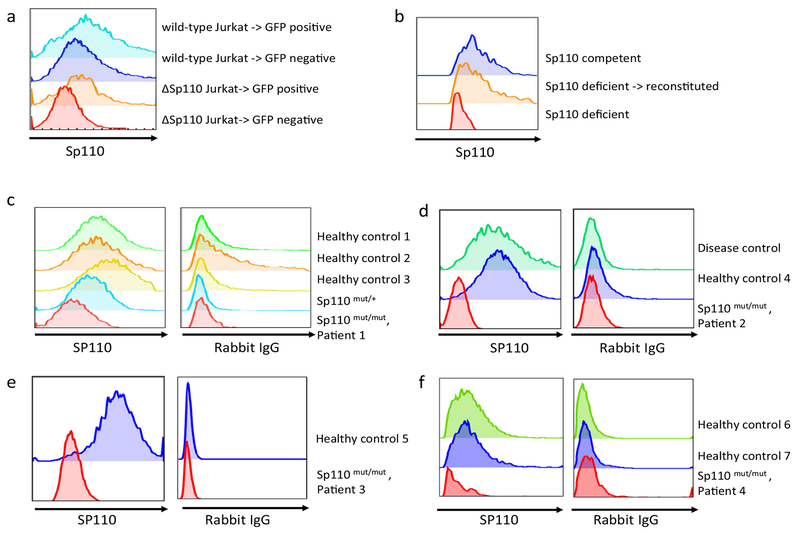
Mutations in Sp110 are the underlying cause of veno-occlusive disease with immunodeficiency (VODI), a combined immunodeficiency that is difficult to treat and often fatal. Because early treatment is critically important for patients with VODI, broadly usable diagnostic tools are needed to detect Sp110 protein deficiency. Several factors make establishing the diagnosis of VODI challenging: (1) Current screening strategies to identify severe combined immunodeficiency are based on measuring T cell receptor excision circles (TREC). This approach will fail to identify VODI patients because the disease is not associated with severe T cell lymphopenia at birth; (2) the SP110 gene contains 17 exons, making it a challenge for Sanger sequencing. The recently developed next-generation sequencing (NGS) platforms that can rapidly determine the sequence of all 17 exons are available in only a few laboratories; (3) there is no standard functional assay to test for the effects of novel mutations in Sp110; and (4) it has been difficult to use flow cytometry to identify patients who lack Sp110 because of the low level of Sp110 protein in peripheral blood lymphocytes. We report here a novel flow cytometric assay that is easily performed in diagnostic laboratories and might thus become a standard assay for the evaluation of patients who may have VODI. In addition, the assay will facilitate investigations directed at understanding the function of Sp110.
Sp110基因的突变是伴有免疫缺陷的肝静脉闭塞病(VODI)的根本病因,这是一种难以治疗且往往致命的联合免疫缺陷病。由于早期治疗对VODI患者至关重要,因此需要广泛可用的诊断工具来检测Sp110蛋白缺乏症。有几个因素使得VODI的诊断具有挑战性:(1)目前用于识别严重联合免疫缺陷的筛查策略是基于测量T细胞受体切除环(TREC)。这种方法无法识别VODI患者,因为该疾病在出生时与严重的T细胞淋巴细胞减少无关;(2)SP110基因包含17个外显子,这使得桑格测序具有挑战性。最近开发的能够快速确定所有17个外显子序列的下一代测序(NGS)平台仅在少数实验室可用;(3)没有标准的功能测定法来测试Sp110中新突变的影响;(4)由于外周血淋巴细胞中Sp110蛋白水平较低,很难使用流式细胞术来识别缺乏Sp110的患者。我们在此报告一种新型的流式细胞术检测方法,该方法在诊断实验室中易于操作,因此可能成为评估可能患有VODI患者的标准检测方法。此外,该检测方法将有助于开展旨在了解Sp110功能的研究。