Department of Cell Biology and Physiology, University of North Carolina, Chapel Hill, NC 27599, USA.
Psychology & Neuroscience Program, University of North Carolina, Chapel Hill, NC 27599, USA.
Zool Res. 2017 Jul 18;38(4):171-179. doi: 10.24272/j.issn.2095-8137.2017.042.
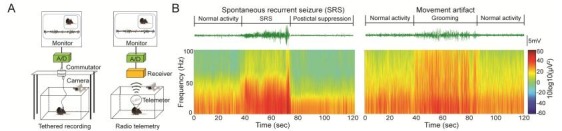
Epilepsy, characterized by spontaneous recurrent seizures (SRS), is a serious and common neurological disorder afflicting an estimated 1% of the population worldwide. Animal experiments, especially those utilizing small laboratory rodents, remain essential to understanding the fundamental mechanisms underlying epilepsy and to prevent, diagnose, and treat this disease. While much attention has been focused on epileptogenesis in animal models of epilepsy, there is little discussion on SRS, the hallmark of epilepsy. This is in part due to the technical difficulties of rigorous SRS detection. In this review, we comprehensively summarize both genetic and acquired models of SRS and discuss the methodology used to monitor and detect SRS in mice and rats.
癫痫,其特征为自发性反复发作性癫痫发作(SRS),是一种严重且常见的神经系统疾病,估计全球有 1%的人口受到影响。动物实验,特别是利用小型实验室啮齿动物的实验,对于理解癫痫的基本机制以及预防、诊断和治疗这种疾病仍然至关重要。虽然人们对癫痫动物模型中的癫痫发生过程给予了很多关注,但对 SRS 的讨论却很少,而 SRS 正是癫痫的标志。这在一定程度上是由于严格检测 SRS 的技术困难所致。在这篇综述中,我们全面总结了 SRS 的遗传和获得性模型,并讨论了用于监测和检测小鼠和大鼠 SRS 的方法。