Tissue Mechanics Laboratory, The Wallace H. Coulter Department of Biomedical Engineering, Georgia Institute of Technology and Emory University, Atlanta, GA, United States.
Tissue Mechanics Laboratory, The Wallace H. Coulter Department of Biomedical Engineering, Georgia Institute of Technology and Emory University, Atlanta, GA, United States.
J Mech Behav Biomed Mater. 2017 Nov;75:486-494. doi: 10.1016/j.jmbbm.2017.08.013. Epub 2017 Aug 9.
Bovine pericardium (BP) has been identified as a choice biomaterial for the development of surgical bioprosthetic heart valves (BHV) and transcatheter aortic valves (TAV). Porcine pericardium (PP) and younger BP have been suggested as candidates TAV leaflet biomaterials for smaller-profile devices due to their reduced thickness; however, their mechanical and structural properties remain to be fully characterized. This study characterized the material properties of chemically treated thick (PPK) and thin (PPN) PP, as well as fetal (FBP), calf (CBP) and adult (ABP) BP tissues in order to better understand their mechanical behavior.
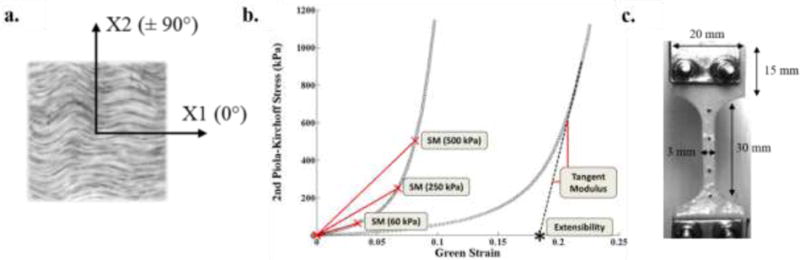
Planar biaxial testing and uniaxial failure testing methods were employed to quantify tissue mechanical responses and failure properties. Fiber characteristics were examined using histological analysis.
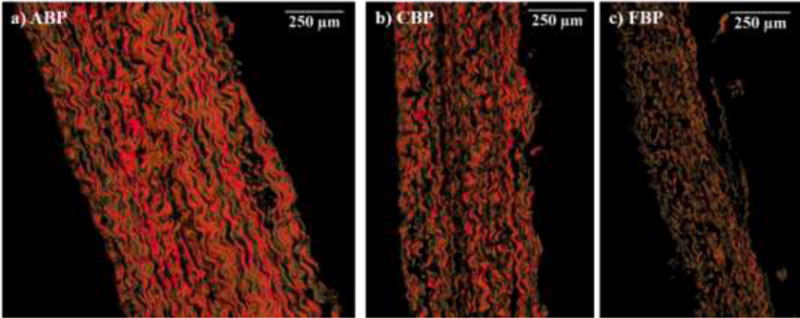
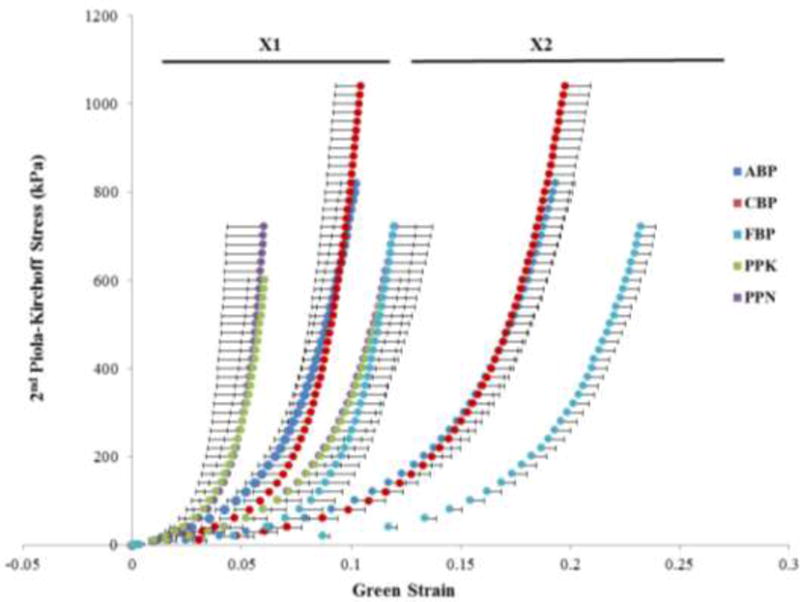
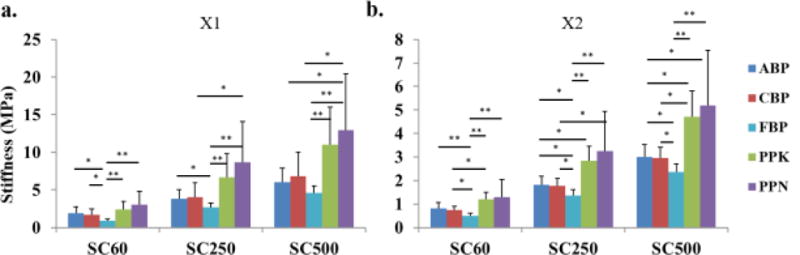
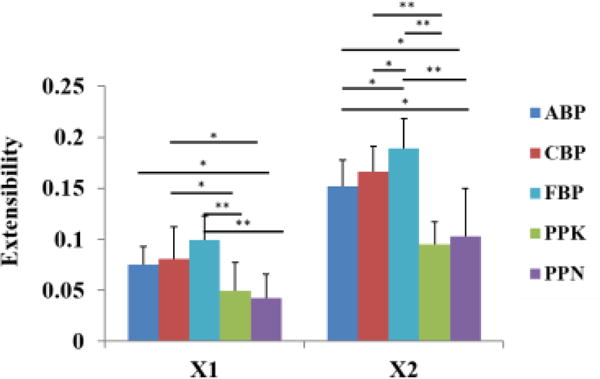
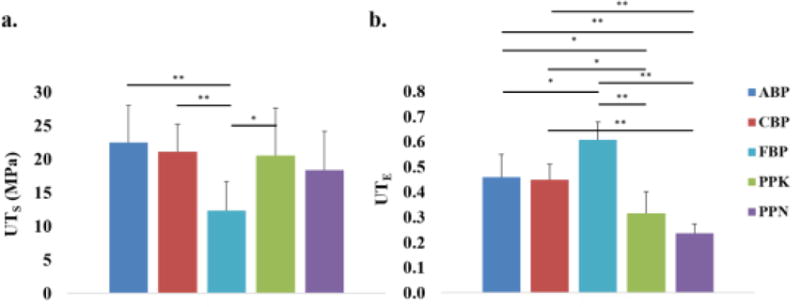
ABP and CBP tissues were significantly stiffer and stronger than the younger FBP tissues. Histological analysis revealed a significantly larger concentration of thin immature collagen fibers in the FBP tissues than in the ABP and CBP tissues. While PP tissues were thinnest, they were stiffer and less extensible than the BP tissues.
Due to comparable mechanical properties but significantly reduced thickness, CBP tissue may be a more suitable material for TAV manufacturing than ABP tissue. FBP tissue, despite its reduced thickness and higher flexibility, was weaker and should be studied in more detail. Although PP tissues are the thinnest, they were least extensible and failed at earlier strain than BP tissues. The differences between PP and BP tissues should be further investigated and suggest that they should not be used interchangeably in the manufacturing of TAV.
牛心包(BP)已被确定为外科生物瓣心脏瓣膜(BHV)和经导管主动脉瓣(TAV)开发的首选生物材料。由于厚度减小,有人建议使用猪心包(PP)和年轻的 BP 作为较小型号 TAV 瓣叶生物材料的候选材料;然而,它们的机械和结构性能仍有待充分表征。本研究对经过化学处理的厚(PPK)和薄(PPN)PP 以及胎儿(FBP)、小牛(CBP)和成人(ABP)BP 组织的材料特性进行了表征,以便更好地了解它们的机械性能。
采用平面双向拉伸试验和单轴破坏试验方法来量化组织的力学响应和破坏特性。采用组织学分析来检查纤维特征。
ABP 和 CBP 组织明显比年轻的 FBP 组织更硬、更强。组织学分析显示,FBP 组织中薄的未成熟胶原纤维浓度明显高于 ABP 和 CBP 组织。虽然 PP 组织最薄,但它们比 BP 组织更硬、弹性更小。
由于具有相当的机械性能但厚度显著减小,CBP 组织可能比 ABP 组织更适合 TAV 制造。尽管 FBP 组织厚度较小且灵活性较高,但强度较弱,应进行更详细的研究。尽管 PP 组织最薄,但它们的延展性最小,在应变早期就会失效,而 BP 组织则不会。PP 和 BP 组织之间的差异应进一步研究,并表明它们不应在 TAV 的制造中互换使用。