Komatsu Hirotake, Cook Colin, Wang Chia-Hao, Medrano Leonard, Lin Henry, Kandeel Fouad, Tai Yu-Chong, Mullen Yoko
Division of Developmental and Translational Diabetes and Endocrinology Research, Department of Diabetes and Metabolic Researches, Beckman Research Institute of City of Hope, Duarte, California, United States of America.
Department of Electrical Engineering, California Institute of Technology, Pasadena, California, United States of America.
PLoS One. 2017 Aug 23;12(8):e0183780. doi: 10.1371/journal.pone.0183780. eCollection 2017.
Type 1 diabetes is an autoimmune disease that destroys insulin-producing beta cells in the pancreas. Pancreatic islet transplantation could be an effective treatment option for type 1 diabetes once several issues are resolved, including donor shortage, prevention of islet necrosis and loss in pre- and post-transplantation, and optimization of immunosuppression. This study seeks to determine the cause of necrotic loss of isolated islets to improve transplant efficiency.
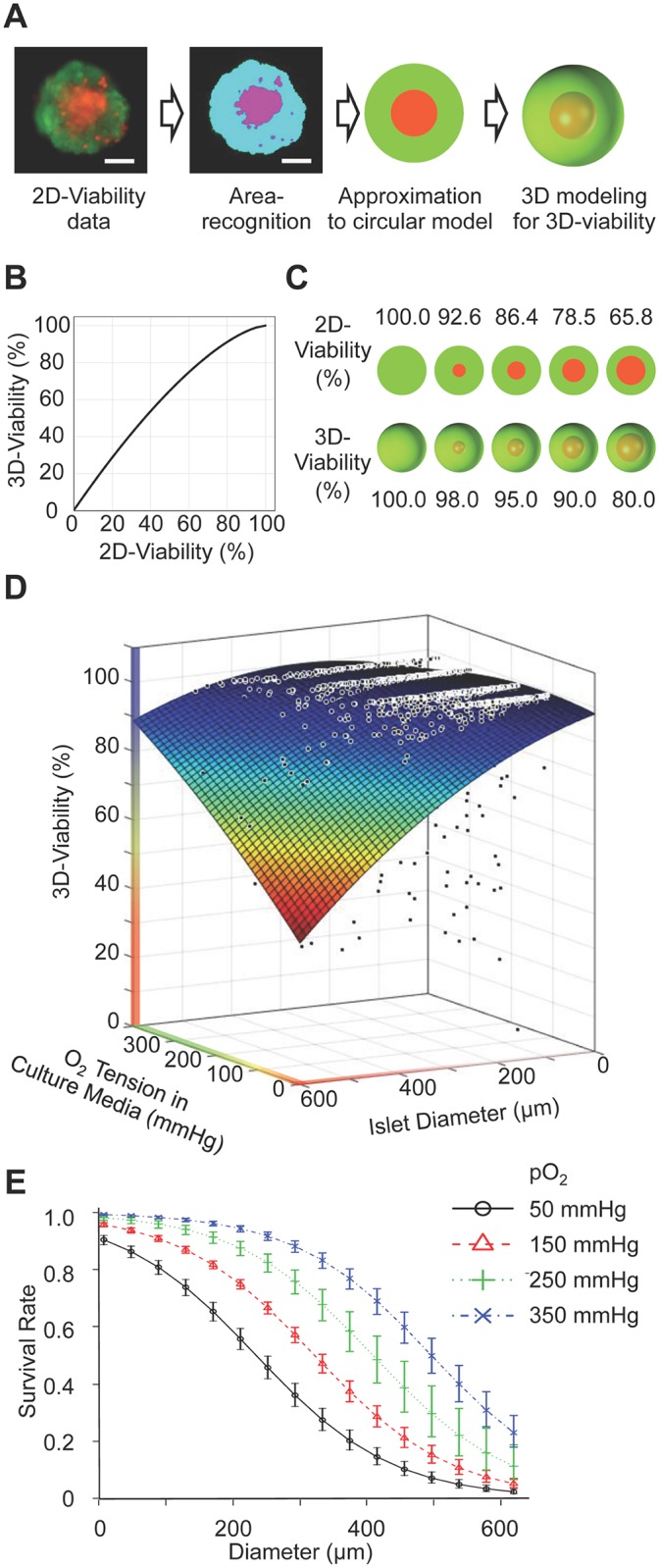
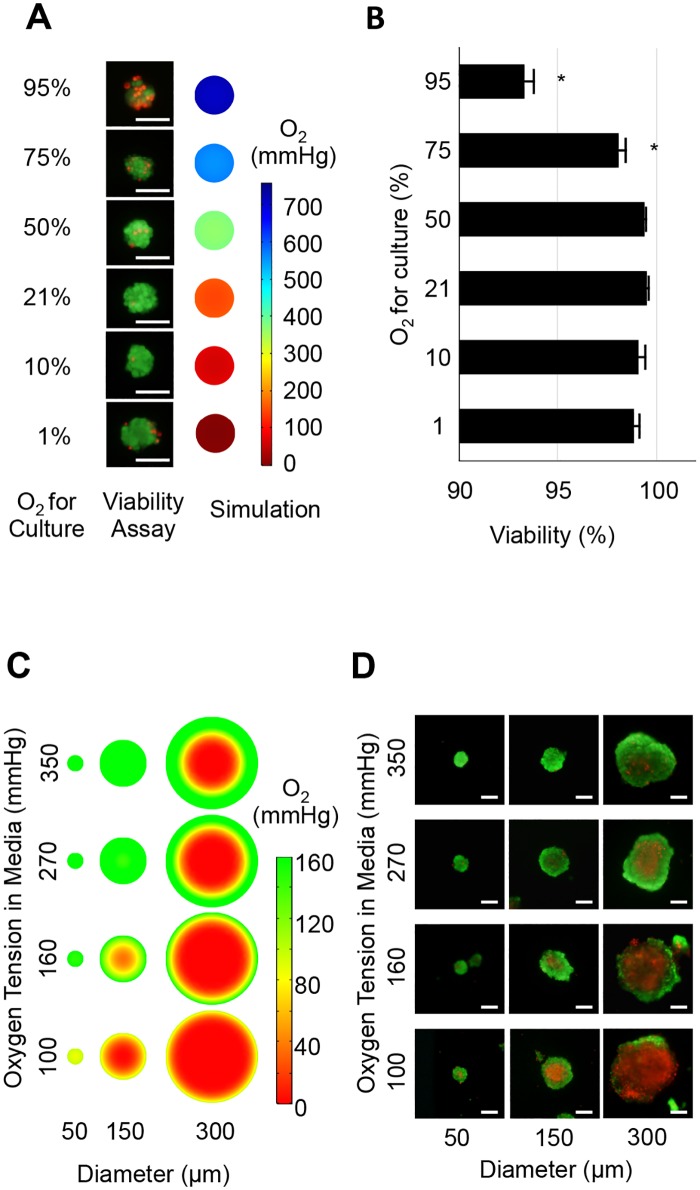
The oxygen tension inside isolated human islets of different sizes was simulated under varying oxygen environments using a computational in silico model. In vitro human islet viability was also assessed after culturing in different oxygen conditions. Correlation between simulation data and experimentally measured islet viability was examined. Using these in vitro viability data of human islets, the effect of islet diameter and oxygen tension of the culture environment on islet viability was also analyzed using a logistic regression model.
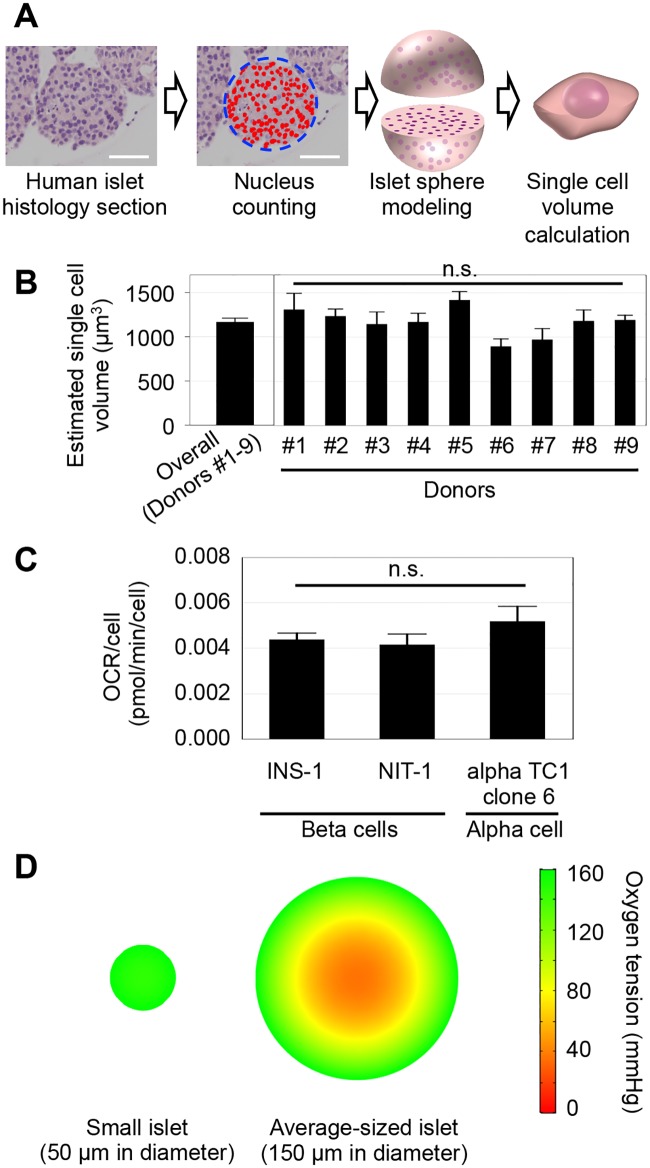
Computational simulation clearly revealed the oxygen gradient inside the islet structure. We found that oxygen tension in the islet core was greatly lower (hypoxic) than that on the islet surface due to the oxygen consumption by the cells. The hypoxic core was expanded in the larger islets or in lower oxygen cultures. These findings were consistent with results from in vitro islet viability assays that measured central necrosis in the islet core, indicating that hypoxia is one of the major causes of central necrosis. The logistic regression analysis revealed a negative effect of large islet and low oxygen culture on islet survival.
CONCLUSIONS/SIGNIFICANCE: Hypoxic core conditions, induced by the oxygen gradient inside islets, contribute to the development of central necrosis of human isolated islets. Supplying sufficient oxygen during culture could be an effective and reasonable method to maintain isolated islets viable.
1型糖尿病是一种自身免疫性疾病,会破坏胰腺中产生胰岛素的β细胞。一旦解决几个问题,包括供体短缺、胰岛坏死的预防以及移植前后胰岛的损失,以及免疫抑制的优化,胰岛移植可能是1型糖尿病的一种有效治疗选择。本研究旨在确定分离的胰岛坏死损失的原因,以提高移植效率。
使用计算机模拟模型在不同的氧气环境下模拟不同大小的分离人胰岛内部的氧张力。在不同氧气条件下培养后,还评估了体外人胰岛的活力。检查了模拟数据与实验测量的胰岛活力之间的相关性。利用这些人胰岛的体外活力数据,还使用逻辑回归模型分析了胰岛直径和培养环境的氧张力对胰岛活力的影响。
计算机模拟清楚地揭示了胰岛结构内部的氧梯度。我们发现,由于细胞消耗氧气,胰岛核心的氧张力比胰岛表面的氧张力低得多(缺氧)。在较大的胰岛或低氧培养环境中,缺氧核心会扩大。这些发现与体外胰岛活力测定结果一致,该测定测量了胰岛核心的中央坏死,表明缺氧是中央坏死的主要原因之一。逻辑回归分析显示大胰岛和低氧培养对胰岛存活有负面影响。
结论/意义:胰岛内部的氧梯度诱导的缺氧核心状况,促成了人分离胰岛中央坏死的发展。在培养过程中提供充足的氧气可能是维持分离胰岛存活的一种有效且合理的方法。