Danner J, Ridgway M D, Rubin S I, Le Boedec K
University of Illinois Champaign-Urbana College of Veterinary Medicine, Urbana, IL.
Centre Hospitalier Vétérinaire Frégis, Arcueil, France.
J Vet Intern Med. 2017 Sep;31(5):1392-1402. doi: 10.1111/jvim.14800. Epub 2017 Aug 20.
Ionized calcium concentration is the gold standard to assess calcium status in dogs, but measurement is not always available.
(1) To predict ionized calcium concentration from biochemical results and compare the diagnostic performance of predicted ionized calcium concentration (piCa) to those of total calcium concentration (tCa) and 2 corrected tCa formulas; and (2) to study the relationship between biochemical results and variation of measured ionized calcium concentration (miCa).
A total of 1,719 dogs with both miCa and biochemical profile results available.
Cross-sectional study. Using 1,200 dogs, piCa was determined using a multivariate adaptive regression splines model. Its accuracy and performance were tested on the remaining 519 dogs.
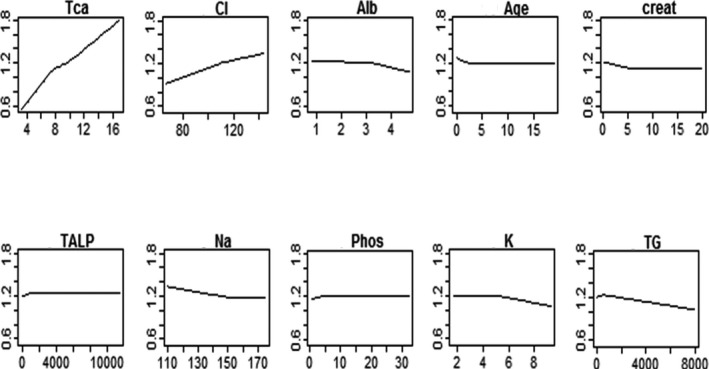
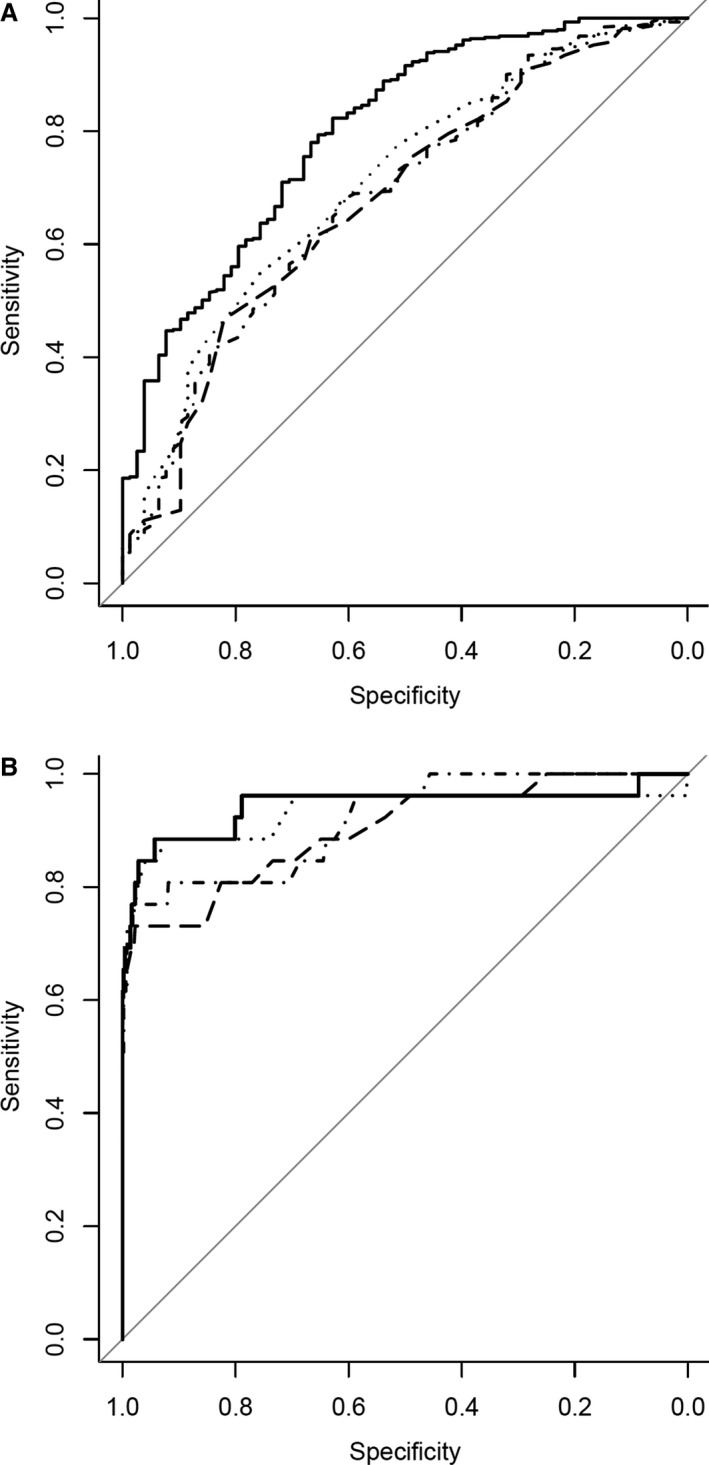
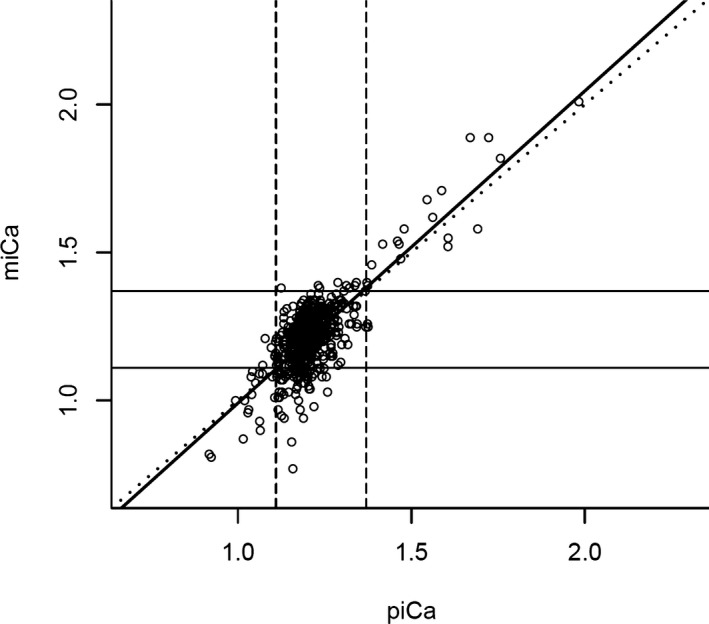
The final model included creatinine, albumin, tCa, phosphorus, sodium, potassium, chloride, alkaline phosphatase, triglycerides, and age, with tCa, albumin, and chloride having the highest impact on miCa variation. Measured ionized calcium concentration was better correlated with piCa than with tCa and corrected tCa and had higher overall diagnostic accuracy to diagnose hypocalcemia and hypercalcemia, but not significantly for hypercalcemia. For hypercalcemia, piCa was as sensitive (64%) but more specific (99.6%) than tCa and corrected tCa. For hypocalcemia, piCa was more sensitive (21.8%) and as specific (98.4%) as tCa. Positive and negative predictive values of piCa were high for both hypercalcemia (90% and 98%, respectively) and hypocalcemia (70.8% and 87.7%, respectively).
Predicted ionized calcium concentration can be obtained from readily available biochemical and patient results and seems more useful than tCa and corrected tCa to assess calcium disorders in dogs when miCa is unavailable. Validation on external data, however, is warranted.
离子钙浓度是评估犬类钙状态的金标准,但并非总能进行测量。
(1)根据生化结果预测离子钙浓度,并将预测的离子钙浓度(piCa)与总钙浓度(tCa)和2种校正tCa公式的诊断性能进行比较;(2)研究生化结果与测量的离子钙浓度(miCa)变化之间的关系。
共有1719只犬既有miCa又有生化指标结果。
横断面研究。使用1200只犬,采用多元自适应回归样条模型确定piCa。在其余519只犬上测试其准确性和性能。
最终模型包括肌酐、白蛋白、tCa、磷、钠、钾、氯、碱性磷酸酶、甘油三酯和年龄,其中tCa、白蛋白和氯对miCa变化影响最大。测量的离子钙浓度与piCa的相关性优于与tCa和校正tCa的相关性,在诊断低钙血症和高钙血症方面具有更高的总体诊断准确性,但对高钙血症而言差异不显著。对于高钙血症,piCa与tCa和校正tCa一样敏感(64%),但特异性更高(99.6%)。对于低钙血症,piCa更敏感(21.8%),与tCa特异性相同(98.4%)。piCa对高钙血症(分别为90%和98%)和低钙血症(分别为70.8%和87.7%)的阳性和阴性预测值都很高。
当无法获得miCa时,可从现成的生化和患者结果中获得预测的离子钙浓度,在评估犬类钙紊乱方面似乎比tCa和校正tCa更有用。然而,需要对外部数据进行验证。