Stout Randy F, Spray David C
Department of Biomedical Sciences, New York Institute of Technology College of Osteopathic Medicine, Old Westbury, NY 11568-8000
Dominick P. Purpura Department of Neuroscience, Albert Einstein College of Medicine, Bronx, NY 10461.
Mol Biol Cell. 2017 Oct 15;28(21):2757-2764. doi: 10.1091/mbc.E17-03-0206. Epub 2017 Aug 23.
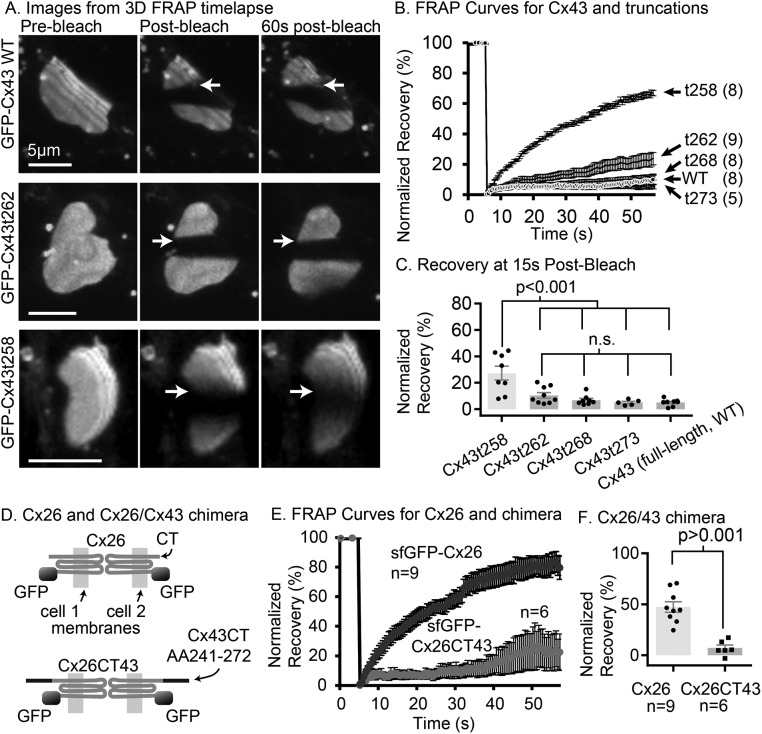
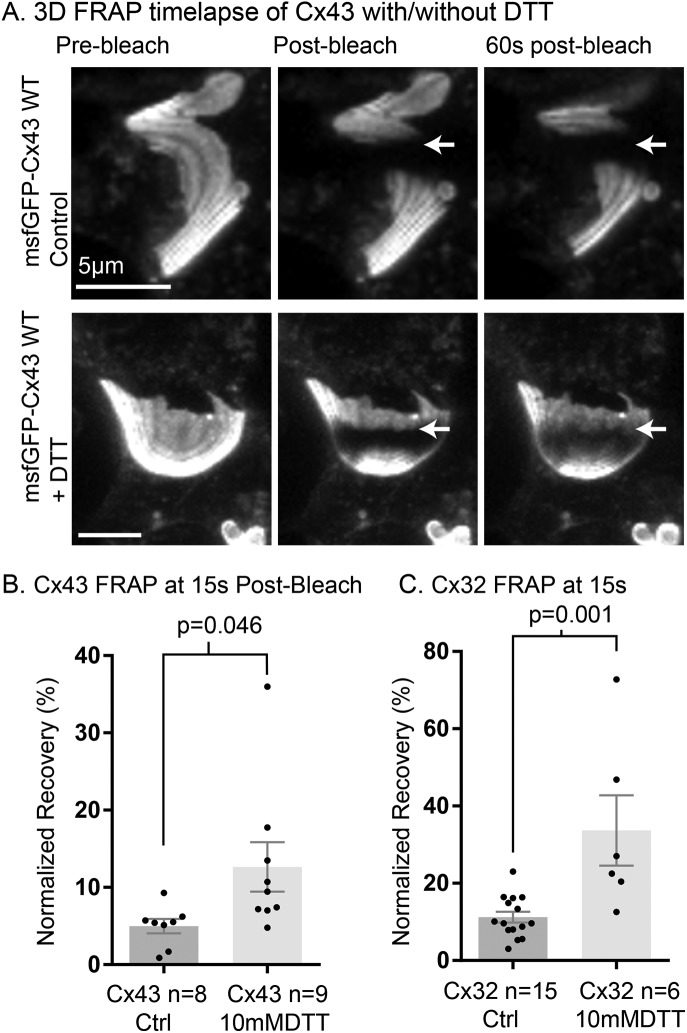
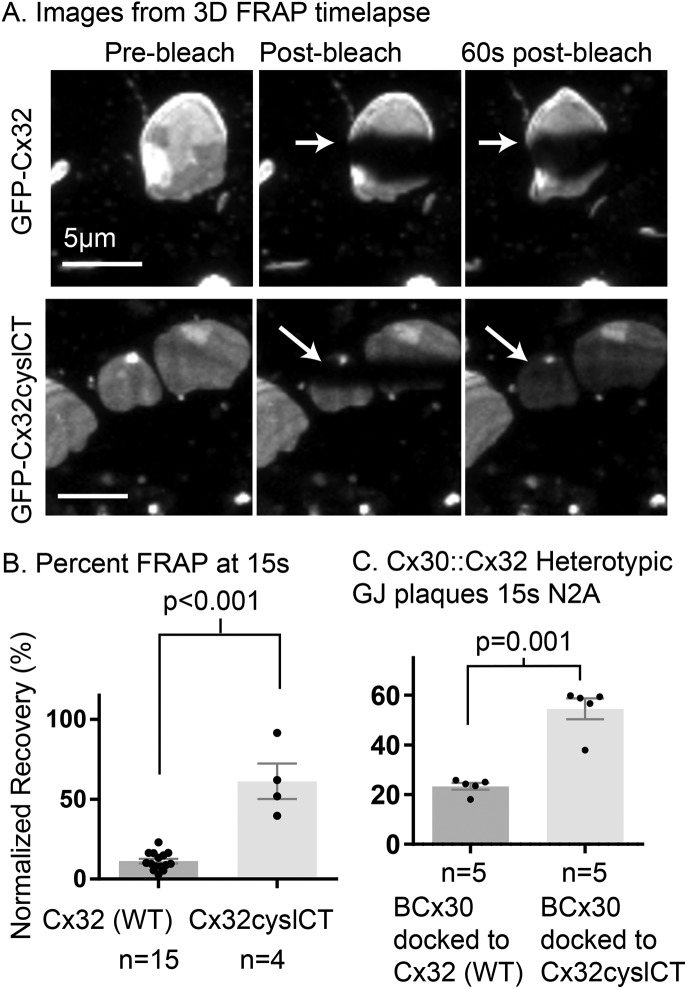
Gap junctions are cellular contact sites composed of clustered connexin transmembrane proteins that act in dual capacities as channels for direct intercellular exchange of small molecules and as structural adhesion complexes known as gap junction nexuses. Depending on the connexin isoform, the cluster of channels (the gap junction plaque) can be stably or fluidly arranged. Here we used confocal microscopy and mutational analysis to identify the residues within the connexin proteins that determine gap junction plaque stability. We found that stability is altered by changing redox balance using a reducing agent-indicating gap junction nexus stability is modifiable. Stability of the arrangement of connexins is thought to regulate intercellular communication by establishing an ordered supramolecular platform. By identifying the residues that establish plaque stability, these studies lay the groundwork for exploration of mechanisms by which gap junction nexus stability modulates intercellular communication.
间隙连接是由聚集的连接蛋白跨膜蛋白组成的细胞接触位点,这些蛋白具有双重功能,既作为小分子直接细胞间交换的通道,又作为称为间隙连接连接体的结构粘附复合物。根据连接蛋白亚型的不同,通道簇(间隙连接斑)可以稳定或灵活地排列。在这里,我们使用共聚焦显微镜和突变分析来确定连接蛋白中决定间隙连接斑稳定性的残基。我们发现,使用还原剂改变氧化还原平衡会改变稳定性,这表明间隙连接连接体的稳定性是可调节的。连接蛋白排列的稳定性被认为通过建立一个有序的超分子平台来调节细胞间通讯。通过确定建立斑稳定性的残基,这些研究为探索间隙连接连接体稳定性调节细胞间通讯的机制奠定了基础。