Department of Neuroscience, Albert Einstein College of Medicine, Bronx, NY, 10461, USA.
New York Institute of Technology College of Osteopathic Medicine, Old Westbury, NY, USA.
Sci Rep. 2021 Dec 21;11(1):24334. doi: 10.1038/s41598-021-03694-x.
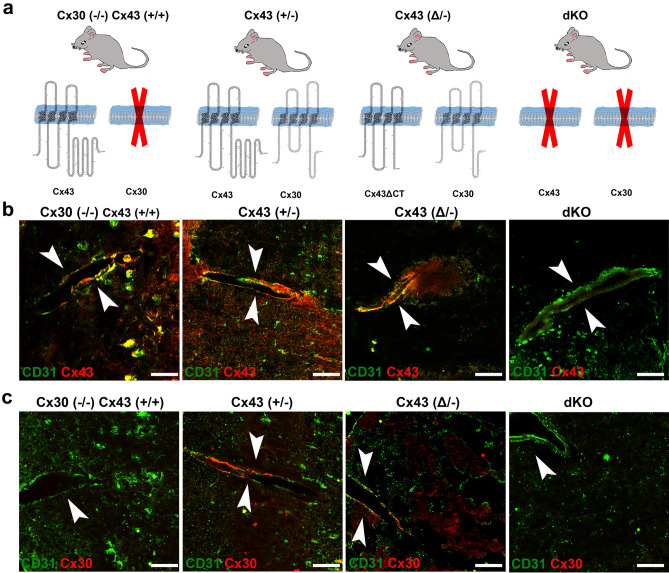
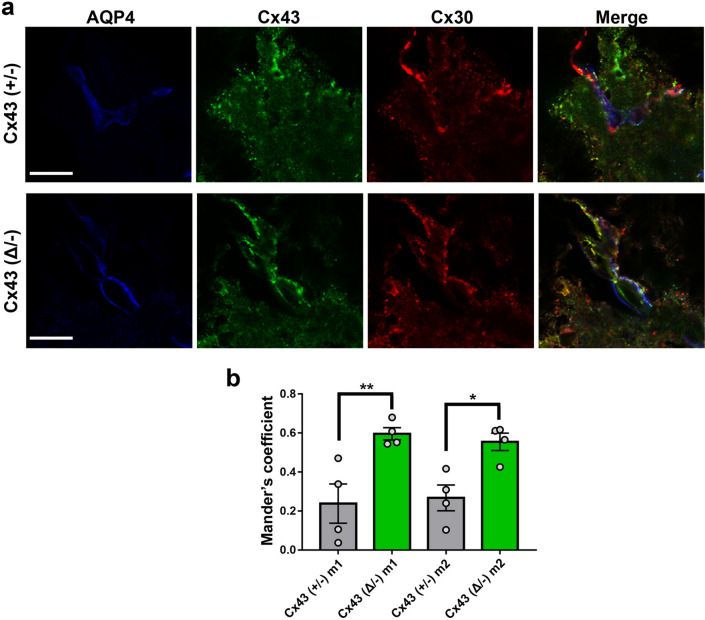
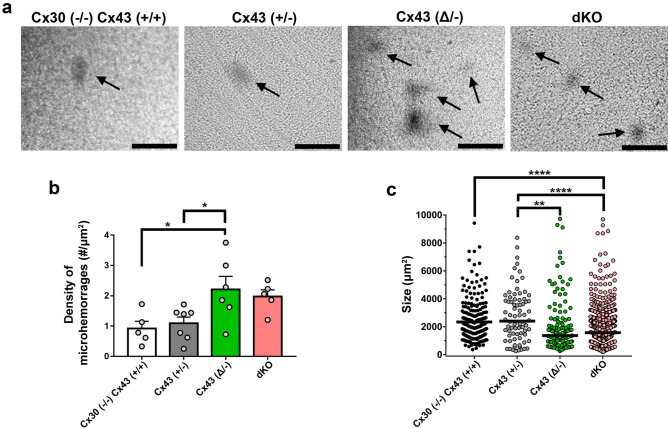
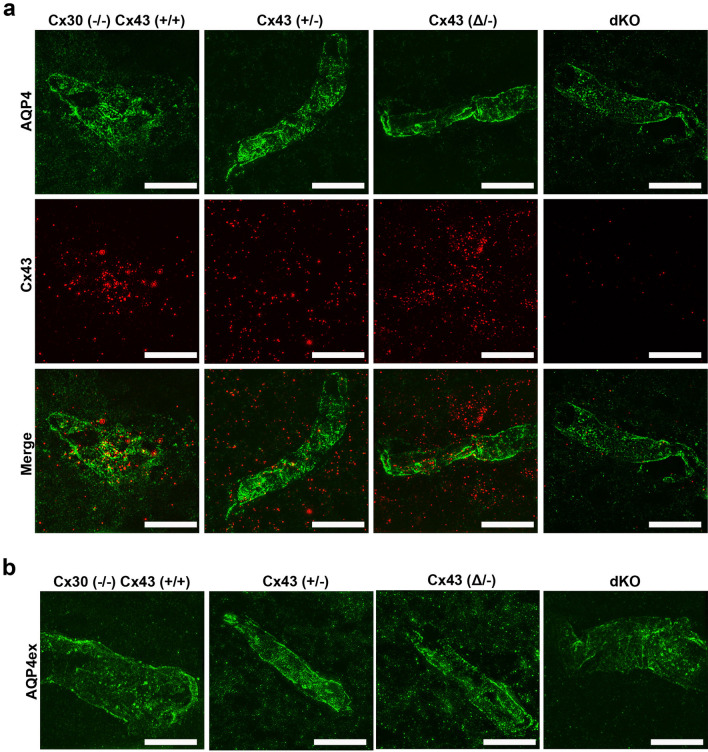
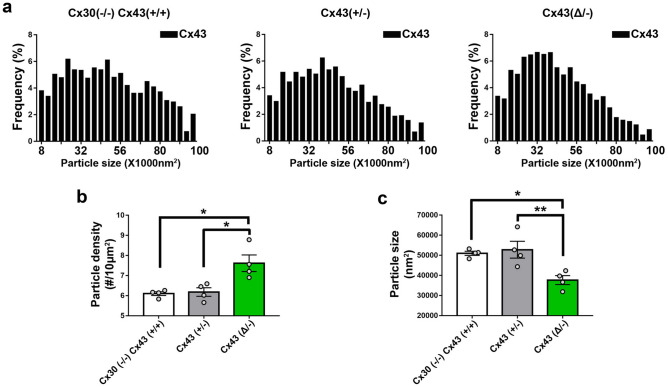
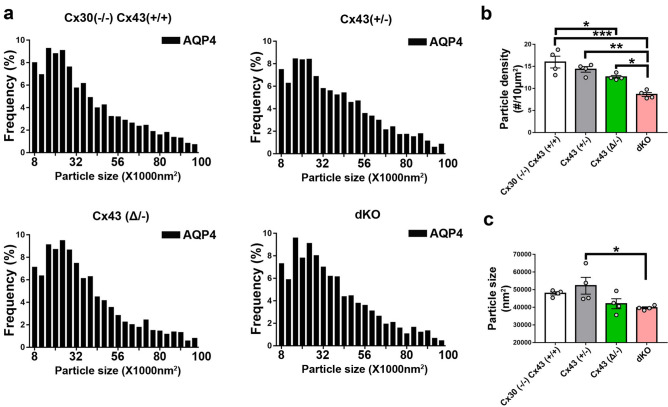
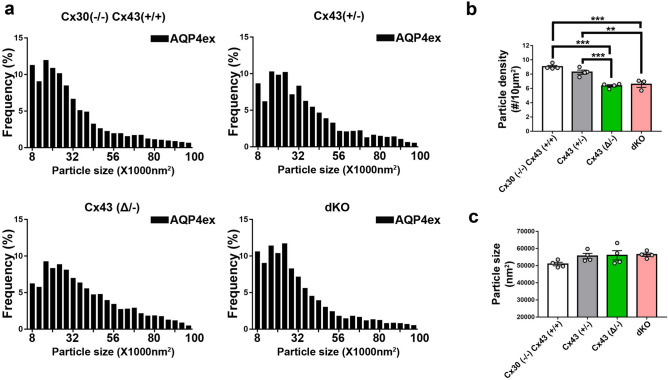
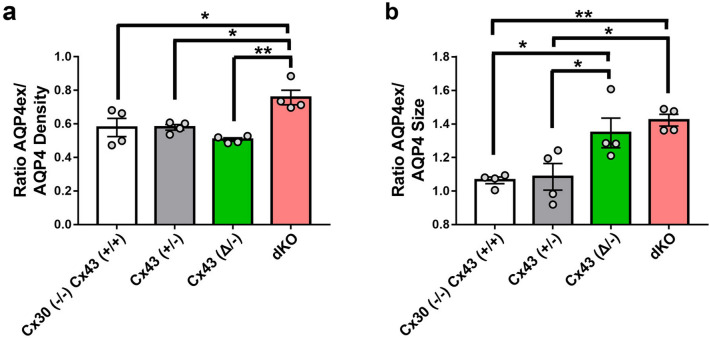
The neurovascular unit (NVU) consists of cells intrinsic to the vessel wall, the endothelial cells and pericytes, and astrocyte endfeet that surround the vessel but are separated from it by basement membrane. Endothelial cells are primarily responsible for creating and maintaining blood-brain-barrier (BBB) tightness, but astrocytes contribute to the barrier through paracrine signaling to the endothelial cells and by forming the glia limitans. Gap junctions (GJs) between astrocyte endfeet are composed of connexin 43 (Cx43) and Cx30, which form plaques between cells. GJ plaques formed of Cx43 do not diffuse laterally in the plasma membrane and thus potentially provide stable organizational features to the endfoot domain, whereas GJ plaques formed of other connexins and of Cx43 lacking a large portion of its cytoplasmic carboxyl terminus are quite mobile. In order to examine the organizational features that immobile GJs impose on the endfoot, we have used super-resolution confocal microscopy to map number and sizes of GJ plaques and aquaporin (AQP)-4 channel clusters in the perivascular endfeet of mice in which astrocyte GJs (Cx30, Cx43) were deleted or the carboxyl terminus of Cx43 was truncated. To determine if BBB integrity was compromised in these transgenic mice, we conducted perfusion studies under elevated hydrostatic pressure using horseradish peroxide as a molecular probe enabling detection of micro-hemorrhages in brain sections. These studies revealed that microhemorrhages were more numerous in mice lacking Cx43 or its carboxyl terminus. In perivascular domains of cerebral vessels, we found that density of Cx43 GJs was higher in the truncation mutant, while GJ size was smaller. Density of perivascular particles formed by AQP4 and its extended isoform AQP4ex was inversely related to the presence of full length Cx43, whereas the ratio of sizes of the particles of the AQP4ex isoform to total AQP4 was directly related to the presence of full length Cx43. Confocal analysis showed that Cx43 and Cx30 were substantially colocalized in astrocyte domains near vasculature of truncation mutant mice. These results showing altered distribution of some astrocyte nexus components (AQP4 and Cx30) in Cx43 null mice and in a truncation mutant, together with leakier cerebral vasculature, support the hypothesis that localization and mobility of gap junction proteins and their binding partners influences organization of astrocyte endfeet which in turn impacts BBB integrity of the NVU.
神经血管单元 (NVU) 由血管壁内的固有细胞组成,包括内皮细胞和周细胞,以及围绕血管但被基底膜隔开的星形胶质细胞终足。内皮细胞主要负责创建和维持血脑屏障 (BBB) 的紧密性,但星形胶质细胞通过旁分泌信号传递给内皮细胞并形成胶质界膜来促进屏障的形成。星形胶质细胞终足之间的缝隙连接 (GJ) 由连接蛋白 43 (Cx43) 和 Cx30 组成,它们在细胞之间形成斑块。由 Cx43 形成的 GJ 斑块在质膜中不能横向扩散,因此可能为终足域提供稳定的组织特征,而由其他连接蛋白形成的 GJ 斑块和缺乏大部分细胞质羧基末端的 Cx43 形成的 GJ 斑块则非常移动。为了研究不可移动的 GJ 对终足施加的组织特征,我们使用超分辨率共聚焦显微镜来绘制在星形胶质细胞 GJ (Cx30、Cx43) 缺失或 Cx43 羧基末端缺失的小鼠血管周围终足中 GJ 斑块和水通道蛋白 (AQP)-4 通道簇的数量和大小。为了确定这些转基因小鼠的 BBB 完整性是否受损,我们在升高的静水压力下进行了灌注研究,使用辣根过氧化物酶作为分子探针,能够检测脑切片中的微出血。这些研究表明,缺乏 Cx43 或其羧基末端的小鼠中微出血的数量更多。在脑血管的血管周围区域,我们发现截短突变体中 Cx43 GJ 的密度更高,而 GJ 的大小更小。AQP4 和其延伸同工型 AQP4ex 形成的血管周围颗粒的密度与全长 Cx43 的存在呈反比关系,而 AQP4ex 同工型颗粒的大小与总 AQP4 的比值与全长 Cx43 的存在直接相关。共聚焦分析显示,Cx43 和 Cx30 在截短突变体小鼠血管附近的星形胶质细胞区域中大量共定位。这些结果表明,在 Cx43 缺失小鼠和截短突变体中,一些星形胶质细胞连接成分 (AQP4 和 Cx30) 的分布发生改变,以及脑血管渗漏增加,支持以下假设:缝隙连接蛋白及其结合伴侣的定位和流动性会影响星形胶质细胞终足的组织,进而影响 NVU 的 BBB 完整性。