Salehnia Mojdeh, Fayazi Mehri, Ehsani Shokreya
Anatomy Department, Faculty of Medical Sciences, Tarbiat Modares University, Tehran, Iran.
Department of Medical Sciences, Najafabad Branch, Islamic Azad University, Najafabad, Iran.
Int J Reprod Biomed. 2017 Apr;15(4):209-216.
Concerning the low population of human endometrial mesenchymal cells within the tissue and their potential application in the clinic and tissue engineering, some researches have been focused on their in vitro expansion.
The aim of this study was to evaluate the effect of leukemia inhibitory factor (LIF) as a proliferative factor on the expansion and proliferation of human endometrial stromal cells.
In this experimental study, the isolated and cultured human endometrial stromal cells from women at ovulatory phase aged 20-35 years, after fourth passage were divided into control and LIF-treated groups. In the experimental group, the endometrial cells were treated by 10 ng/ml LIF in culture media and the cultured cells without adding LIF considered as control group. Both groups were evaluated and compared for proliferation rate using MTT assay, for CD90 marker by flow cytometric analysis and for the expression of Oct4, Nanog, PCNA and LIFr genes using real-time RT-PCR.
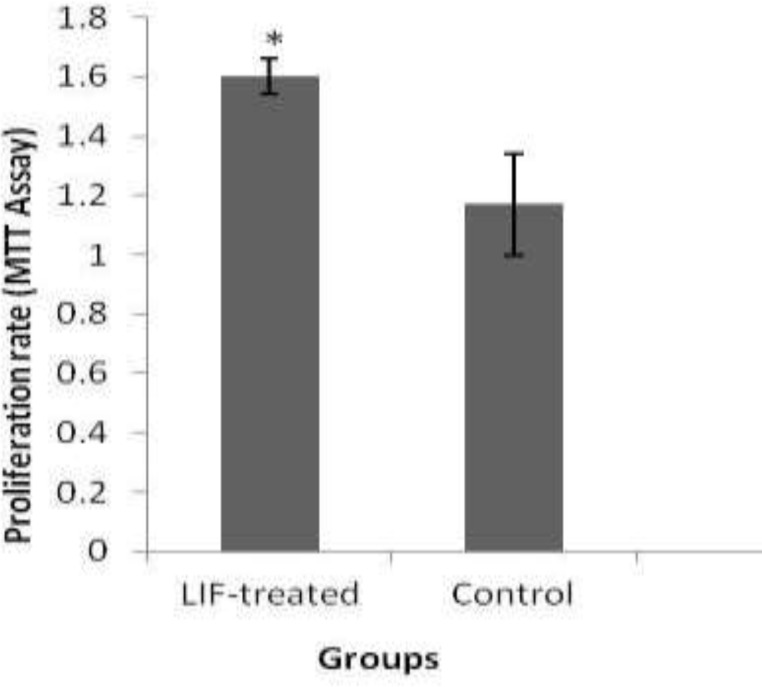
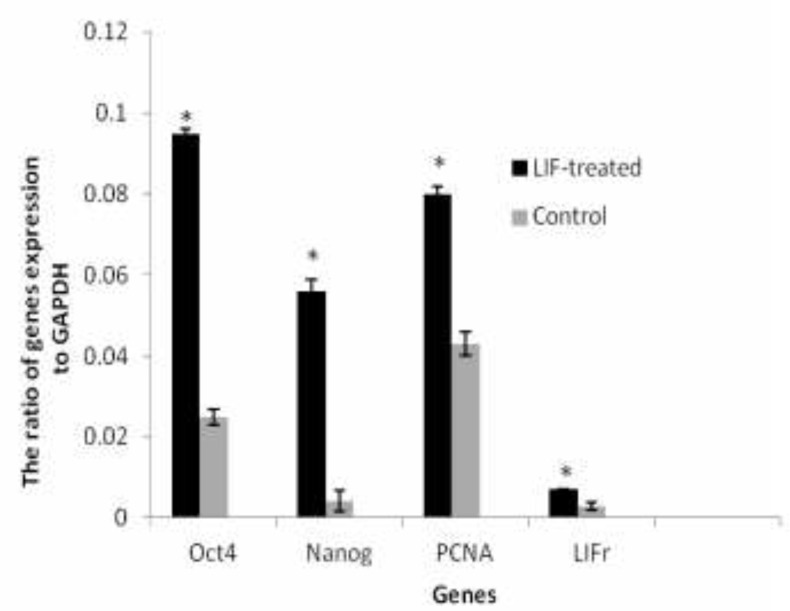
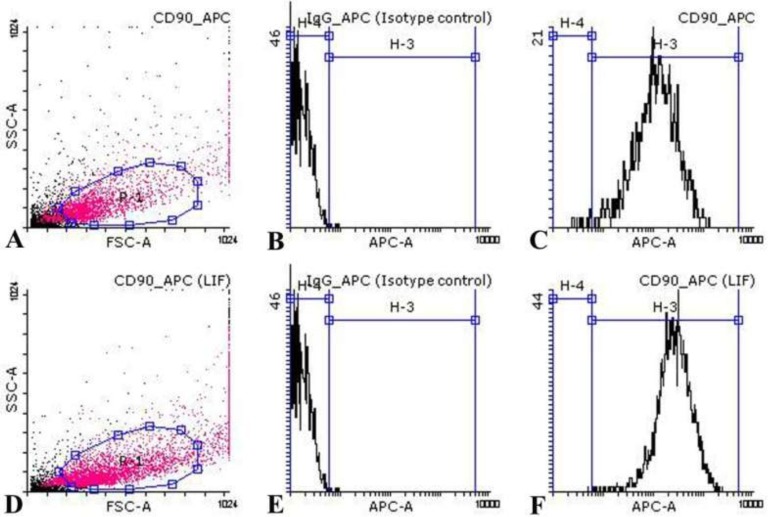
The proliferation rate of control and LIF-treated groups were 1.17±0.17 and 1.61±0.06 respectively and there was a significant increase in endometrial stromal cell proliferation following in vitro treatment by LIF compared to control group (p=0.049). The rate of CD90 positive cells was significantly increased in LIF-treated group (98.96±0.37%) compared to control group (94.26±0.08%) (p=0.0498). Also, the expression ratio of all studied genes was significantly increased in the LIF-treated group compared to control group (p=0.0479).
The present study showed that LIF has a great impact on proliferation, survival, and maintenance of pluripotency of human endometrial stromal cells and it could be applicable in cell therapies.
鉴于人子宫内膜间充质细胞在组织中的数量较少以及它们在临床和组织工程中的潜在应用,一些研究聚焦于其体外扩增。
本研究旨在评估白血病抑制因子(LIF)作为增殖因子对人子宫内膜基质细胞扩增和增殖的影响。
在本实验研究中,从20 - 35岁处于排卵期的女性中分离并培养人子宫内膜基质细胞,传代4次后分为对照组和LIF处理组。实验组中,子宫内膜细胞在培养基中用10 ng/ml LIF处理,未添加LIF的培养细胞作为对照组。使用MTT法评估并比较两组的增殖率,通过流式细胞术分析CD90标志物,使用实时RT-PCR检测Oct4、Nanog、PCNA和LIFr基因的表达。
对照组和LIF处理组的增殖率分别为1.17±0.17和1.61±0.06,与对照组相比,LIF体外处理后人子宫内膜基质细胞增殖显著增加(p = 0.049)。与对照组(94.26±0.08%)相比,LIF处理组CD90阳性细胞率显著增加(98.96±0.37%)(p = 0.0498)。此外,与对照组相比,LIF处理组所有研究基因的表达率均显著增加(p = 0.0479)。
本研究表明LIF对人子宫内膜基质细胞的增殖、存活和多能性维持有很大影响,可应用于细胞治疗。