Tawiah Kwaku D, Porciani David, Burke Donald H
Department of Biochemistry, University of Missouri, Columbia, MO 65211, USA.
Bond Life Sciences Center, University of Missouri, Columbia, MO 65211, USA.
Biomedicines. 2017 Aug 24;5(3):51. doi: 10.3390/biomedicines5030051.
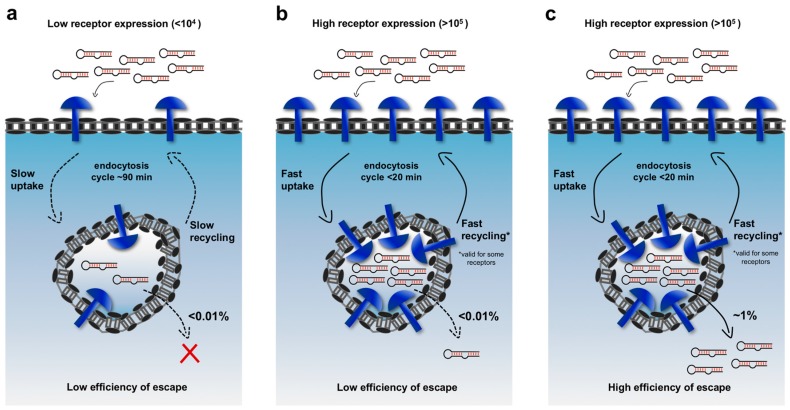
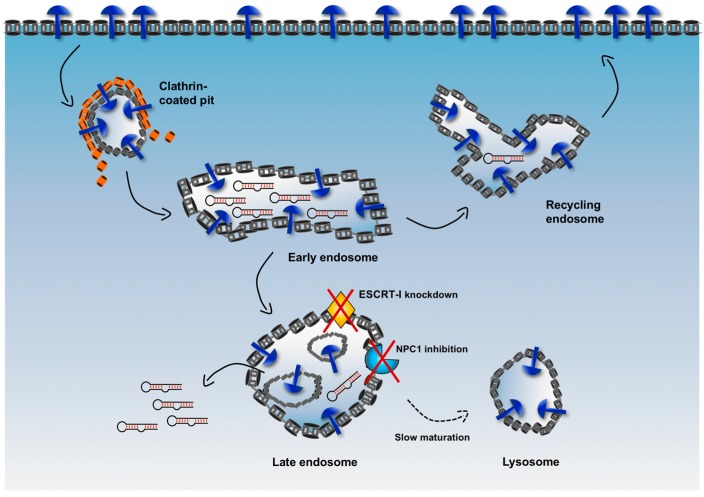
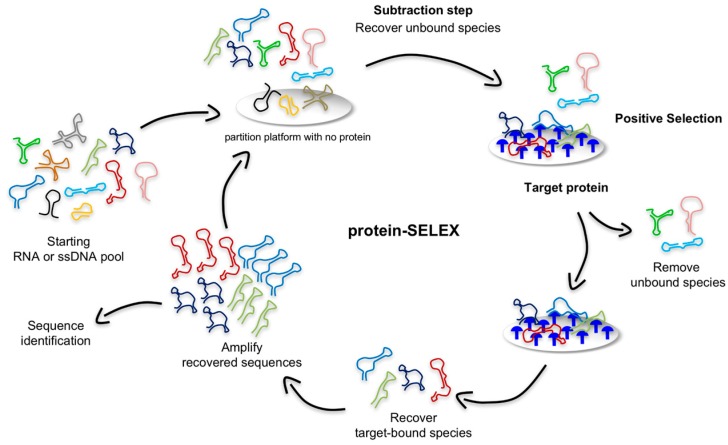
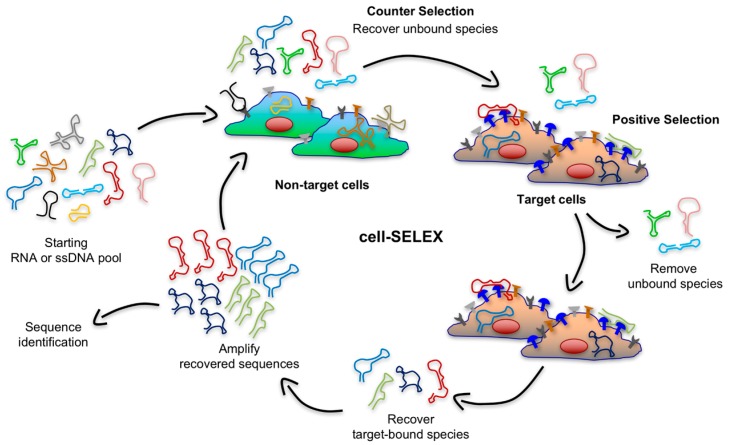
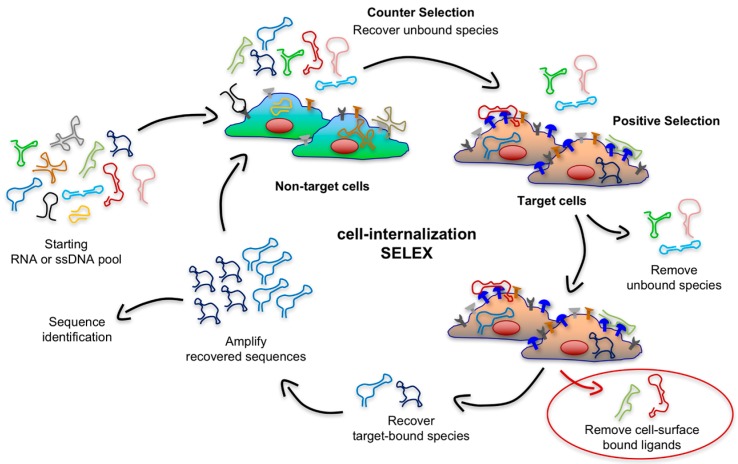
Over the past decades there have been exciting and rapid developments of highly specific molecules to bind cancer antigens that are overexpressed on the surfaces of malignant cells. Nanomedicine aims to exploit these ligands to generate nanoscale platforms for targeted cancer therapy, and to do so with negligible off-target effects. Aptamers are structured nucleic acids that bind to defined molecular targets ranging from small molecules and proteins to whole cells or viruses. They are selected through an iterative process of amplification and enrichment called SELEX (systematic evolution of ligands by exponential enrichment), in which a combinatorial oligonucleotide library is exposed to the target of interest for several repetitive rounds. Nucleic acid ligands able to bind and internalize into malignant cells have been extensively used as tools for targeted delivery of therapeutic payloads both in vitro and in vivo. However, current cell targeting aptamer platforms suffer from limitations that have slowed their translation to the clinic. This is especially true for applications in which the cargo must reach the cytosol to exert its biological activity, as only a small percentage of the endocytosed cargo is typically able to translocate into the cytosol. Innovative technologies and selection strategies are required to enhance cytoplasmic delivery. In this review, we describe current selection methods used to generate aptamers that target cancer cells, and we highlight some of the factors that affect productive endosomal escape of cargoes. We also give an overview of the most promising strategies utilized to improve and monitor endosomal escape of therapeutic cargoes. The methods we highlight exploit tools and technologies that can potentially be incorporated in the SELEX process. Innovative selection protocols may identify aptamers with extended biological functionalities that allow effective cytosolic translocation of therapeutics. This in turn may facilitate successful translation of these platforms into clinical applications.
在过去几十年中,针对在恶性细胞表面过度表达的癌症抗原,已经开发出了令人兴奋且迅速发展的高特异性分子。纳米医学旨在利用这些配体来生成用于靶向癌症治疗的纳米级平台,并使其脱靶效应可忽略不计。适体是一种结构化核酸,可与从小分子、蛋白质到全细胞或病毒等特定分子靶标结合。它们通过一种称为SELEX(指数富集配体的系统进化)的扩增和富集迭代过程进行筛选,在这个过程中,一个组合寡核苷酸文库会多次重复暴露于感兴趣的靶标。能够结合并内化到恶性细胞中的核酸配体已被广泛用作在体外和体内靶向递送治疗载荷的工具。然而,目前的细胞靶向适体平台存在局限性,这减缓了它们向临床应用的转化。对于那些货物必须到达细胞质溶胶才能发挥其生物学活性的应用来说尤其如此,因为通常只有一小部分内吞的货物能够转运到细胞质溶胶中。需要创新技术和筛选策略来增强细胞质递送。在这篇综述中,我们描述了目前用于生成靶向癌细胞的适体的筛选方法,并强调了一些影响货物有效从内体逃逸的因素。我们还概述了用于改善和监测治疗性货物从内体逃逸的最有前景的策略。我们强调的方法利用了一些工具和技术,这些工具和技术有可能被纳入SELEX过程。创新的筛选方案可能会鉴定出具有扩展生物学功能的适体,从而使治疗药物能够有效地进行胞质转运。这反过来可能会促进这些平台成功转化为临床应用。