Chaston Jessica J, Stewart Alastair Gordon, Christie Mary
Molecular, Structural and Computational Biology Division, The Victor Chang Cardiac Research Institute, Sydney, New South Wales, Australia.
St Vincent's Clinical School, Faculty of Medicine, University of New South Wales, Sydney, New South Wales, Australia.
PLoS One. 2017 Aug 24;12(8):e0183587. doi: 10.1371/journal.pone.0183587. eCollection 2017.
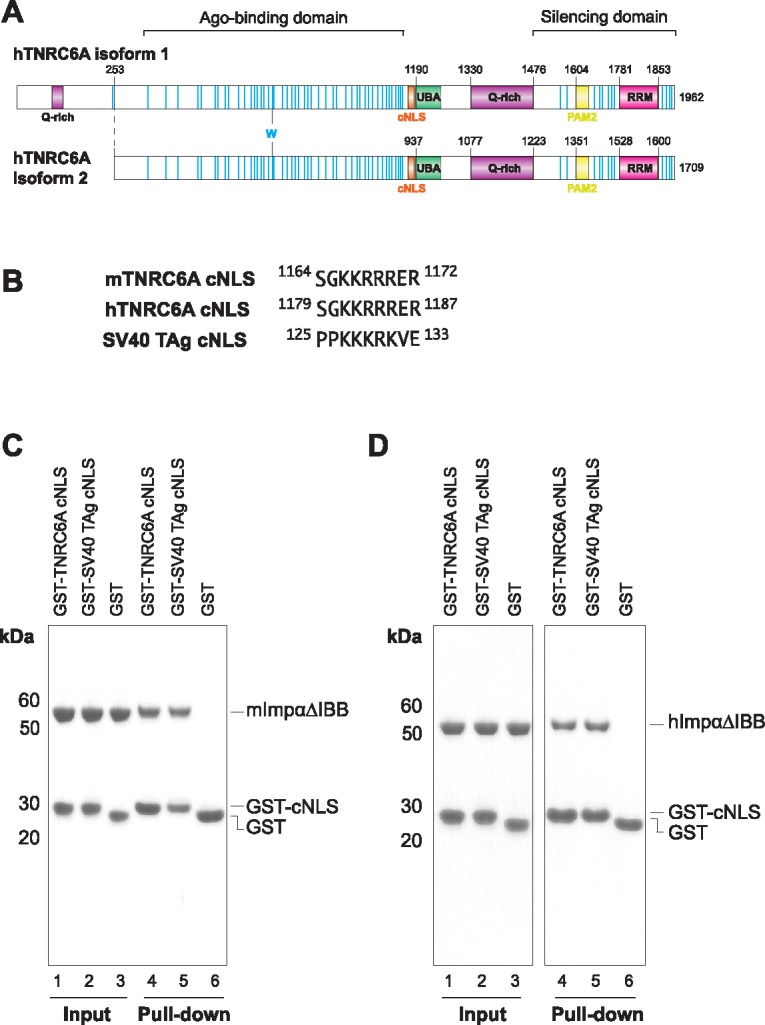
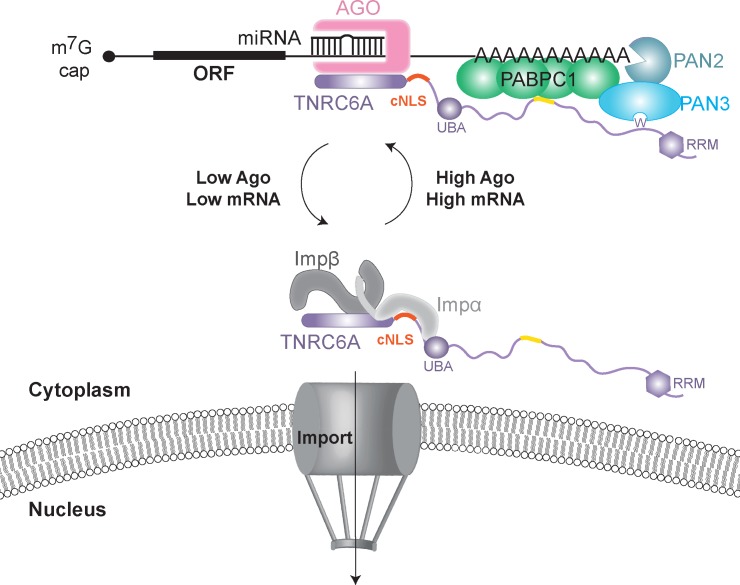
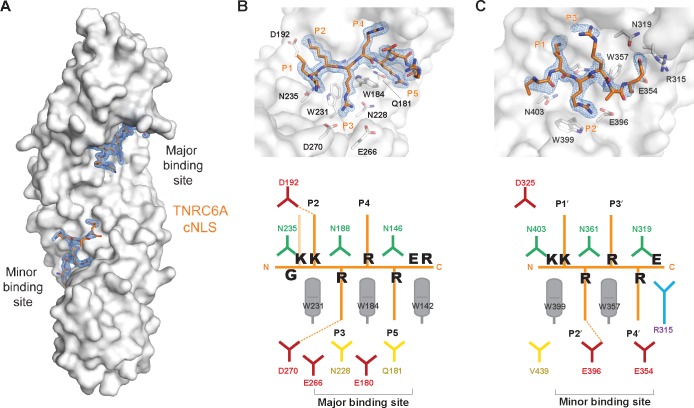
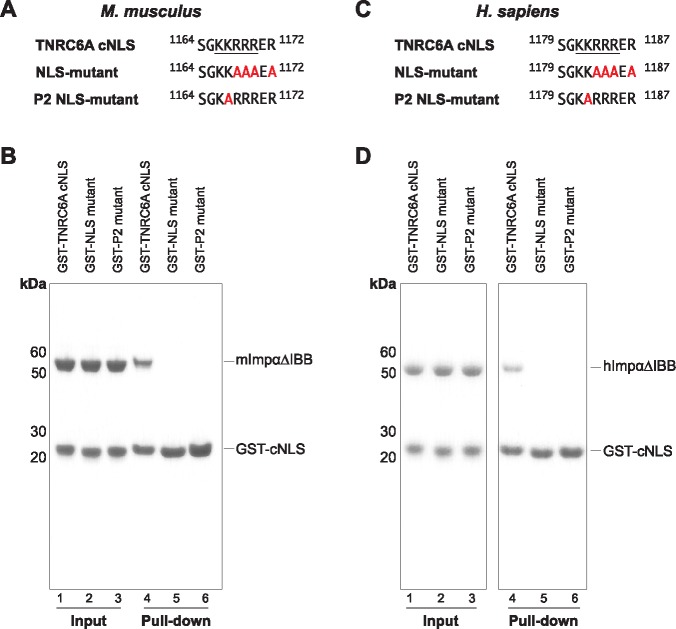
The GW182/TNRC6 family of proteins are central scaffolds that link microRNA-associated Argonaute proteins to the cytoplasmic decay machinery for targeted mRNA degradation processes. Although nuclear roles for the GW182/TNRC6 proteins are unknown, recent reports have demonstrated nucleocytoplasmic shuttling activity that utilises the importin-α and importin-β transport receptors for nuclear translocation. Here we describe the structure of mouse importin-α in complex with the TNRC6A nuclear localisation signal peptide. We further show that the interactions observed between TNRC6A and importin-α are conserved between mouse and human complexes. Our results highlight the ability of monopartite cNLS sequences to maximise contacts at the importin-α major binding site, as well as regions outside the main binding cavities.
GW182/TNRC6 蛋白家族是核心支架,可将与 microRNA 相关的 Argonaute 蛋白与细胞质衰变机制相连,以进行靶向 mRNA 的降解过程。尽管 GW182/TNRC6 蛋白在细胞核中的作用尚不清楚,但最近的报道表明其具有核质穿梭活性,该活性利用 importin-α 和 importin-β 转运受体进行核转运。在此,我们描述了与 TNRC6A 核定位信号肽结合的小鼠 importin-α 的结构。我们进一步表明,TNRC6A 与 importin-α 之间观察到的相互作用在小鼠和人类复合物之间是保守的。我们的结果突出了单部分 cNLS 序列在 importin-α 主要结合位点以及主要结合腔之外区域最大化接触的能力。