St-Pierre Joëlle, Moreau France, Cornick Steve, Quach Jeanie, Begum Sharmin, Aracely Fernandez Luz, Gorman Hayley, Chadee Kris
Department of Microbiology, Immunology and Infectious Diseases, Snyder Institute for Chronic Diseases, University of Calgary, Calgary, Alberta, Canada.
PLoS Pathog. 2017 Aug 24;13(8):e1006592. doi: 10.1371/journal.ppat.1006592. eCollection 2017 Aug.
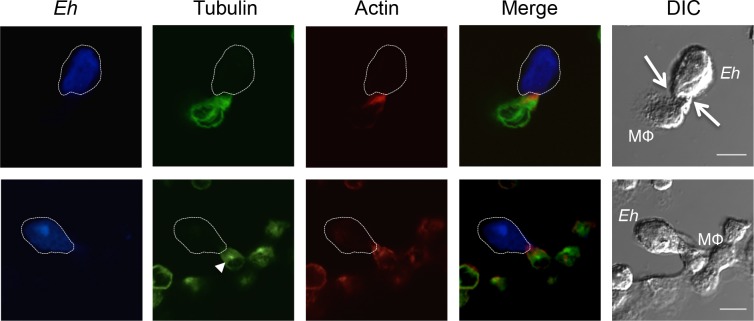
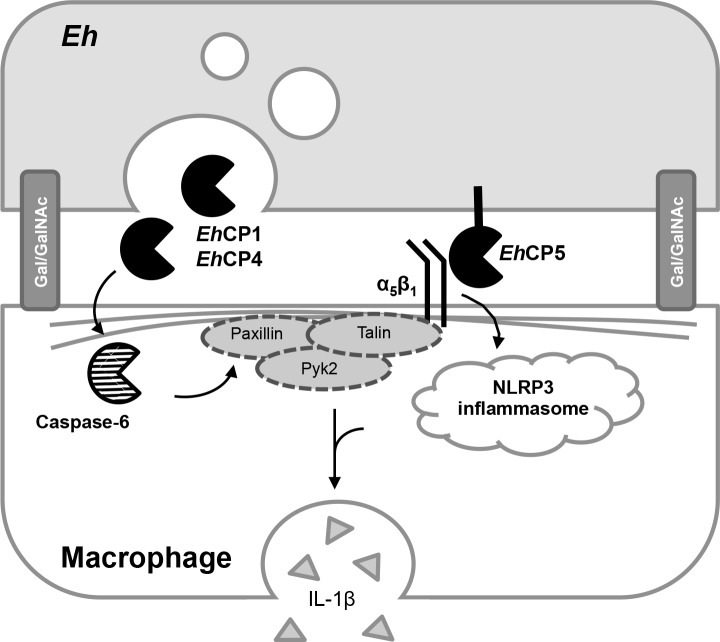
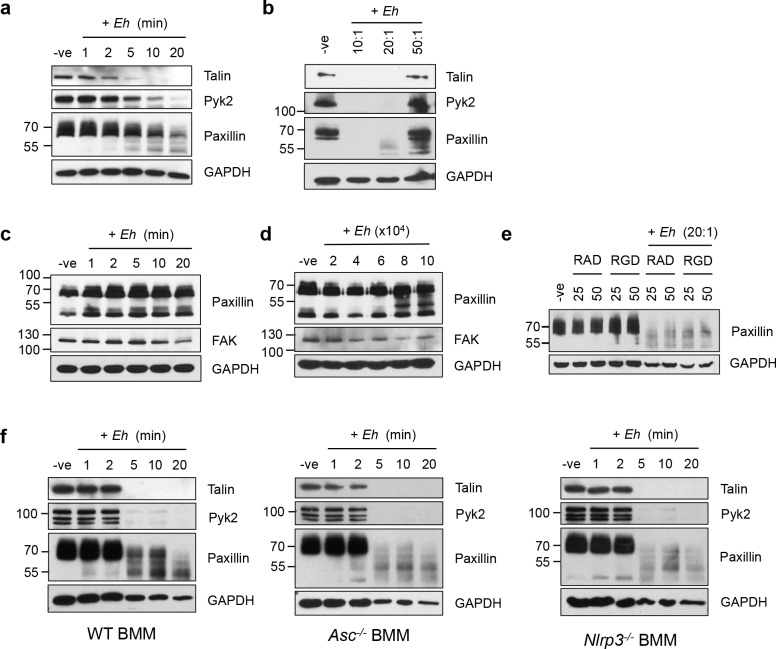
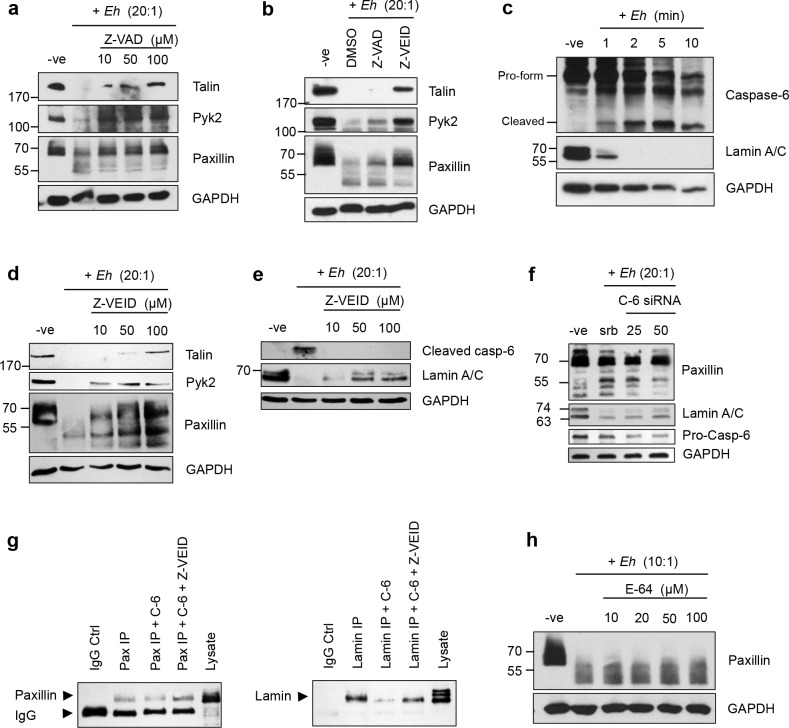
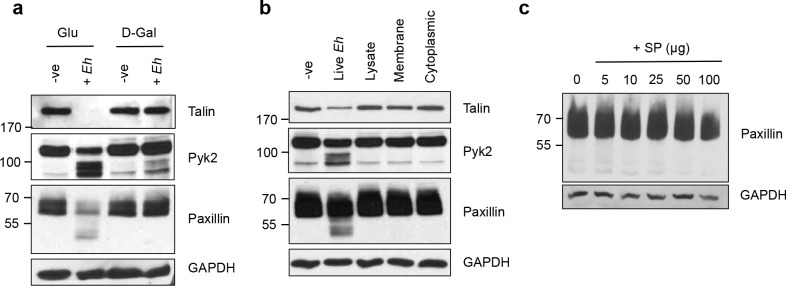
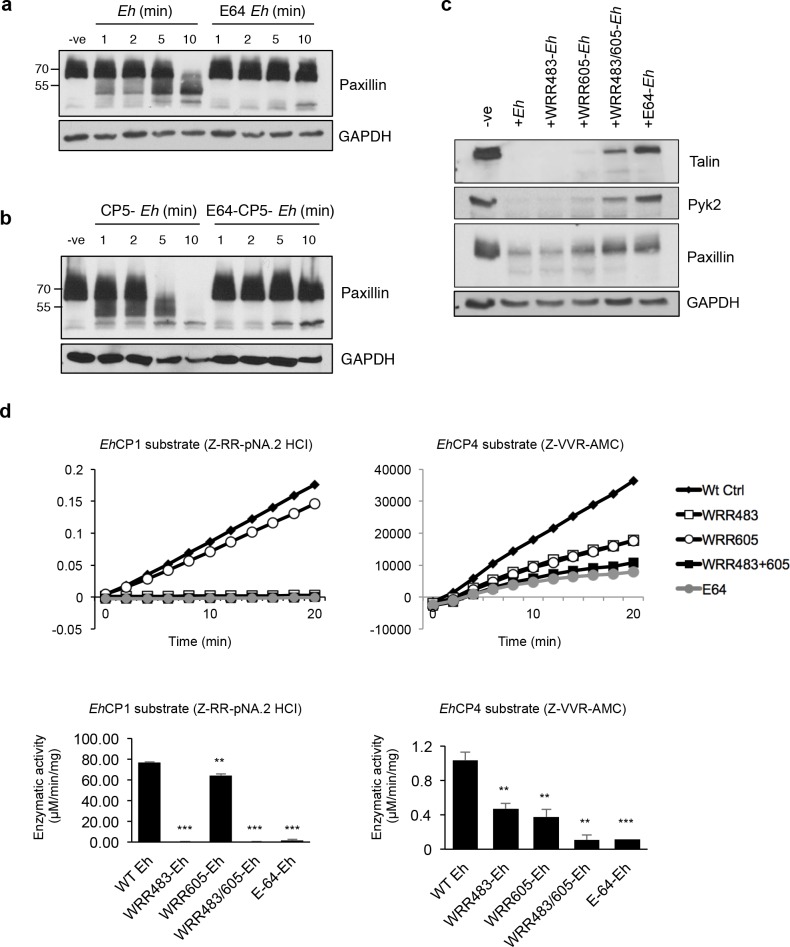
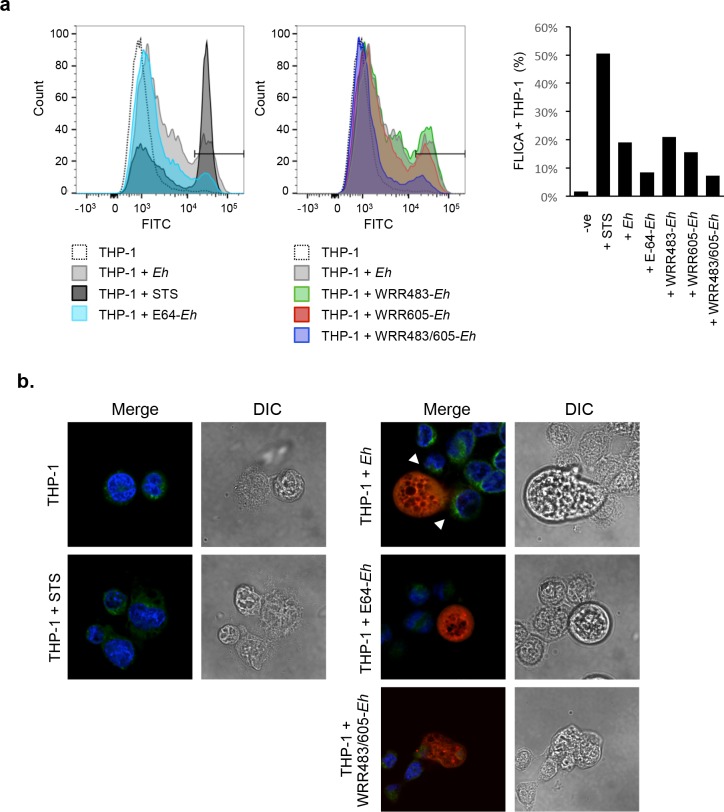
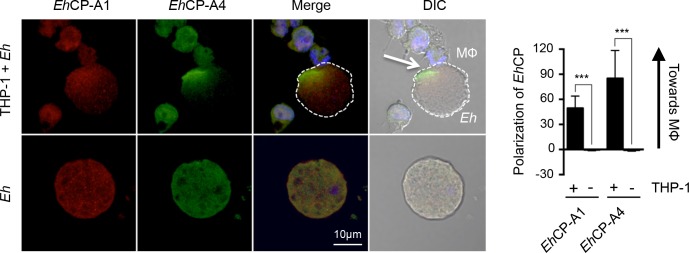
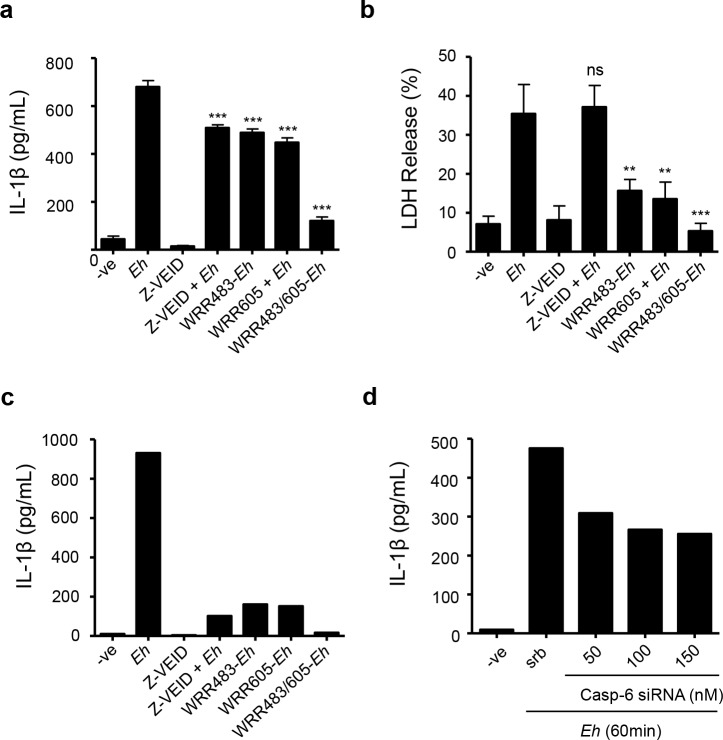
Entamoeba histolytica (Eh) is the causative agent of amebiasis, one of the major causes of dysentery-related morbidity worldwide. Recent studies have underlined the importance of the intercellular junction between Eh and host cells as a determinant in the pathogenesis of amebiasis. Despite the fact that direct contact and ligation between Eh surface Gal-lectin and EhCP-A5 with macrophage α5β1 integrin are absolute requirements for NLRP3 inflammasome activation and IL-1β release, many other undefined molecular events and downstream signaling occur at the interface of Eh and macrophage. In this study, we investigated the molecular events at the intercellular junction that lead to recognition of Eh through modulation of the macrophage cytoskeleton. Upon Eh contact with macrophages key cytoskeletal-associated proteins were rapidly post-translationally modified only with live Eh but not with soluble Eh proteins or fragments. Eh ligation with macrophages rapidly activated caspase-6 dependent cleavage of the cytoskeletal proteins talin, Pyk2 and paxillin and caused robust release of the pro-inflammatory cytokine, IL-1β. Macrophage cytoskeletal cleavages were dependent on Eh cysteine proteinases EhCP-A1 and EhCP-A4 but not EhCP-A5 based on pharmacological blockade of Eh enzyme inhibitors and EhCP-A5 deficient parasites. These results unravel a model where the intercellular junction between macrophages and Eh form an area of highly interacting proteins that implicate the macrophage cytoskeleton as a sensor for Eh contact that leads downstream to subsequent inflammatory immune responses.
溶组织内阿米巴(Eh)是阿米巴病的病原体,阿米巴病是全球痢疾相关发病的主要原因之一。最近的研究强调了Eh与宿主细胞之间的细胞间连接作为阿米巴病发病机制决定因素的重要性。尽管Eh表面半乳糖凝集素和EhCP - A5与巨噬细胞α5β1整合素之间的直接接触和连接是NLRP3炎性小体激活和IL - 1β释放的绝对必要条件,但在Eh与巨噬细胞的界面还发生许多其他未定义的分子事件和下游信号传导。在本研究中,我们研究了细胞间连接处通过调节巨噬细胞细胞骨架导致识别Eh的分子事件。当Eh与巨噬细胞接触时,关键的细胞骨架相关蛋白仅在活的Eh作用下发生快速翻译后修饰,而在可溶性Eh蛋白或片段作用下则不会。Eh与巨噬细胞的连接迅速激活了依赖半胱天冬酶 - 6的细胞骨架蛋白踝蛋白、黏着斑激酶2和桩蛋白的裂解,并导致促炎细胞因子IL - 1β的大量释放。基于Eh酶抑制剂的药理学阻断和EhCP - A5缺陷型寄生虫,巨噬细胞细胞骨架的裂解依赖于Eh半胱氨酸蛋白酶EhCP - A1和EhCP - A4,而不依赖于EhCP - A5。这些结果揭示了一个模型,其中巨噬细胞与Eh之间的细胞间连接形成了一个高度相互作用蛋白的区域,这表明巨噬细胞细胞骨架作为Eh接触的传感器,下游导致随后炎症免疫反应。