Department of Physics, Virginia Commonwealth University, Richmond, VA, 23284, USA.
Nitride Crystals, Inc, 181E Industry Ct., Ste. B, Deer Park, NY, 11729, USA.
Sci Rep. 2017 Aug 24;7(1):9297. doi: 10.1038/s41598-017-08570-1.
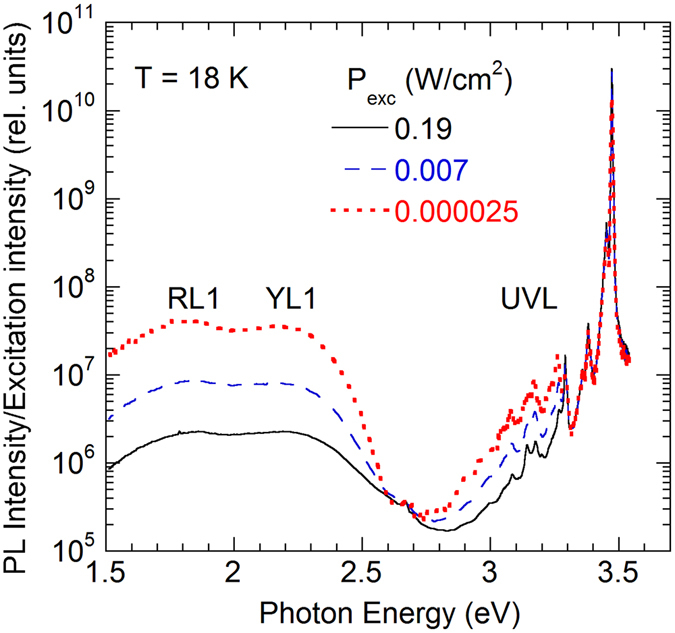
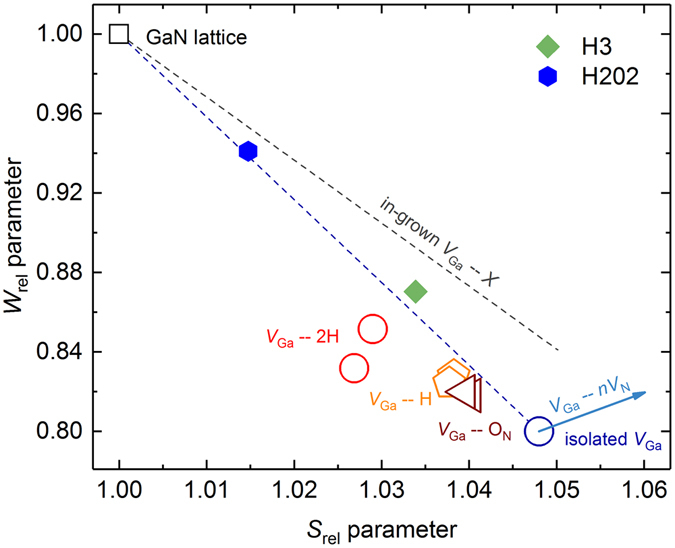
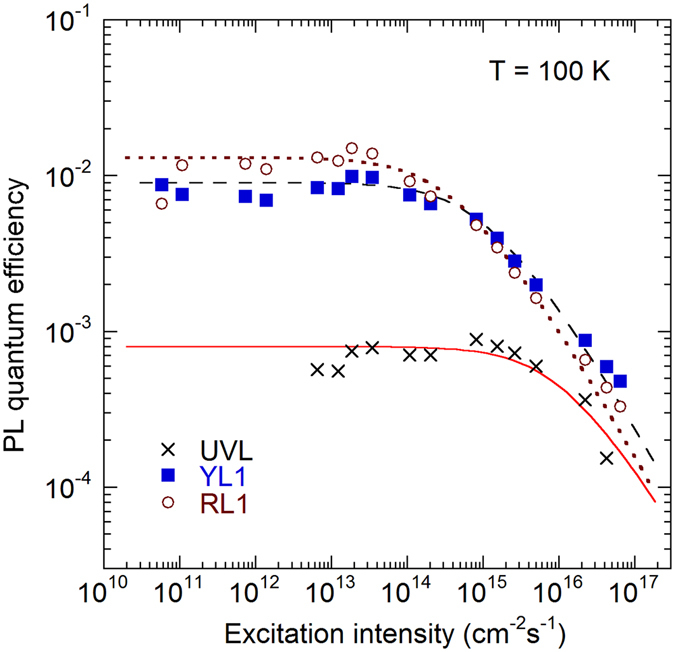
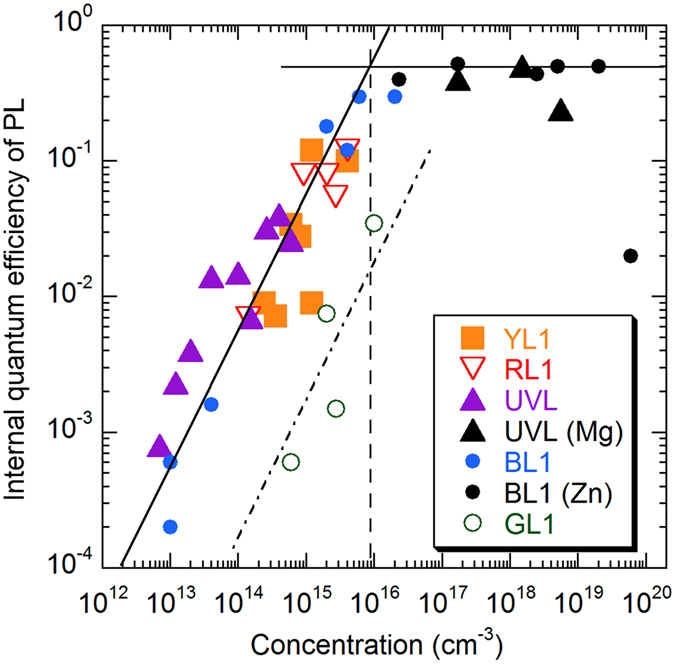
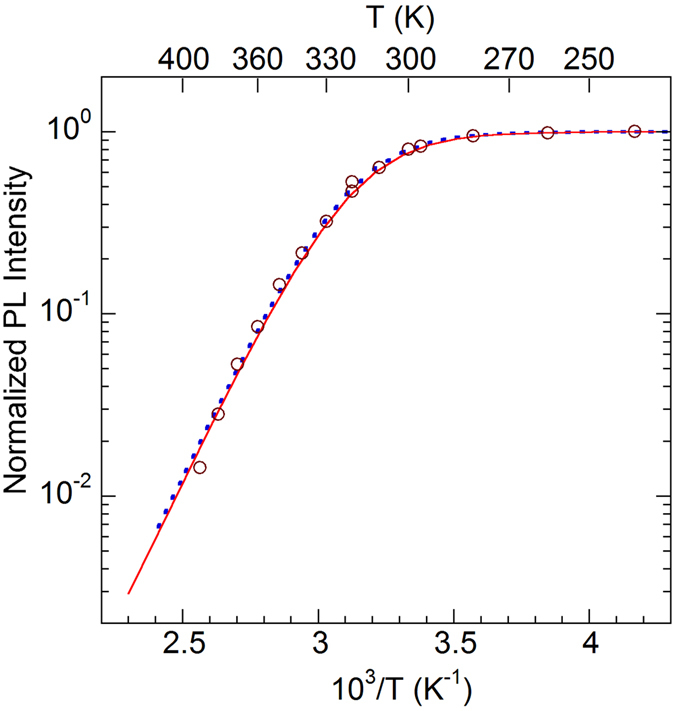
Photoluminescence (PL) was used to estimate the concentration of point defects in GaN. The results are compared with data from positron annihilation spectroscopy (PAS), secondary ion mass spectrometry (SIMS), and deep level transient spectroscopy (DLTS). Defect-related PL intensity in undoped GaN grown by hydride vapor phase epitaxy increases linearly with the concentration of related defects only up to 10 cm. At higher concentrations, the PL intensity associated with individual defects tends to saturate, and accordingly, does not directly correlate with the concentration of defects. For this reason, SIMS analysis, with relatively high detection limits, may not be helpful for classifying unidentified point defects in GaN. Additionally, we highlight challenges in correlating defects identified by PL with those by PAS and DLTS methods.
光致发光(PL)被用于估计 GaN 中点缺陷的浓度。结果与正电子湮没谱(PAS)、二次离子质谱(SIMS)和深能级瞬态谱(DLTS)的数据进行了比较。在通过氢化物气相外延生长的未掺杂 GaN 中,与缺陷相关的 PL 强度与相关缺陷的浓度仅在 10 cm 范围内呈线性增加。在更高的浓度下,与单个缺陷相关的 PL 强度趋于饱和,因此,不会直接与缺陷浓度相关。因此,具有相对较高检测限的 SIMS 分析对于在 GaN 中分类未识别的点缺陷可能没有帮助。此外,我们强调了将通过 PL 方法识别的缺陷与 PAS 和 DLTS 方法识别的缺陷相关联所面临的挑战。