Laboratory of Tumor Biology, Guangdong Provincial Hospital of Chinese Medicine, The Second Clinical Medical Collage, Guangzhou University of Chinese Medicine, Guangzhou, Guangdong Province, China.
Department of Medical Oncology, Guangdong Provincial Hospital of Chinese Medicine, The Second Clinical Medical Collage, Guangzhou University of Chinese Medicine, Guangzhou, Guangdong Province, China.
J Cell Mol Med. 2018 Jan;22(1):600-612. doi: 10.1111/jcmm.13347. Epub 2017 Aug 25.
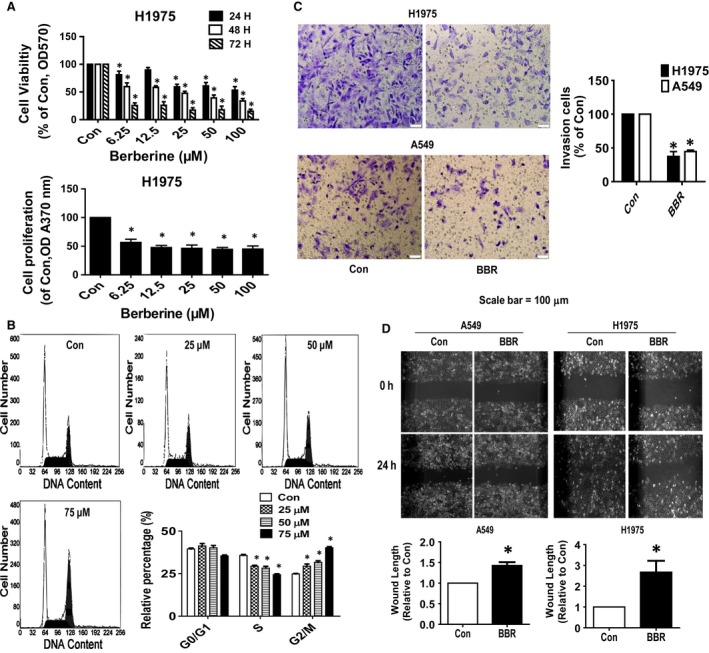
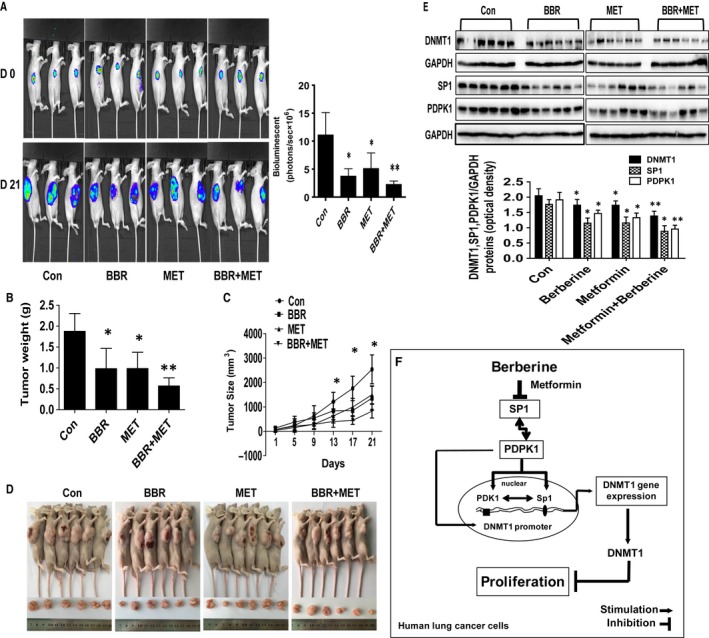
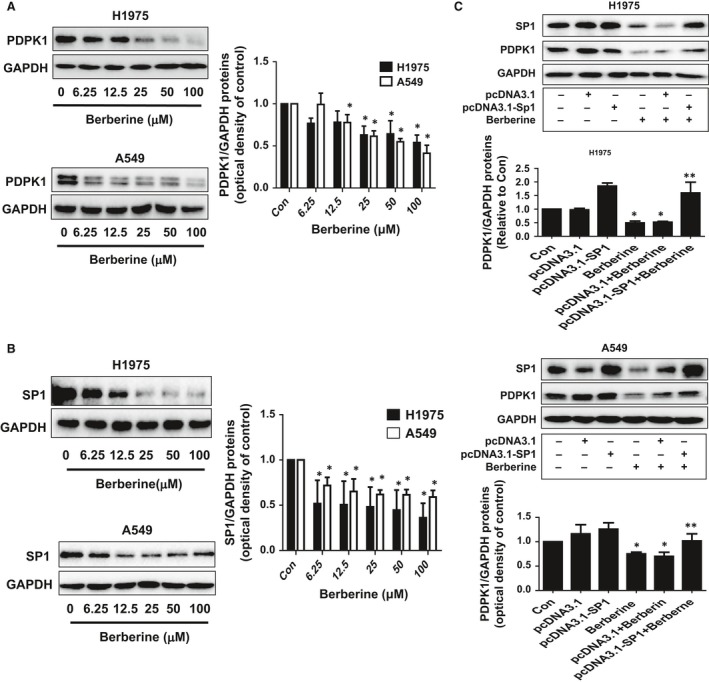
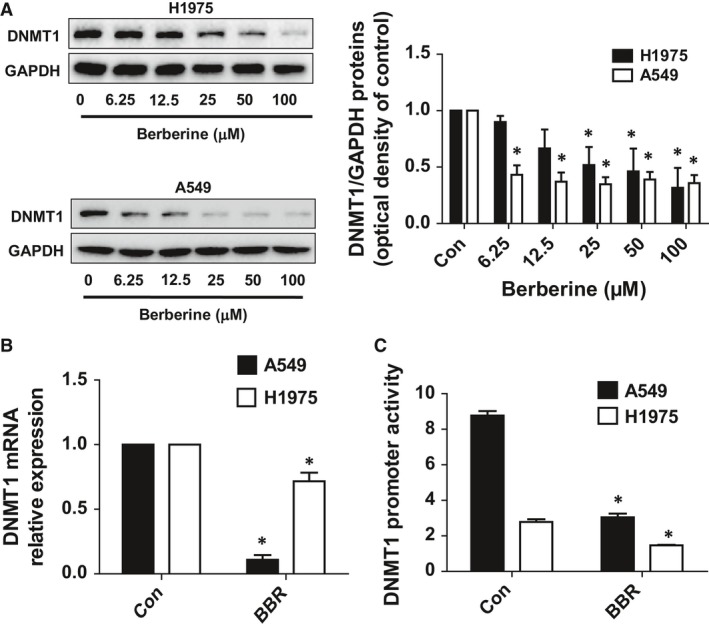
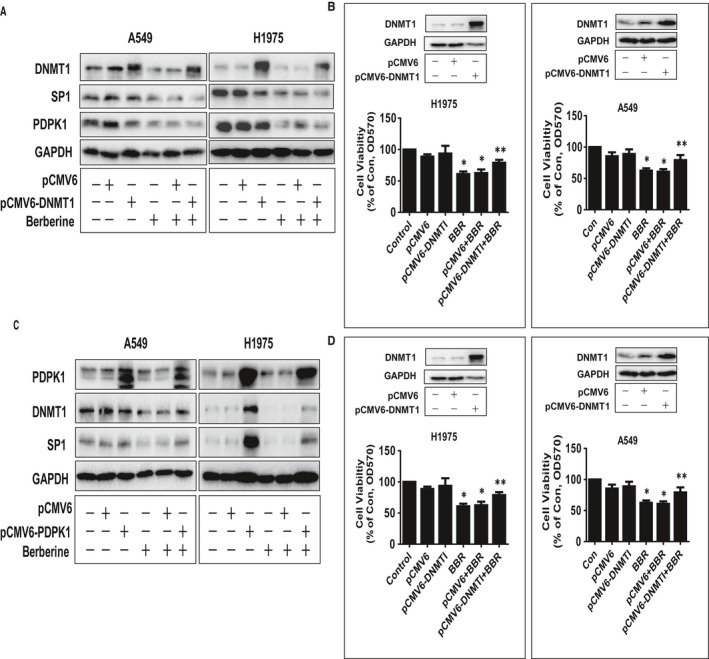
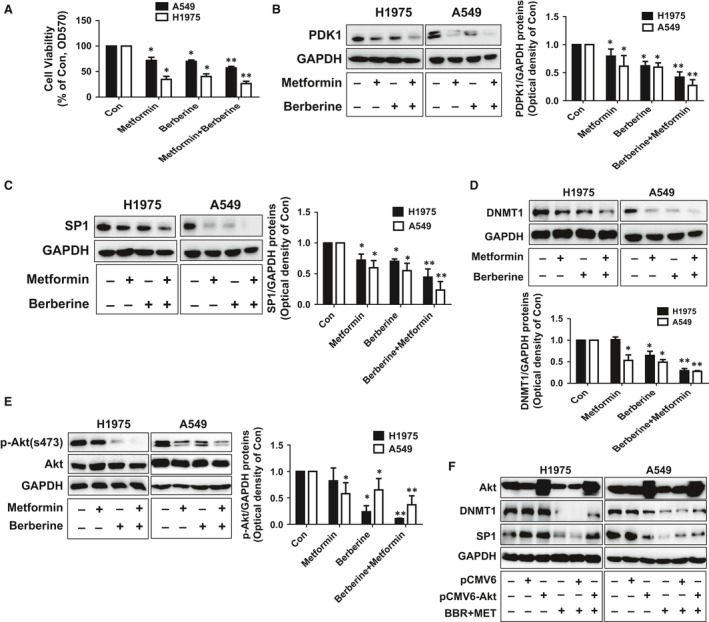
Berberine (BBR), one of active alkaloid found in the rhizome, exhibited anti-cancer properties. We have showed that BBR inhibited growth of non-small cell lung cancer (NSCLC) cells through mitogen-activated protein kinase (MAPK)-mediated increase in forkhead box O3a (FOXO3a). However, the in-depth mechanism underlying the anti-tumor effects still remained to be elucidated. Herein, we further confirmed that BBR not only induced cell cycle arrest, but also reduced migration and invasion of NSCLC cells. Mechanistically, we observed that BBR reduced 3-phosphoinositide-dependent protein kinase-1 (PDPK1) and transcription factor SP1 protein expressions. Exogenously expressed SP1 overcame BBR-inhibited PDPK1 expression. Moreover, BBR inhibited DNA methyltransferase 1 (DNMT1) gene expression and overexpressed DNMT1 resisted BBR-inhibited cell growth. Intriguingly, overexpressed PDPK1 antagonized BBR-inhibited SP1 and DNMT1 expressions. Finally, metformin enhanced the effects of BBR both in vitro and in vivo. Collectively, we observe that BBR inhibits proliferation of NSCLC cells through inhibition of SP1 and PDPK1; this results in a reduction of DNMT1 expression. The interplay of PDPK1 and SP1 contributes to the inhibition of DNMT1 in response to BBR. In addition, there is a synergy of BBR and metformin. This study uncovers a new mechanism of BBR in combination with metformin for NSCLC-associated therapy.
小檗碱(BBR)是从根茎中提取的一种活性生物碱,具有抗癌作用。我们已经表明,BBR 通过丝裂原激活的蛋白激酶(MAPK)介导的叉头框 O3a(FOXO3a)增加来抑制非小细胞肺癌(NSCLC)细胞的生长。然而,其抗肿瘤作用的深入机制仍有待阐明。在此,我们进一步证实 BBR 不仅诱导细胞周期停滞,而且还降低 NSCLC 细胞的迁移和侵袭。从机制上讲,我们观察到 BBR 降低了 3-磷酸肌醇依赖性蛋白激酶-1(PDPK1)和转录因子 SP1 的蛋白表达。外源性表达的 SP1 克服了 BBR 抑制的 PDPK1 表达。此外,BBR 抑制 DNA 甲基转移酶 1(DNMT1)基因表达,过表达的 DNMT1 抵抗 BBR 抑制细胞生长。有趣的是,过表达的 PDPK1 拮抗了 BBR 抑制的 SP1 和 DNMT1 的表达。最后,二甲双胍增强了 BBR 在体外和体内的作用。总之,我们观察到 BBR 通过抑制 SP1 和 PDPK1 抑制 NSCLC 细胞的增殖,从而降低 DNMT1 的表达。PDPK1 和 SP1 的相互作用有助于抑制 BBR 对 DNMT1 的作用。此外,BBR 和二甲双胍之间存在协同作用。这项研究揭示了 BBR 与二甲双胍联合用于 NSCLC 相关治疗的新机制。