Academy of Integrative Medicine, Fujian University of Traditional Chinese Medicine, Fuzhou, Fujian 350122, P.R. China.
Department of Acupuncture and Moxibustion, The Second Affiliated People's Hospital of Fujian University of Traditional Chinese Medicine, Fuzhou, Fujian 350003, P.R. China.
Mol Med Rep. 2017 Nov;16(5):5807-5814. doi: 10.3892/mmr.2017.7366. Epub 2017 Aug 28.
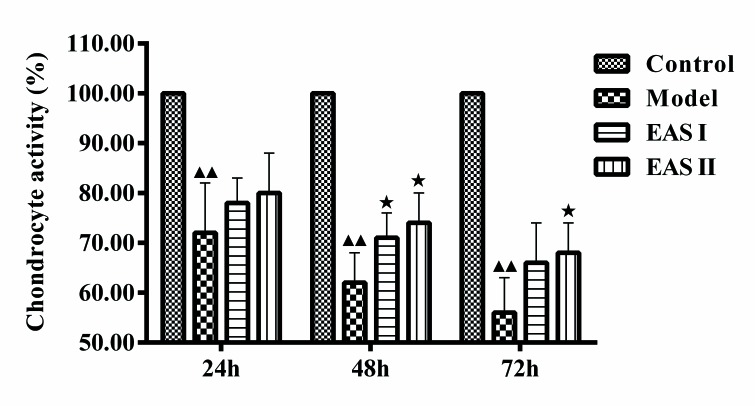
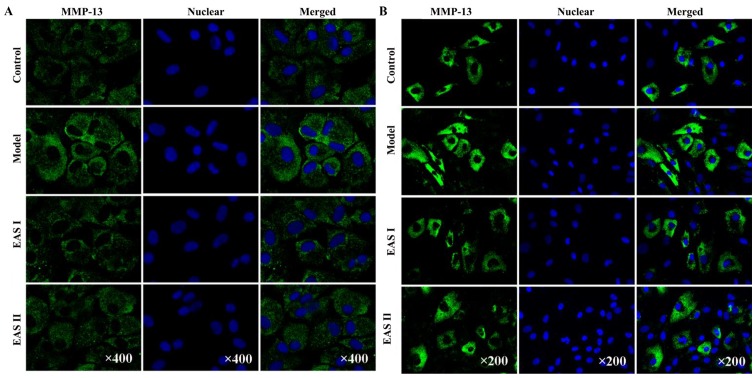
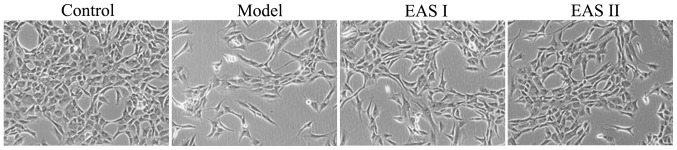
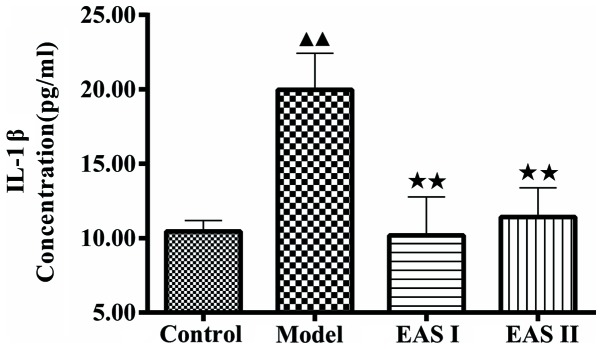
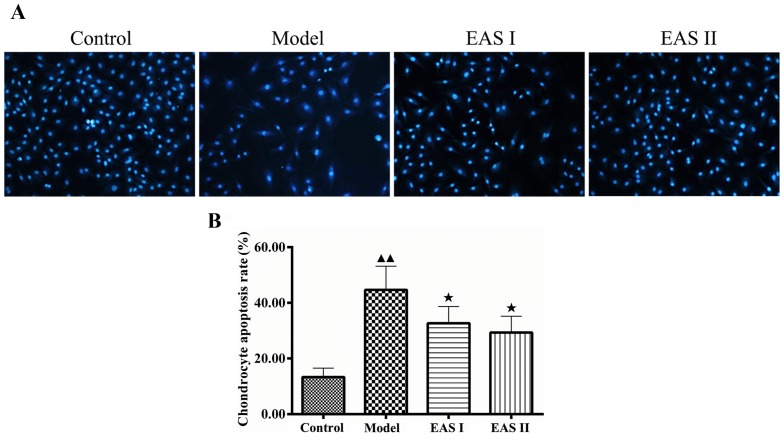
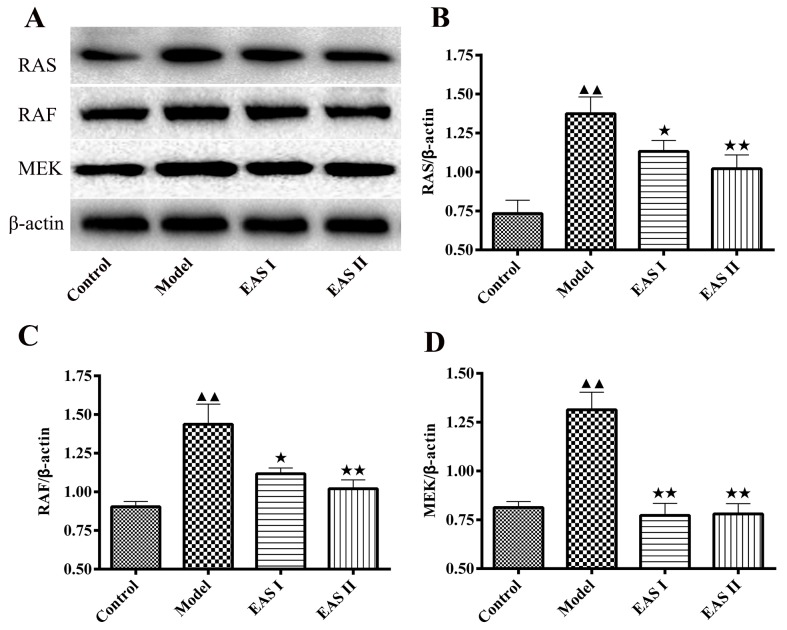
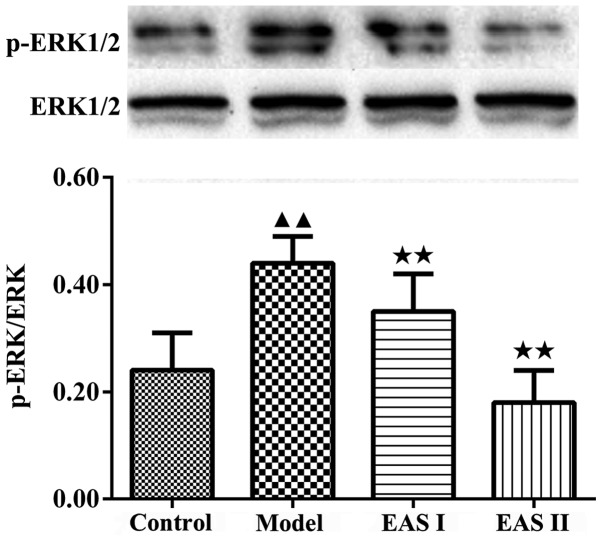
The Ras‑Raf‑mitogen‑activated protein kinase kinase (MEK)1/2‑extracellular signal‑regulated kinase (ERK)1/2 signaling pathway contributes to the release of chondral matrix‑degrading enzymes and accelerates the degradation of articular cartilage. Electroacupuncture (EA) treatment has been widely used for the treatment of osteoarthritis (OA); however, the mechanism underlying the effects of EA on OA remains unclear. Therefore, the present study evaluated the anti‑inflammatory effects and potential underlying mechanisms of EA serum (EAS) on tumor necrosis factor (TNF)‑α‑mediated chondrocyte inflammation. A total of 30 Sprague Dawley rats were randomly divided into three groups: The blank group; experimental group I, which received 15 min of EA treatment; and experimental group II, which received 30 min of EA treatment. Subsequently, serum samples were obtained. Chondrocytes were isolated from the knee cartilage of Sprague Dawley rats, and were identified using collagen type II immunohistochemistry. TNF‑α‑treated chondrocytes were used as a cell model, and subsequently the cells were treated with EAS from each group for various durations. The results demonstrated that EAS treatment significantly promoted the viability and inhibited the apoptosis of TNF‑α‑treated chondrocytes. In addition, interleukin (IL)‑1β concentration was significantly increased in the model group compared with in the control group, whereas EAS significantly reduced IL‑1β concentration in TNF‑α‑treated chondrocytes. Furthermore, the protein expression levels of Ras, Raf and MEK1/2 were reduced in the EAS groups compared with in the model group. EAS also significantly inhibited the phosphorylation of ERK1/2, and the expression of downstream regulators matrix metalloproteinase (MMP)‑3 and MMP‑13. In conclusion, these results indicated that EAS may inhibit TNF‑α‑mediated chondrocyte inflammation via the Ras‑Raf‑MEK1/2‑ERK1/2 signaling pathway in vitro, thus suggesting that EAS may be considered a potential therapeutic strategy for the treatment of OA.
Ras-Raf-丝裂原活化蛋白激酶激酶 (MEK)1/2-细胞外信号调节激酶 (ERK)1/2 信号通路有助于软骨基质降解酶的释放,并加速关节软骨的降解。电针 (EA) 治疗已广泛用于治疗骨关节炎 (OA);然而,EA 对 OA 的作用机制尚不清楚。因此,本研究评估了 EA 血清 (EAS) 对肿瘤坏死因子 (TNF)-α 介导的软骨细胞炎症的抗炎作用及其潜在机制。总共 30 只 Sprague Dawley 大鼠随机分为三组:空白组;EA 治疗 15 分钟的实验组 I;EA 治疗 30 分钟的实验组 II。随后,采集血清样本。从 Sprague Dawley 大鼠的膝关节软骨中分离软骨细胞,并通过 II 型胶原免疫组织化学进行鉴定。将 TNF-α 处理的软骨细胞用作细胞模型,然后用来自每组的 EAS 处理不同时间的细胞。结果表明,EAS 处理可显著促进 TNF-α 处理的软骨细胞的活力并抑制其凋亡。此外,与对照组相比,模型组中白细胞介素 (IL)-1β 浓度显著增加,而 EAS 可显著降低 TNF-α 处理的软骨细胞中 IL-1β 浓度。此外,EAS 组 Ras、Raf 和 MEK1/2 的蛋白表达水平均低于模型组。EAS 还显著抑制 ERK1/2 的磷酸化,以及下游调节因子基质金属蛋白酶 (MMP)-3 和 MMP-13 的表达。综上所述,这些结果表明,EAS 可能通过 Ras-Raf-MEK1/2-ERK1/2 信号通路在体外抑制 TNF-α 介导的软骨细胞炎症,因此 EAS 可能被认为是治疗 OA 的一种潜在治疗策略。