Li Meng, Yang Jingyu, Zhou Wenlong, Ren Yong, Wang Xiaoxuan, Chen Huiping, Zhang Jingyuan, Chen Junli, Sun Yuhong, Cui Lijuan, Liu Xing, Wang Lihui, Wu Chunfu
Department of Pharmacology, Shenyang Pharmaceutical University, Shenyang 110016, China.
Benxi Institute of Pharmaceutical Research, Shenyang Pharmaceutical University, Shenyang 110016, China.
Br J Cancer. 2017 Sep 26;117(7):974-983. doi: 10.1038/bjc.2017.292. Epub 2017 Aug 29.
Tyrosine kinase inhibitors (TKIs) have demonstrated clinical benefits in the treatment of several tumour types. However, the emergence of TKI resistance restricts the therapeutic effect. This study uses non-small cell lung cancer (NSCLC) to explore the mechanisms contributing to TKI resistance in tumours.
Biological phenotypes and RNA microarray expression data were analysed in NSCLC cells with and without TKI pretreatment. Specific inhibitors and siRNAs were used to validate the direct involvement of an AKT/FOXM1/STMN1 pathway in TKI resistance. Patients' tissues were analysed to explore the clinical importance of FOXM1 and STMN1.
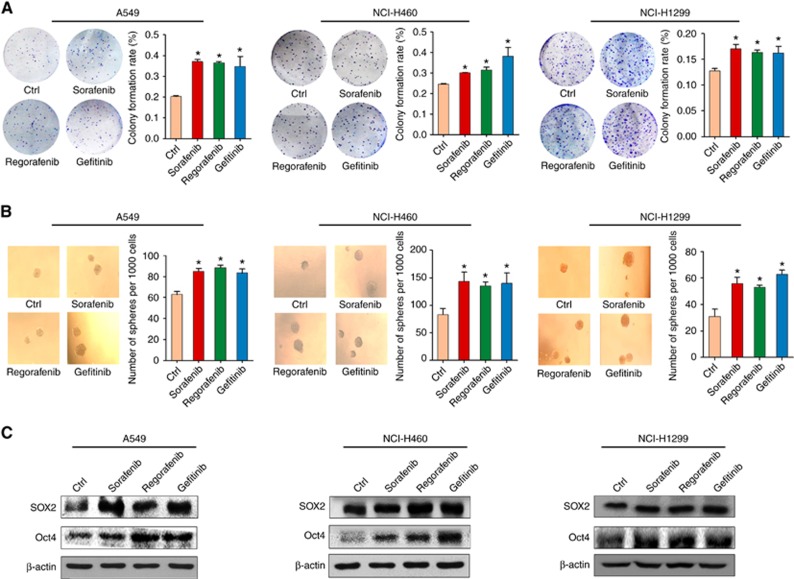
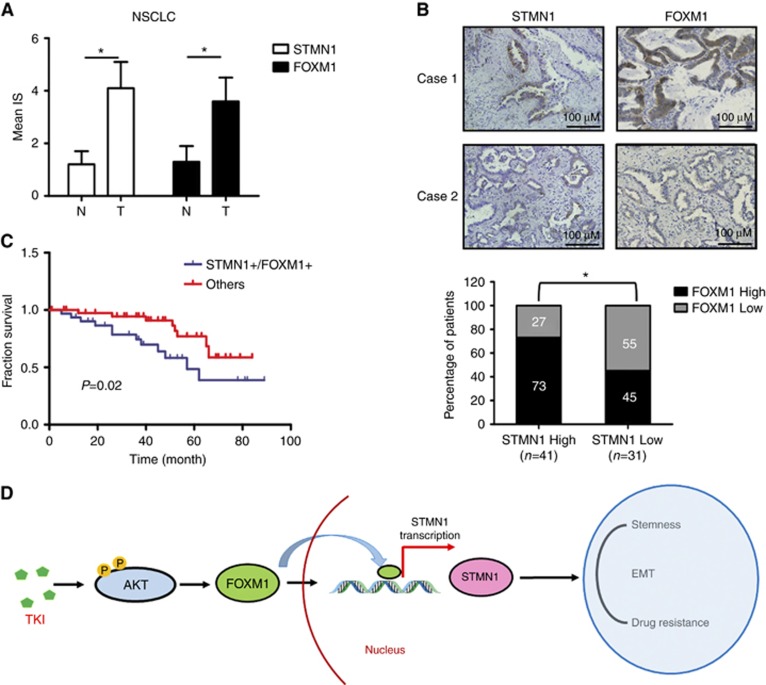
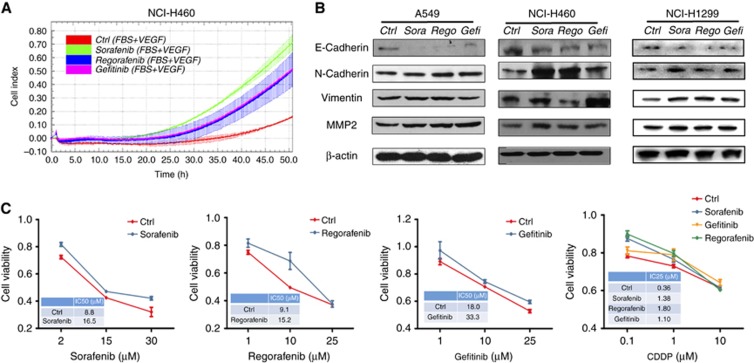
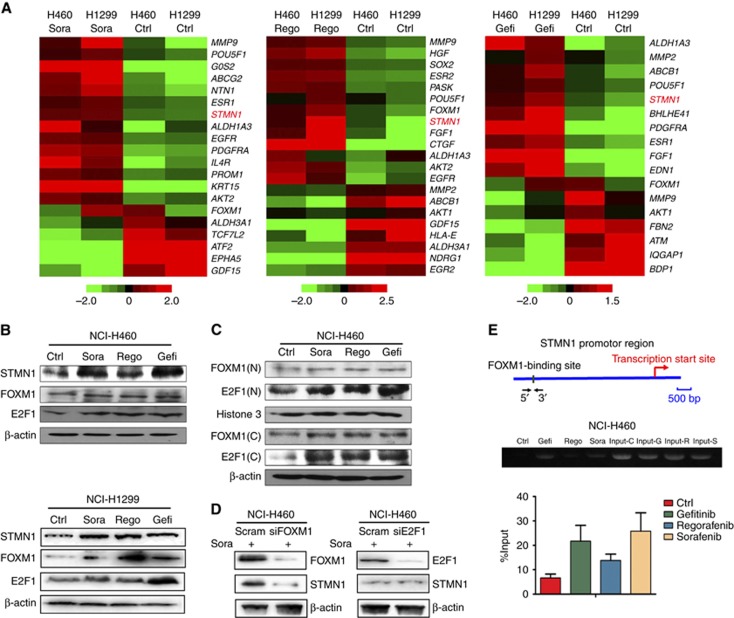
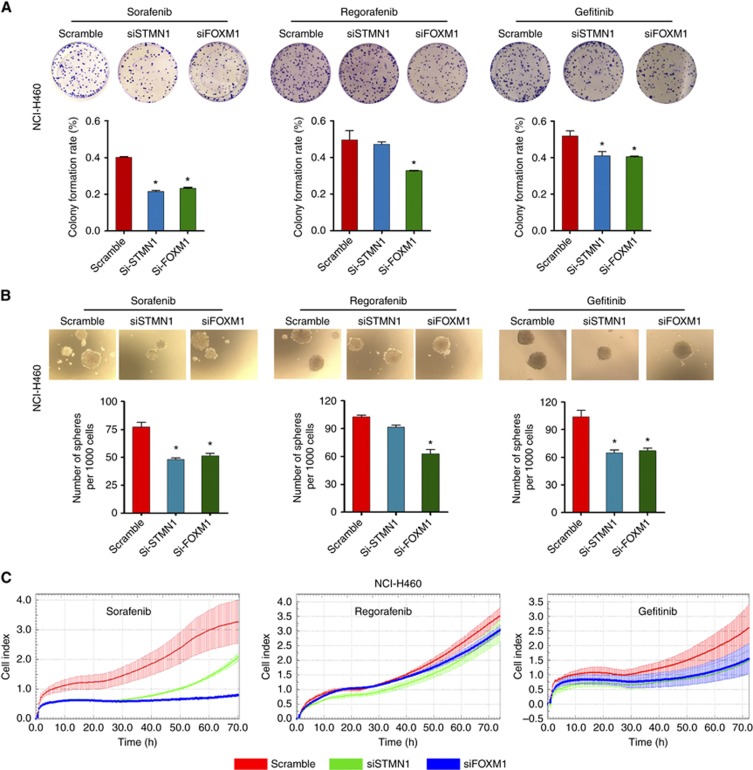
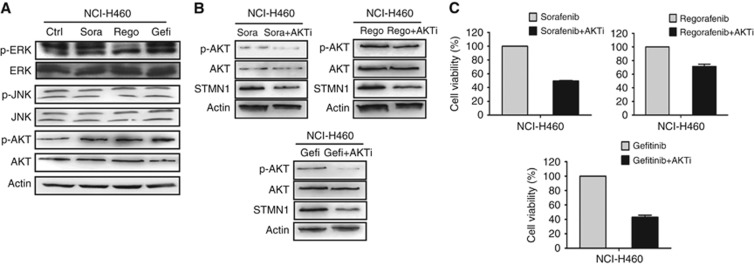
In vitro and in vivo studies showed that TKIs induced the enrichment of cancer stem cells (CSC), promoted epithelial to mesenchymal transition (EMT), and conferred multidrug resistance on NSCLC cells in a cell type- and TKI class-dependent manner. Mechanistically, TKIs activated an AKT/FOXM1/STMN1 pathway. The crucial role of this pathway in TKI-induced enrichment of CSC and drug resistance was verified by silencing FOXM1 and STMN1 or blocking the AKT pathway. Additionally, overexpression of STMN1 was associated with upregulation of FOXM1 in advanced NSCLC patients, and STMN1/FOXM1 upregulation predicted a poor outcome.
Our findings elucidate an additional common mechanism for TKI resistance and provide a promising therapeutic target for reversing TKI resistance in NSCLC.
酪氨酸激酶抑制剂(TKIs)已在多种肿瘤类型的治疗中显示出临床益处。然而,TKI耐药性的出现限制了治疗效果。本研究使用非小细胞肺癌(NSCLC)来探索肿瘤中TKI耐药的机制。
对经过和未经过TKI预处理的NSCLC细胞进行生物学表型和RNA微阵列表达数据分析。使用特异性抑制剂和小干扰RNA(siRNAs)来验证AKT/FOXM1/STMN1通路在TKI耐药中的直接作用。对患者组织进行分析以探究FOXM1和STMN1的临床重要性。
体外和体内研究表明,TKIs以细胞类型和TKI类别依赖的方式诱导癌症干细胞(CSC)富集,促进上皮-间质转化(EMT),并赋予NSCLC细胞多药耐药性。机制上,TKIs激活了AKT/FOXM1/STMN1通路。通过沉默FOXM1和STMN1或阻断AKT通路,验证了该通路在TKI诱导的CSC富集和耐药中的关键作用。此外,在晚期NSCLC患者中,STMN1的过表达与FOXM1的上调相关,且STMN1/FOXM1上调预示着不良预后。
我们的研究结果阐明了TKI耐药的另一种常见机制,并为逆转NSCLC中的TKI耐药提供了一个有前景的治疗靶点。