Milrot Elad, Shimoni Eyal, Dadosh Tali, Rechav Katya, Unger Tamar, Van Etten James L, Minsky Abraham
Department of Structural Biology, The Weizmann Institute of Science, Rehovot, Israel.
Chemical Research Support, The Weizmann Institute of Science, Rehovot, Israel.
PLoS Pathog. 2017 Aug 29;13(8):e1006562. doi: 10.1371/journal.ppat.1006562. eCollection 2017 Aug.
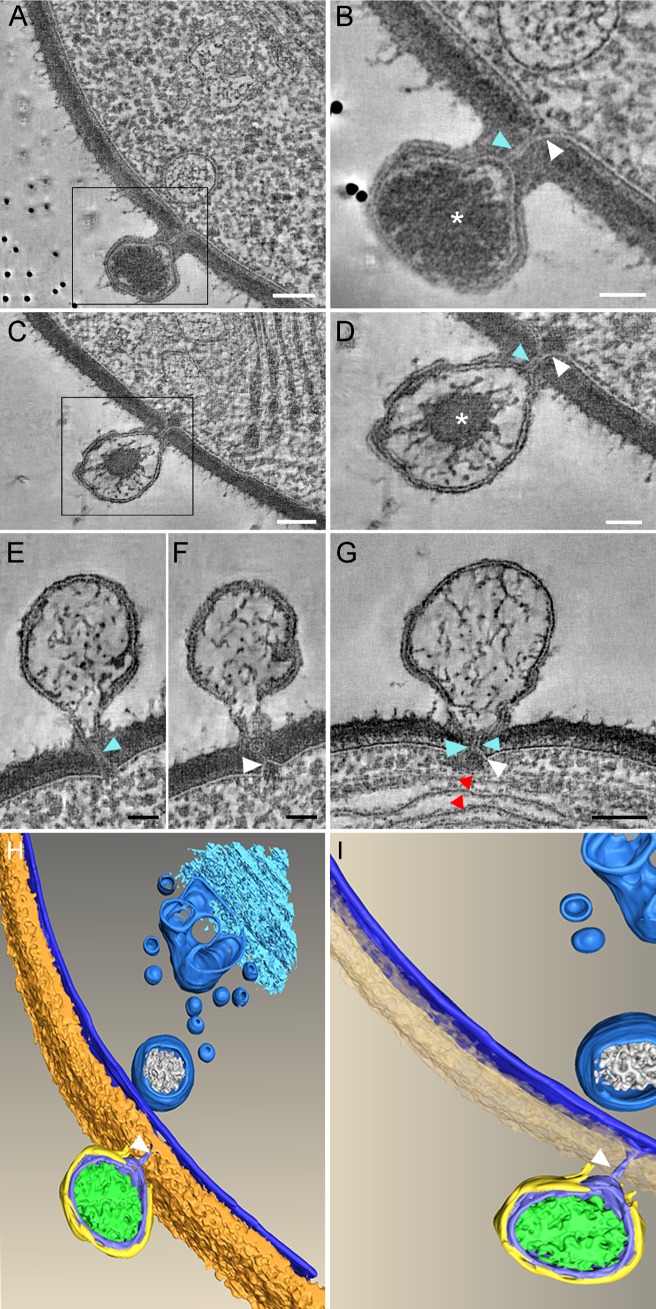
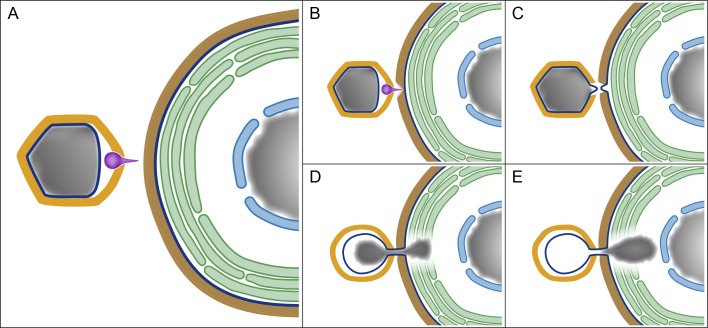
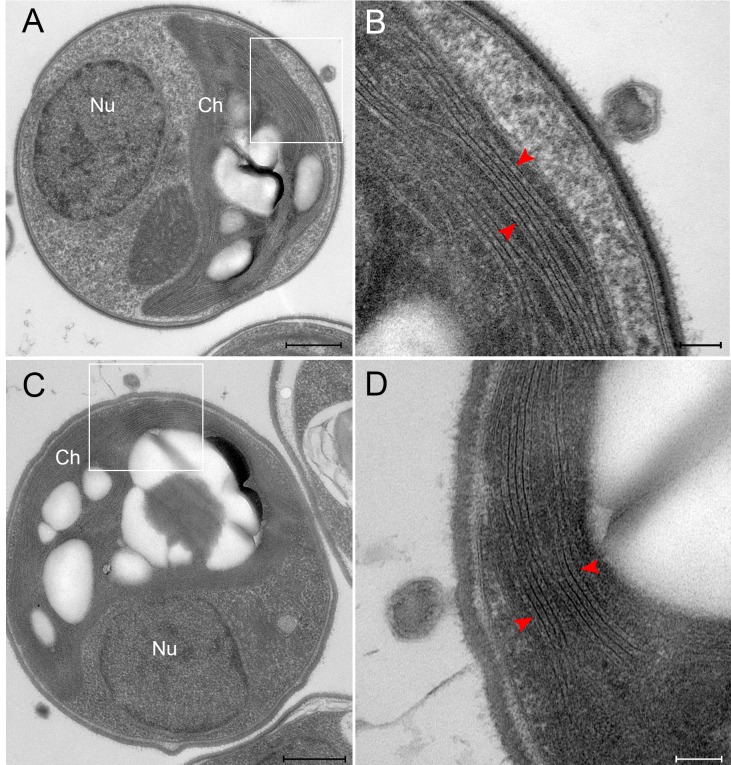
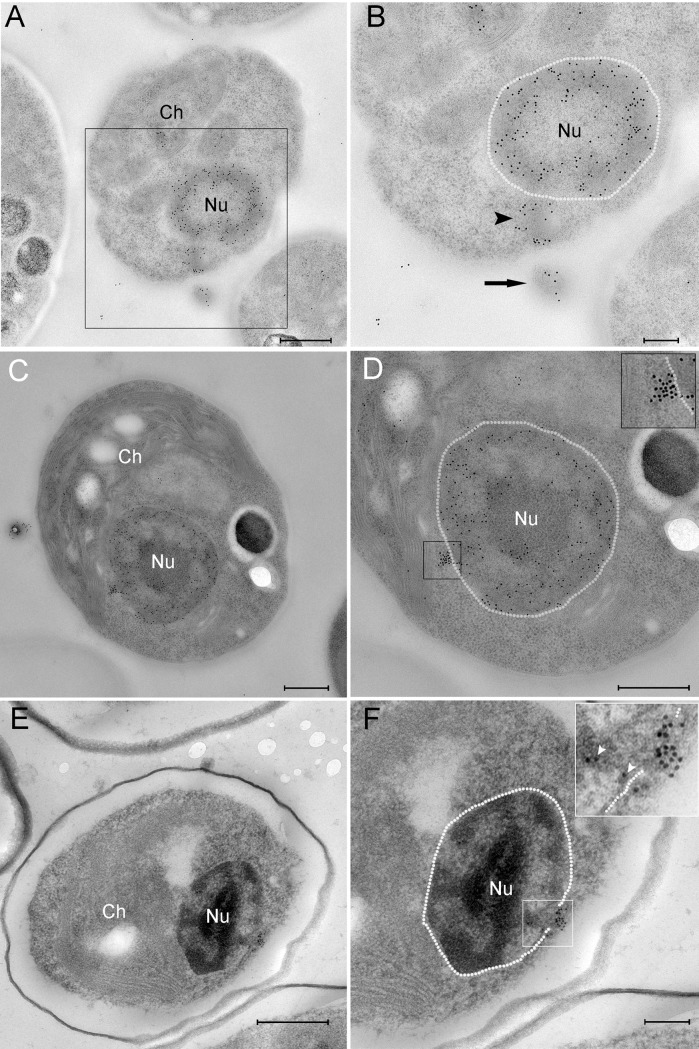
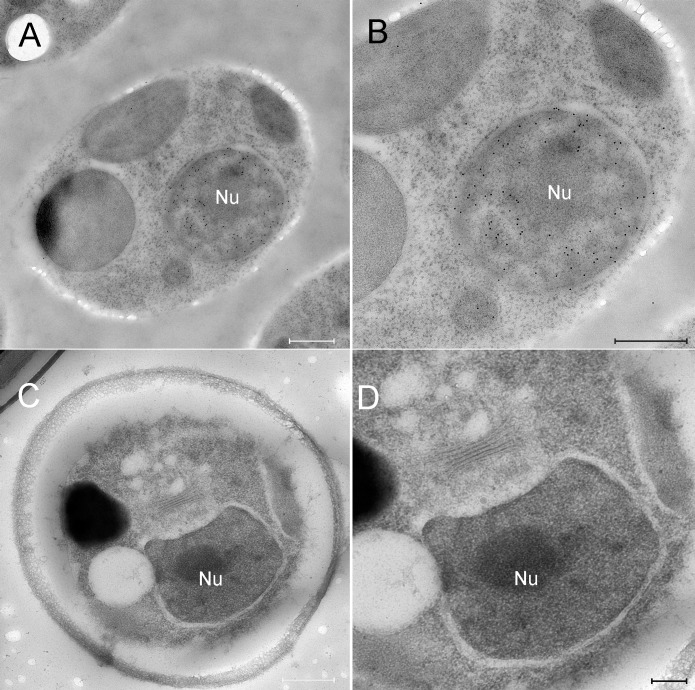
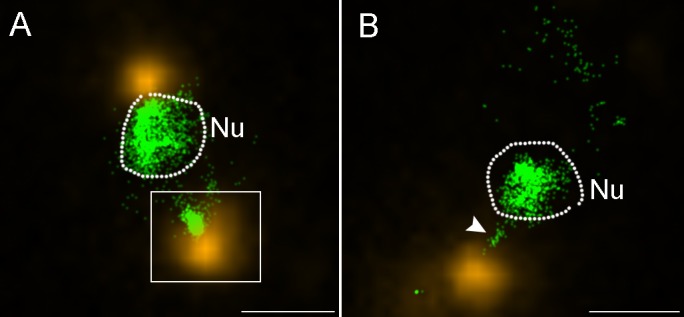
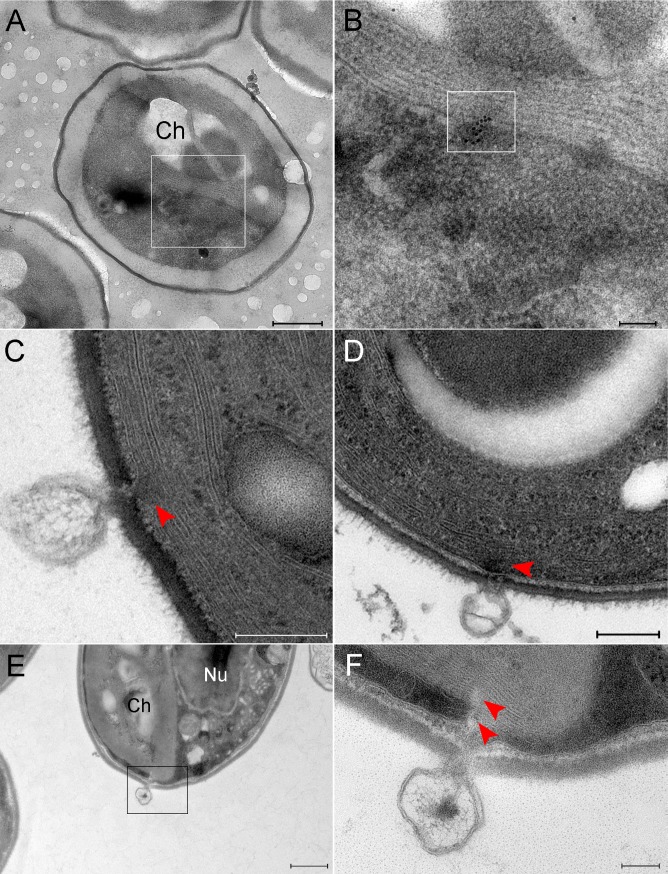
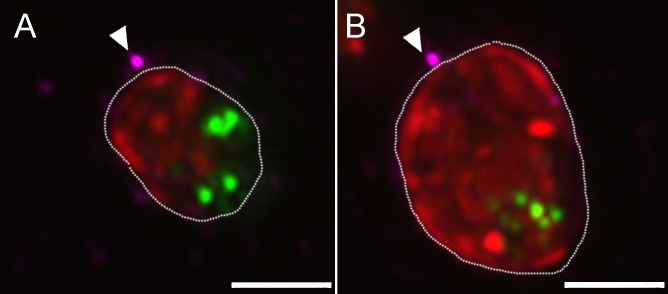
A fundamental stage in viral infection is the internalization of viral genomes in host cells. Although extensively studied, the mechanisms and factors responsible for the genome internalization process remain poorly understood. Here we report our observations, derived from diverse imaging methods on genome internalization of the large dsDNA Paramecium bursaria chlorella virus-1 (PBCV-1). Our studies reveal that early infection stages of this eukaryotic-infecting virus occurs by a bacteriophage-like pathway, whereby PBCV-1 generates a hole in the host cell wall and ejects its dsDNA genome in a linear, base-pair-by-base-pair process, through a membrane tunnel generated by the fusion of the virus internal membrane with the host membrane. Furthermore, our results imply that PBCV-1 DNA condensation that occurs shortly after infection probably plays a role in genome internalization, as hypothesized for the infection of some bacteriophages. The subsequent perforation of the host photosynthetic membranes presumably enables trafficking of viral genomes towards host nuclei. Previous studies established that at late infection stages PBCV-1 generates cytoplasmic organelles, termed viral factories, where viral assembly takes place, a feature characteristic of many large dsDNA viruses that infect eukaryotic organisms. PBCV-1 thus appears to combine a bacteriophage-like mechanism during early infection stages with a eukaryotic-like infection pathway in its late replication cycle.
病毒感染的一个基本阶段是病毒基因组进入宿主细胞。尽管对此进行了广泛研究,但负责基因组内化过程的机制和因素仍知之甚少。在此,我们报告了通过多种成像方法对大型双链DNA草履虫小球藻病毒-1(PBCV-1)基因组内化的观察结果。我们的研究表明,这种感染真核生物的病毒在早期感染阶段通过类似噬菌体的途径发生,即PBCV-1在宿主细胞壁上形成一个孔,并通过病毒内膜与宿主膜融合产生的膜通道,以逐个碱基对的线性方式排出其双链DNA基因组。此外,我们的结果表明,感染后不久发生的PBCV-1 DNA浓缩可能在基因组内化中起作用,正如对某些噬菌体感染所假设的那样。宿主光合膜随后的穿孔大概使病毒基因组能够向宿主细胞核运输。先前的研究表明,在感染后期,PBCV-1会产生称为病毒工厂的细胞质细胞器,病毒组装在那里发生,这是许多感染真核生物的大型双链DNA病毒的一个特征。因此,PBCV-1在早期感染阶段似乎将类似噬菌体的机制与后期复制周期中类似真核生物的感染途径结合起来。