Neuroscience, Innovative Medicines and Early Development, AstraZeneca Granta Park, Cambridge, UK.
Tanz Centre for Research in Neurodegenerative Diseases, University of Toronto, Toronto, ON, Canada.
EMBO Mol Med. 2017 Oct;9(10):1366-1378. doi: 10.15252/emmm.201707673.
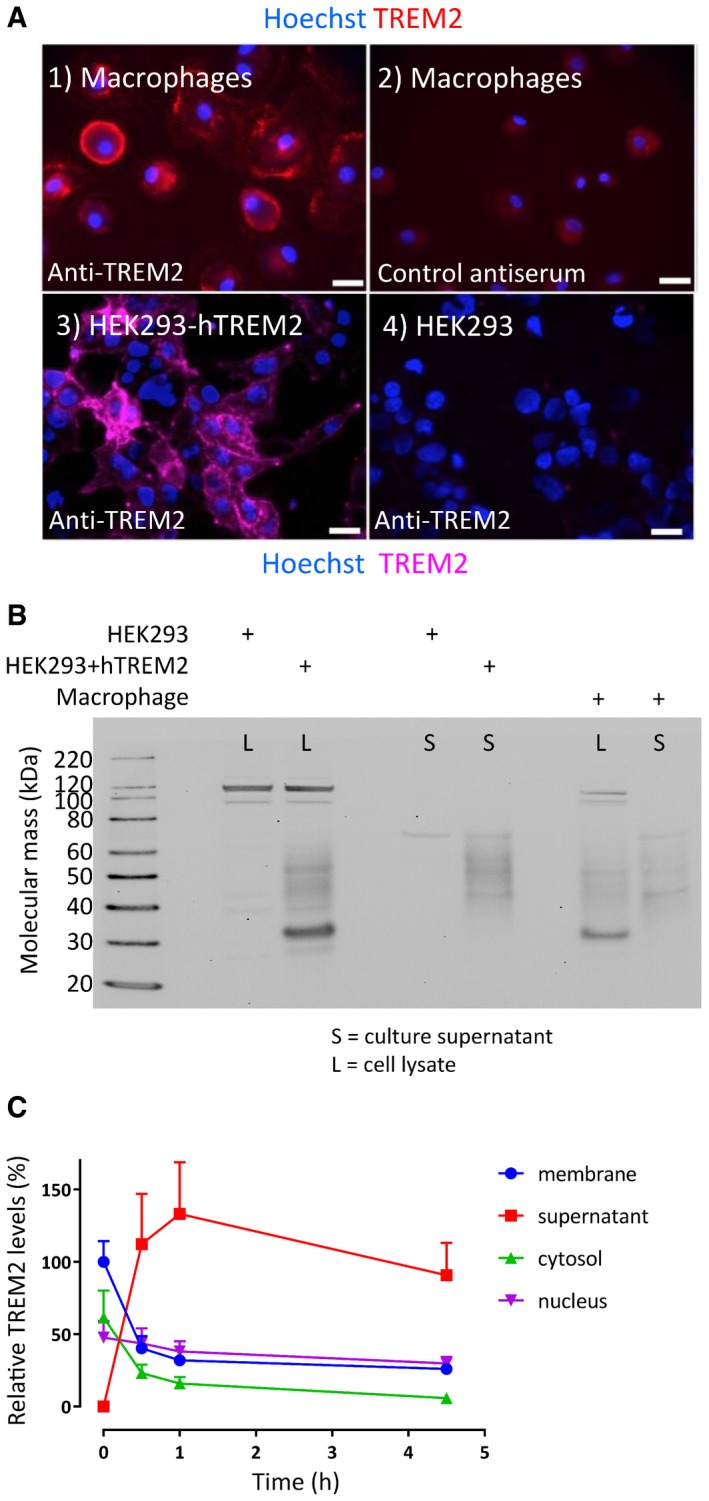
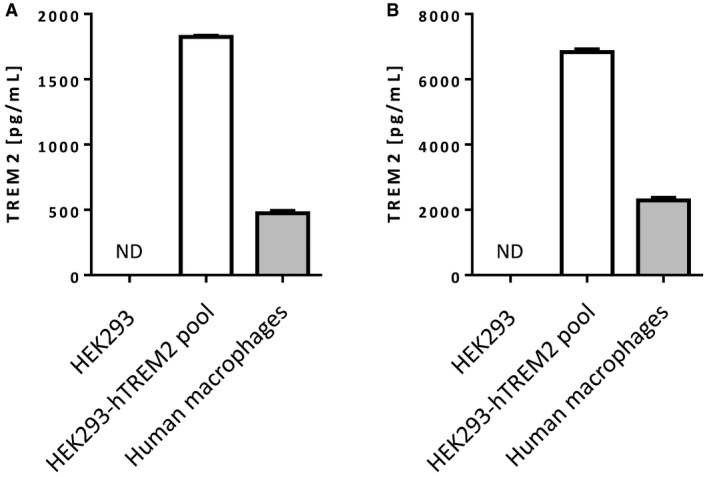
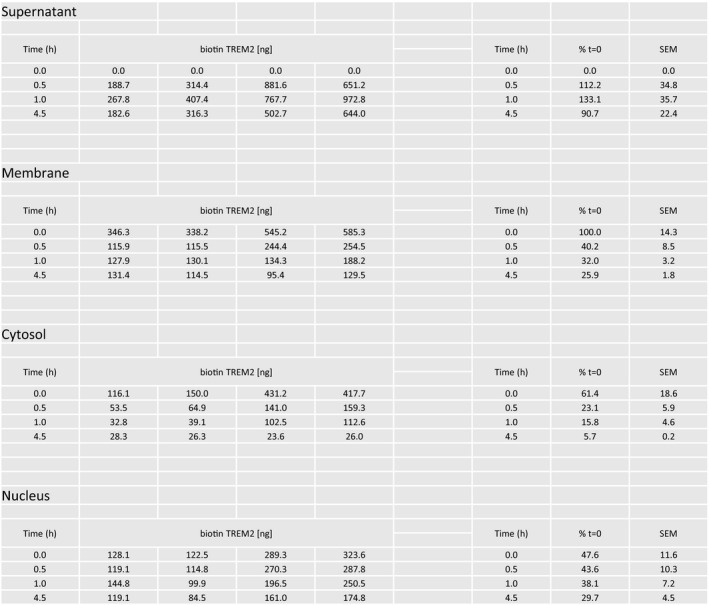
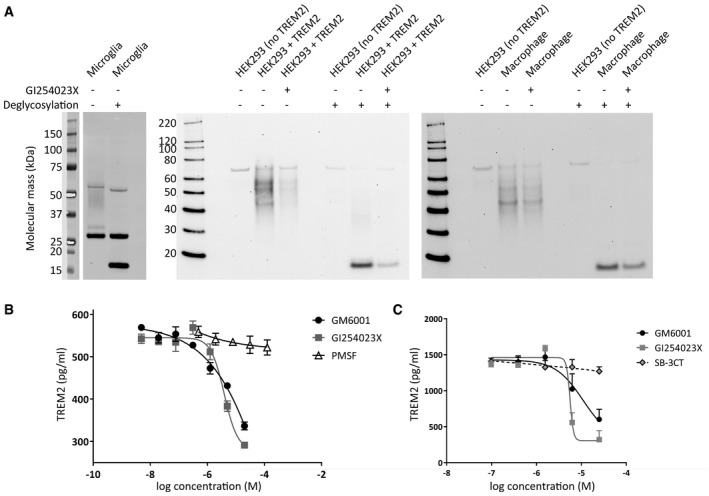
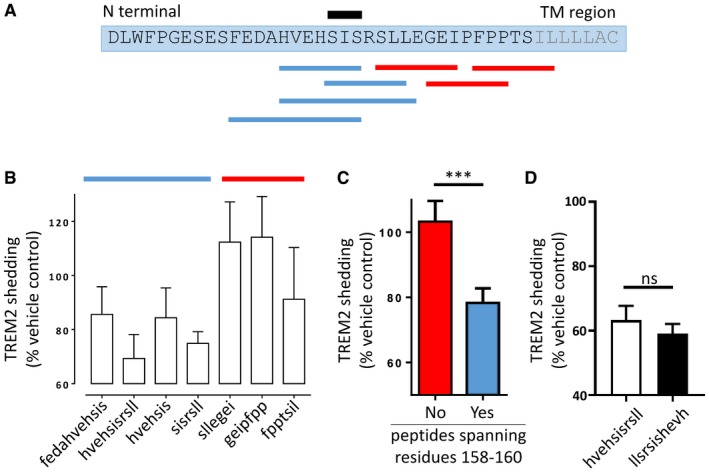
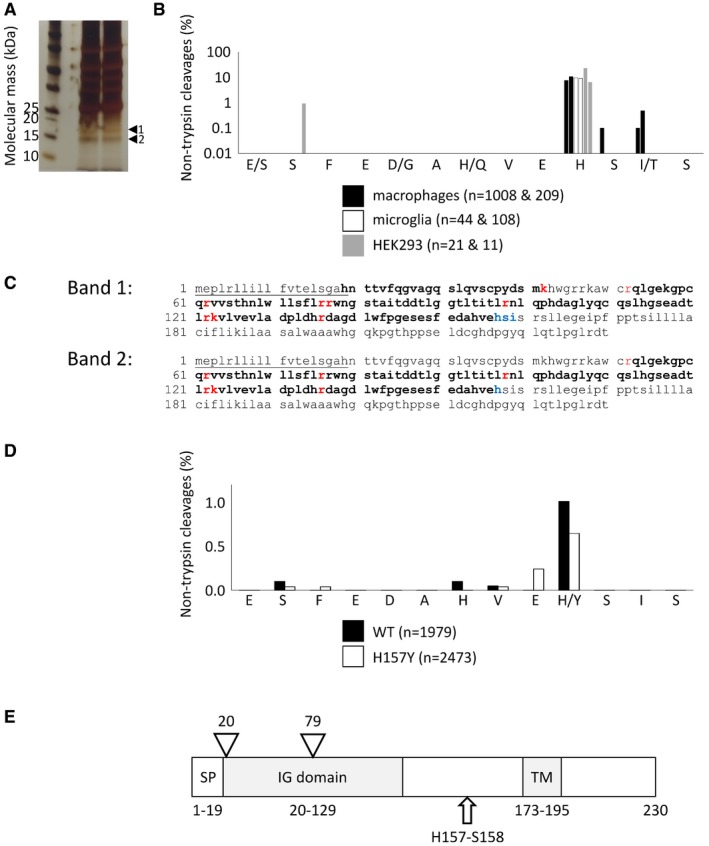
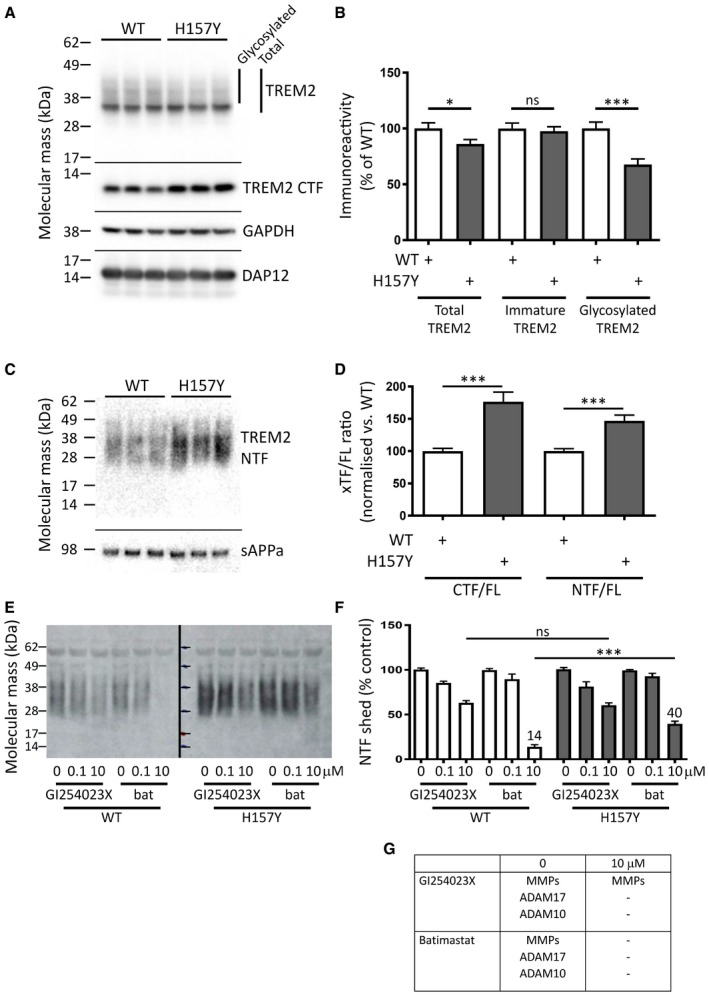
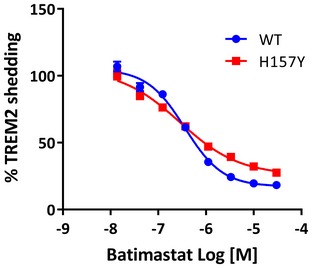
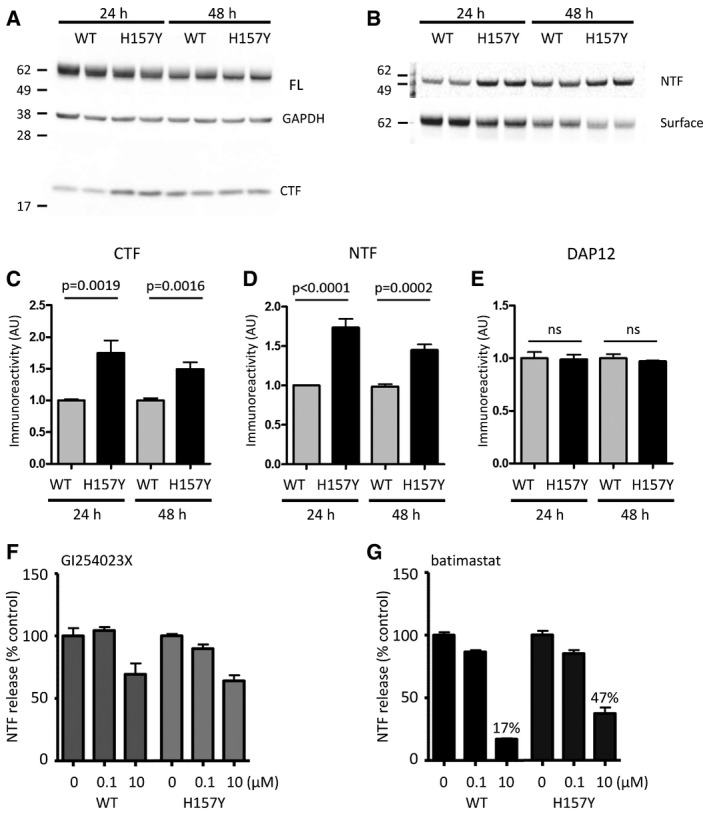
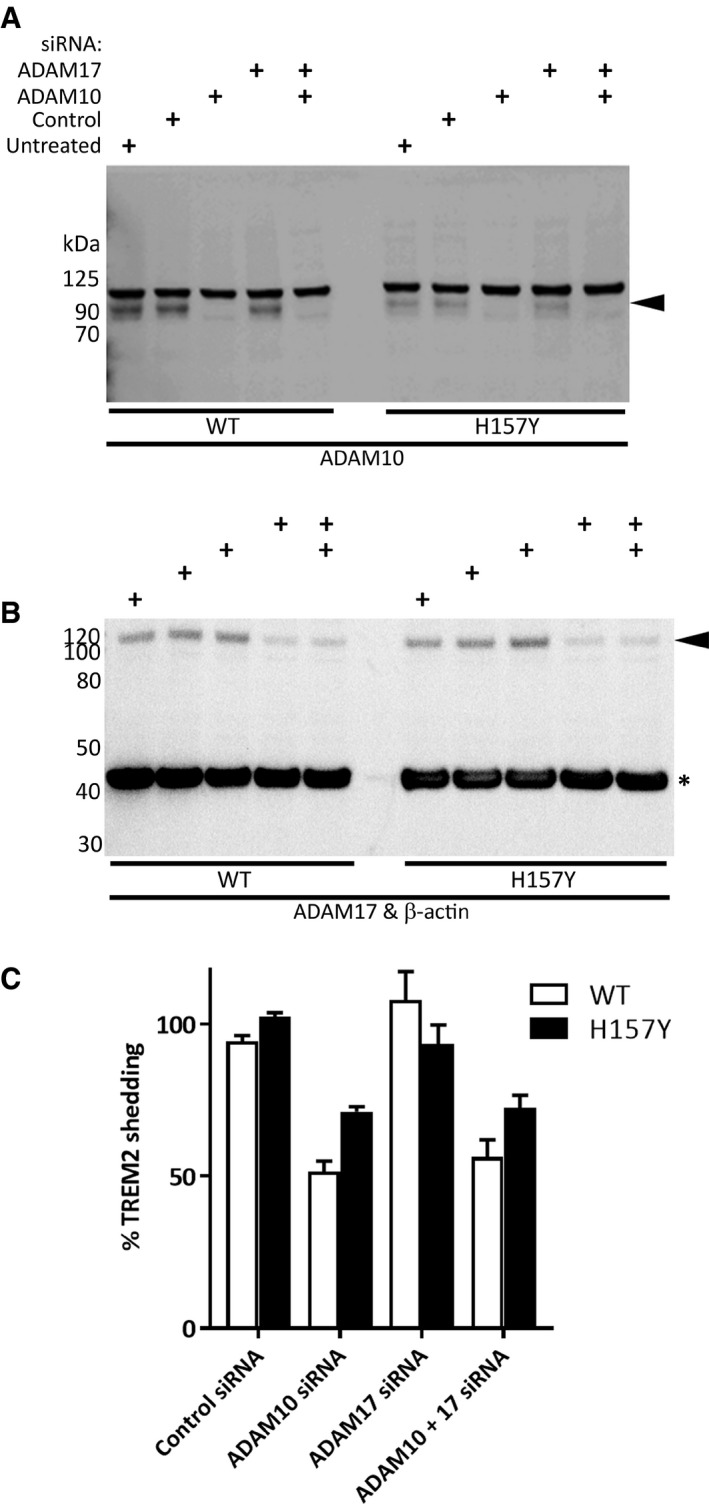
We have characterised the proteolytic cleavage events responsible for the shedding of triggering receptor expressed on myeloid cells 2 (TREM2) from primary cultures of human macrophages, murine microglia and TREM2-expressing human embryonic kidney (HEK293) cells. In all cell types, a soluble 17 kDa N-terminal cleavage fragment was shed into the conditioned media in a constitutive process that is inhibited by G1254023X and metalloprotease inhibitors and siRNA targeting ADAM10. Inhibitors of serine proteases and matrix metalloproteinases 2/9, and ADAM17 siRNA did not block TREM2 shedding. Peptidomimetic protease inhibitors highlighted a possible cleavage site, and mass spectrometry confirmed that shedding occurred predominantly at the H157-S158 peptide bond for both wild-type and H157Y human TREM2 and for the wild-type murine orthologue. Crucially, we also show that the Alzheimer's disease-associated H157Y TREM2 variant was shed more rapidly than wild type from HEK293 cells, possibly by a novel, batimastat- and ADAM10-siRNA-independent, sheddase activity. These insights offer new therapeutic targets for modulating the innate immune response in Alzheimer's and other neurological diseases.
我们已经描述了触发受体表达在髓样细胞 2(TREM2)从原代培养的人类巨噬细胞、小鼠小胶质细胞和 TREM2 表达的人胚肾(HEK293)细胞中的蛋白水解切割事件。在所有细胞类型中,一种可溶性 17 kDa 的 N 端切割片段以组成型方式被分泌到条件培养基中,该过程可被 G1254023X 和金属蛋白酶抑制剂以及针对 ADAM10 的 siRNA 抑制。丝氨酸蛋白酶和基质金属蛋白酶 2/9 的抑制剂以及 ADAM17 siRNA 不能阻断 TREM2 的脱落。肽拟肽蛋白酶抑制剂突出了一个可能的切割位点,质谱分析证实,野生型和 H157Y 人 TREM2 以及野生型鼠同源物的脱落主要发生在 H157-S158 肽键处。至关重要的是,我们还表明,阿尔茨海默病相关的 H157Y TREM2 变体从 HEK293 细胞中比野生型更快地脱落,可能是通过一种新的、batimastat 和 ADAM10-siRNA 独立的、脱落酶活性。这些见解为调节阿尔茨海默病和其他神经退行性疾病中的固有免疫反应提供了新的治疗靶点。