Grossman Tamar R, Carrer Michele, Shen Lijiang, Johnson Robert B, Hettrick Lisa A, Henry Scott P, Monia Brett P, McCaleb Michael L
Ionis Pharmaceuticals, Inc., Carlsbad, CA.
Mol Vis. 2017 Aug 10;23:561-571. eCollection 2017.
Age-related macular degeneration (AMD) is the leading cause of permanent vision loss among the elderly in many industrialized countries, and the complement system plays an important role in the pathogenesis of AMD. Inhibition of complement factor B, a key regulator of the alternative pathway, is implicated as a potential therapeutic intervention for AMD. Here we investigated the effect of liver factor B reduction on systemic and ocular factor B levels.
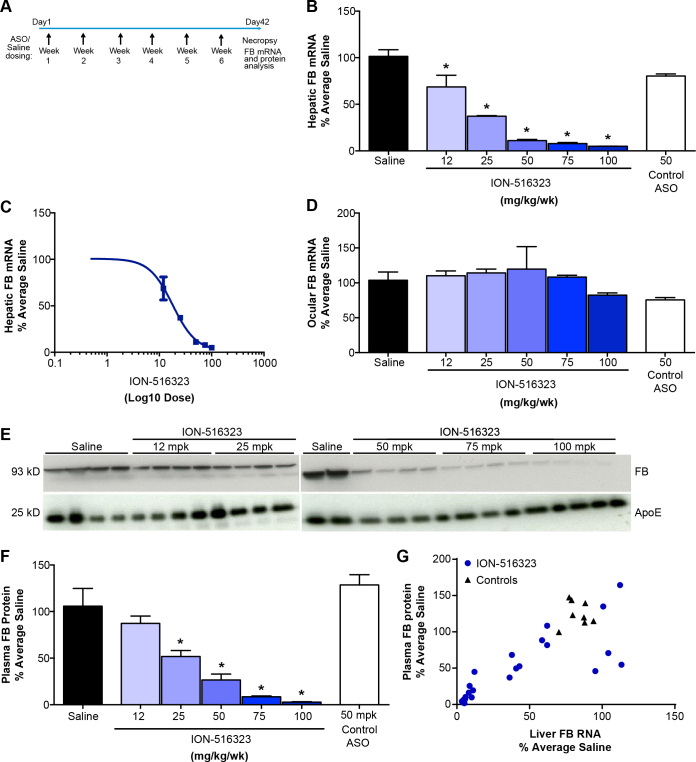
Second-generation antisense oligonucleotides (ASOs) targeting mouse and monkey factor B mRNA were administered by subcutaneous injection to healthy mice or monkeys, and the level of factor B mRNA was assessed in the liver and the eye. In addition, the factor B protein level was determined in plasma and whole eyes from the treated animals.
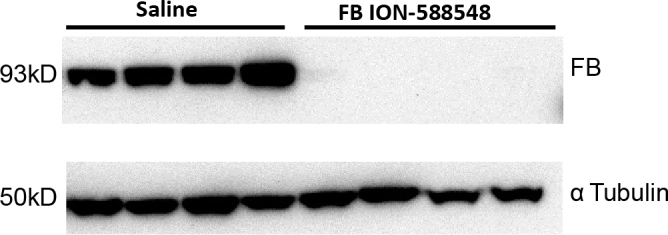
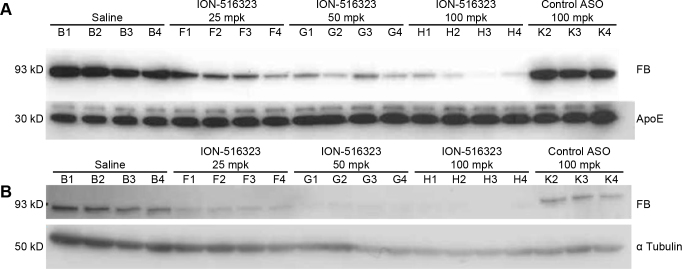
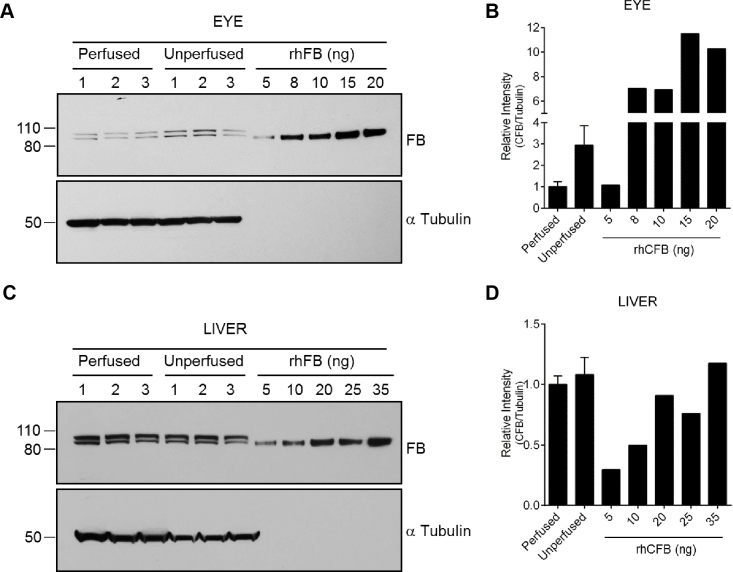
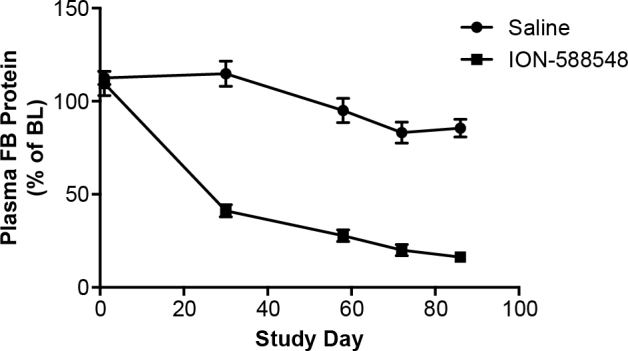
Mice and monkeys treated with factor B ASOs demonstrated a robust reduction in liver factor B mRNA levels with no change in ocular factor B mRNA levels. Plasma factor B protein levels were significantly reduced in mice and monkeys treated with factor B ASOs, leading to a dramatic reduction in ocular factor B protein, below the assay detection levels.
The results add to the increasing evidence that the liver is the main source of plasma and ocular factor B protein, and demonstrate that reduction of liver factor B mRNA by an ASO results in a significant reduction in plasma and ocular factor B protein levels. The results suggest that inhibition of liver factor B mRNA by factor B ASOs would reduce systemic alternative complement pathway activation and has potential to be used as a novel therapy for AMD.
年龄相关性黄斑变性(AMD)是许多工业化国家老年人永久性视力丧失的主要原因,补体系统在AMD的发病机制中起重要作用。抑制补体因子B(替代途径的关键调节因子)被认为是AMD的一种潜在治疗干预措施。在此,我们研究了肝脏中因子B减少对全身和眼部因子B水平的影响。
将靶向小鼠和猴因子B mRNA的第二代反义寡核苷酸(ASO)通过皮下注射给予健康小鼠或猴,然后评估肝脏和眼中因子B mRNA的水平。此外,还测定了处理动物血浆和全眼中的因子B蛋白水平。
用因子B ASO处理的小鼠和猴肝脏中因子B mRNA水平显著降低,而眼部因子B mRNA水平无变化。用因子B ASO处理的小鼠和猴血浆中因子B蛋白水平显著降低,导致眼部因子B蛋白急剧减少,降至检测水平以下。
这些结果进一步证明肝脏是血浆和眼部因子B蛋白的主要来源,并表明ASO降低肝脏因子B mRNA会导致血浆和眼部因子B蛋白水平显著降低。结果表明,因子B ASO抑制肝脏因子B mRNA将减少全身替代补体途径的激活,有潜力作为AMD的一种新疗法。