Mita Monica M, Mita Alain C, Moseley Jennifer L, Poon Jennifer, Small Karen A, Jou Ying-Ming, Kirschmeier Paul, Zhang Da, Zhu Yali, Statkevich Paul, Sankhala Kamelesh K, Sarantopoulos John, Cleary James M, Chirieac Lucian R, Rodig Scott J, Bannerji Rajat, Shapiro Geoffrey I
Institute for Drug Development, Cancer Therapy and Research Center at University of Texas Health Science Center, San Antonio, TX 78229, USA.
Merck & Co., Inc., Kenilworth, NJ 07033, USA.
Br J Cancer. 2017 Oct 24;117(9):1258-1268. doi: 10.1038/bjc.2017.288. Epub 2017 Aug 31.
Dinaciclib is a potent inhibitor of cell cycle and transcriptional cyclin-dependent kinases. This Phase 1 study evaluated the safety, tolerability and pharmacokinetics of various dosing schedules of dinaciclib in advanced solid tumour patients and assessed pharmacodynamic and preliminary anti-tumour activity.
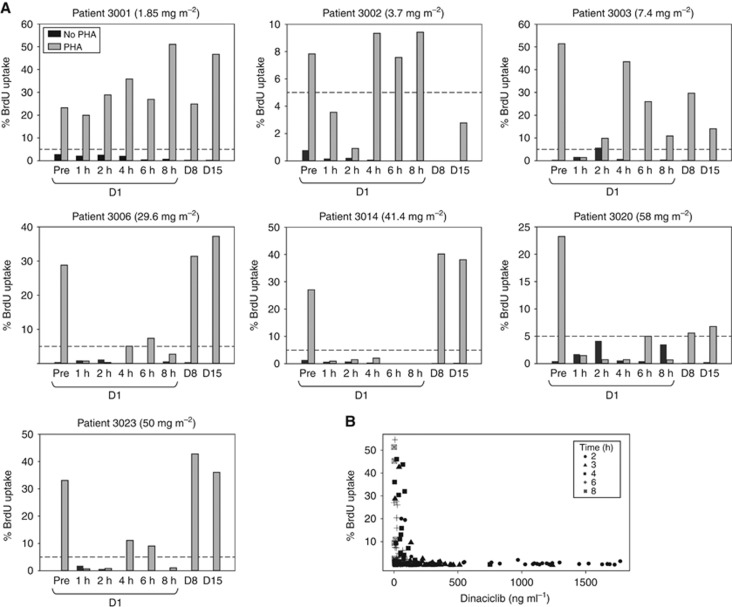
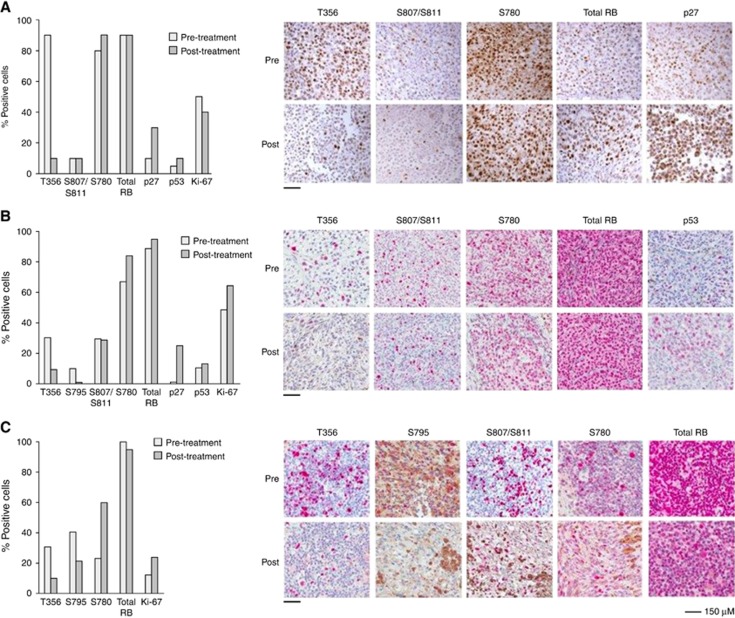
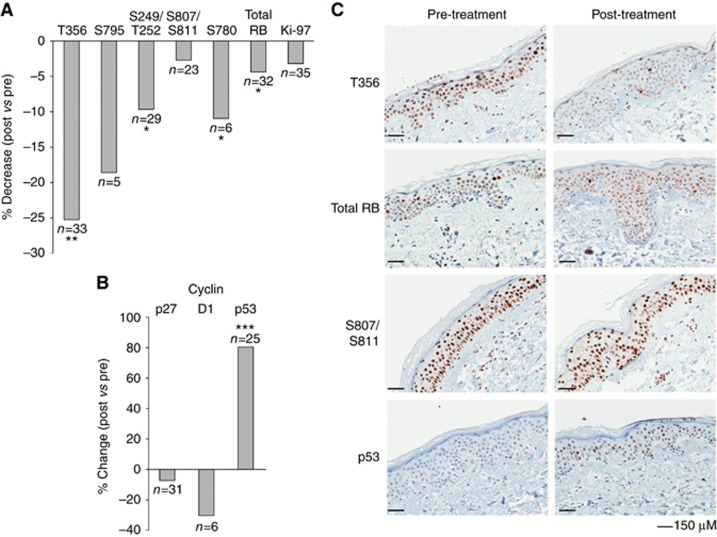
In part 1, patients were enrolled in escalating cohorts of 2-h infusions administered once every 3 weeks, utilising an accelerated titration design until a recommended phase 2 dose (RP2D) was defined. In part 2, 8- and 24-h infusions were evaluated. Pharmacokinetic parameters were determined for all schedules. Pharmacodynamic effects were assessed with an ex vivo stimulated lymphocyte proliferation assay performed in whole blood.Effects of dinaciclib on retinoblastoma (Rb) phosphorylation and other CDK targets were evaluated in skin and tumour biopsies. In addition to tumour size, metabolic response was evaluated by 18F-fluorodeoxyglucose-positron emission tomography.
Sixty-one patients were enrolled to parts 1 and 2. The RP2Ds were 50, 7.4 and 10.4 mg m as 2- 8- and 24-hour infusions, respectively. Dose-limiting toxicities included pancytopenia, neutropenic fever, elevated transaminases, hyperuricemia and hypotension. Pharmacokinetics demonstrated rapid distribution and a short plasma half-life. Dinaciclib suppressed proliferation of stimulated lymphocytes. In skin and tumour biopsies, dinaciclib reduced Rb phosphorylation at CDK2 phospho-sites and modulated expression of cyclin D1 and p53, suggestive of CDK9 inhibition. Although there were no RECIST responses, eight patients had prolonged stable disease and received between 6 and 30 cycles. Early metabolic responses occurred.
Dinaciclib is tolerable at doses demonstrating target engagement in surrogate and tumour tissue.
地西他滨是一种有效的细胞周期和转录细胞周期蛋白依赖性激酶抑制剂。这项1期研究评估了地西他滨在晚期实体瘤患者中不同给药方案的安全性、耐受性和药代动力学,并评估了药效学和初步抗肿瘤活性。
在第1部分中,患者被纳入每3周进行一次2小时静脉输注的剂量递增队列,采用加速滴定设计,直至确定推荐的2期剂量(RP2D)。在第2部分中,评估了8小时和24小时的静脉输注。确定了所有给药方案的药代动力学参数。通过在全血中进行的体外刺激淋巴细胞增殖试验评估药效学效应。在地西他滨对视网膜母细胞瘤(Rb)磷酸化和其他CDK靶点的影响在皮肤和肿瘤活检中进行了评估。除了肿瘤大小外,还通过18F-氟脱氧葡萄糖-正电子发射断层扫描评估代谢反应。
61名患者被纳入第1部分和第2部分。RP2D分别为50、7.4和10.4mg/m²,分别为2小时、8小时和24小时静脉输注。剂量限制性毒性包括全血细胞减少、中性粒细胞减少性发热、转氨酶升高、高尿酸血症和低血压。药代动力学显示分布迅速,血浆半衰期短。地西他滨抑制刺激淋巴细胞的增殖。在皮肤和肿瘤活检中,地西他滨降低了CDK2磷酸化位点的Rb磷酸化,并调节了细胞周期蛋白D1和p53的表达,提示CDK9受到抑制。虽然没有RECIST反应,但8名患者病情长期稳定,接受了6至30个周期的治疗。出现了早期代谢反应。
地西他滨在剂量上可耐受,在替代组织和肿瘤组织中显示出靶点活性。