Pillet Jeremy, Chambers Alan H, Barbey Christopher, Bao Zhilong, Plotto Anne, Bai Jinhe, Schwieterman Michael, Johnson Timothy, Harrison Benjamin, Whitaker Vance M, Colquhoun Thomas A, Folta Kevin M
Horticultural Sciences Department, University of Florida, 1251 Fifield Hall, Gainesville, FL, 32611, USA.
Tropical Research and Education Center, University of Florida, Homestead, FL, USA.
BMC Plant Biol. 2017 Aug 31;17(1):147. doi: 10.1186/s12870-017-1088-1.
Methyl anthranilate (MA) contributes an attractive fruity note to the complex flavor and aroma of strawberry (Fragaria spp.), yet it is rare in modern cultivars. The genetic basis for its biosynthesis has not been elucidated. Understanding the specific genes required for its synthesis could allow the development of gene/allele-specific molecular markers to speed breeding of flavorful strawberries.
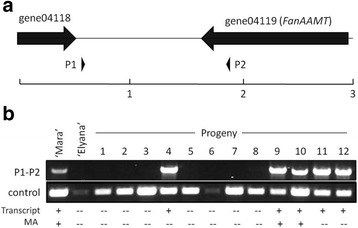
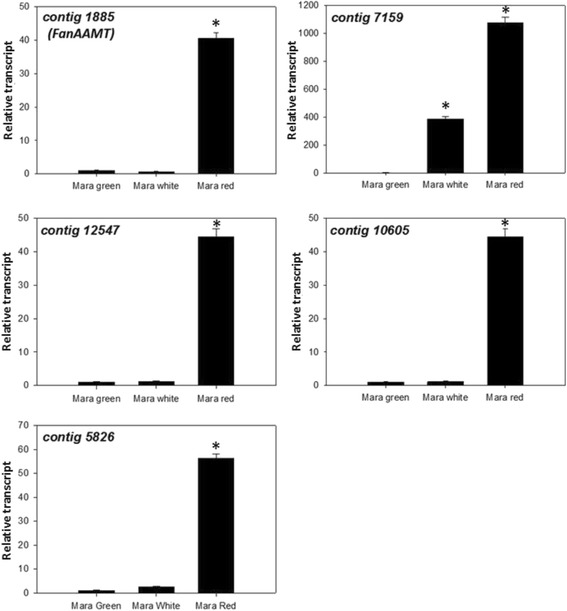
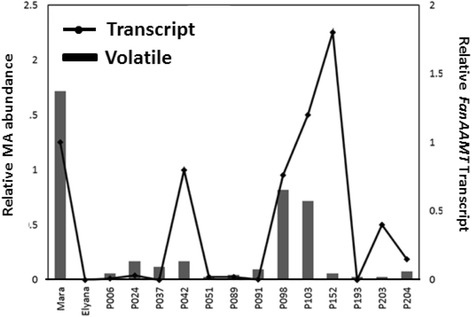
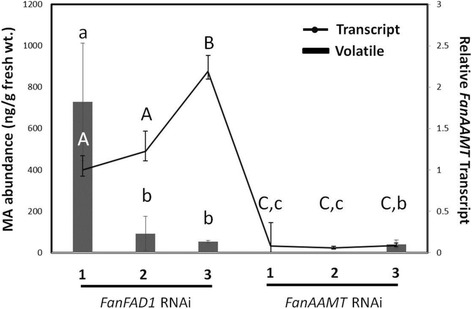
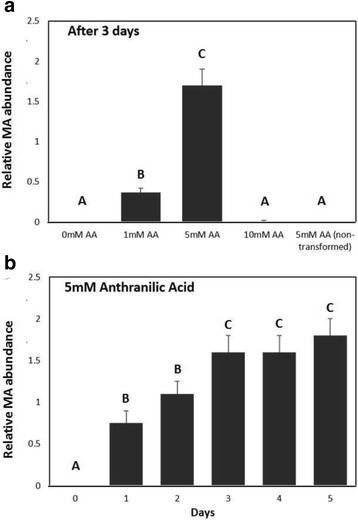
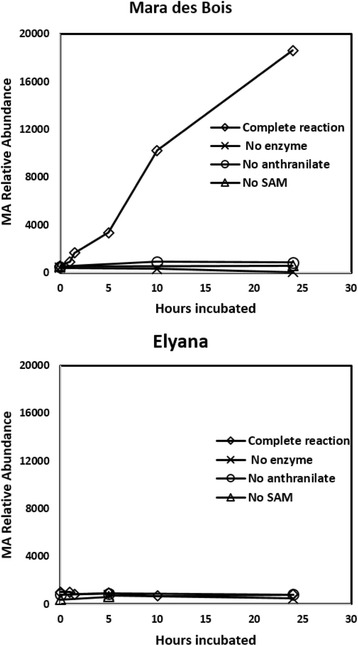
Ripe fruits from individuals in an F1 population resulting from a cross between a MA producer and a non-producer were examined using a bulk-segregant transcriptome approach. MA producer and non-producer transcriptomes were compared, revealing five candidate transcripts that strictly co-segregated with MA production. One candidate encodes an annotated methyltransferase. MA levels are lower when this transcript is suppressed with RNAi, and bacterial cultures expressing the protein produced MA in the presence of anthranilic acid. Frozen fruit powders reconstituted with anthranilic acid and a methyl donor produced MA only if the transcript was detected in the fruit powder. A DNA-based molecular marker was developed that segregates with the MA-producing gene variant.
These analyses indicate that the methyltransferase, now noted ANTHRANILIC ACID METHYL TRANSFERASE (FanAAMT), mediates the ultimate step of MA production in cultivated strawberry. Identification of this gene and its associated molecular marker may hasten breeding efforts to introduce this important volatile into modern cultivars.
邻氨基苯甲酸甲酯(MA)为草莓(草莓属)复杂的风味和香气增添了诱人的果香,但在现代栽培品种中却很少见。其生物合成的遗传基础尚未阐明。了解其合成所需的特定基因有助于开发基因/等位基因特异性分子标记,以加速美味草莓的育种进程。
采用混合分组转录组方法,对由一个MA产生者和一个非产生者杂交产生的F1群体中个体的成熟果实进行了检测。比较了MA产生者和非产生者的转录组,发现了五个与MA产生严格共分离的候选转录本。其中一个候选转录本编码一种注释的甲基转移酶。当用RNA干扰抑制该转录本时,MA水平降低,并且在邻氨基苯甲酸存在下表达该蛋白质的细菌培养物产生了MA。只有在果粉中检测到该转录本时,用邻氨基苯甲酸和甲基供体重组的冷冻果粉才会产生MA。开发了一种与产生MA的基因变体共分离的基于DNA的分子标记。
这些分析表明,现在命名为邻氨基苯甲酸甲基转移酶(FanAAMT)的甲基转移酶介导了栽培草莓中MA产生的最终步骤。鉴定该基因及其相关分子标记可能会加速将这种重要挥发性物质引入现代栽培品种的育种工作。