Zelinger Lina, Karakülah Gökhan, Chaitankar Vijender, Kim Jung-Woong, Yang Hyun-Jin, Brooks Matthew J, Swaroop Anand
Neurobiology-Neurodegeneration and Repair Laboratory, National Eye Institute, National Institutes of Health, Bethesda, Maryland, United States.
Invest Ophthalmol Vis Sci. 2017 Sep 1;58(11):4422-4435. doi: 10.1167/iovs.17-21805.
Transcriptome analysis by next generation sequencing allows qualitative and quantitative profiling of expression patterns associated with development and disease. However, most transcribed sequences do not encode proteins, and little is known about the functional relevance of noncoding (nc) transcriptome in neuronal subtypes. The goal of this study was to perform a comprehensive analysis of long noncoding (lncRNAs) and antisense (asRNAs) RNAs expressed in mouse retinal photoreceptors.
Transcriptomic profiles were generated at six developmental time points from flow-sorted Nrlp-GFP (rods) and Nrlp-GFP;Nrl-/- (S-cone like) mouse photoreceptors. Bioinformatic analysis was performed to identify novel noncoding transcripts and assess their regulation by rod differentiation factor neural retina leucine zipper (NRL). In situ hybridization (ISH) was used for validation and cellular localization.
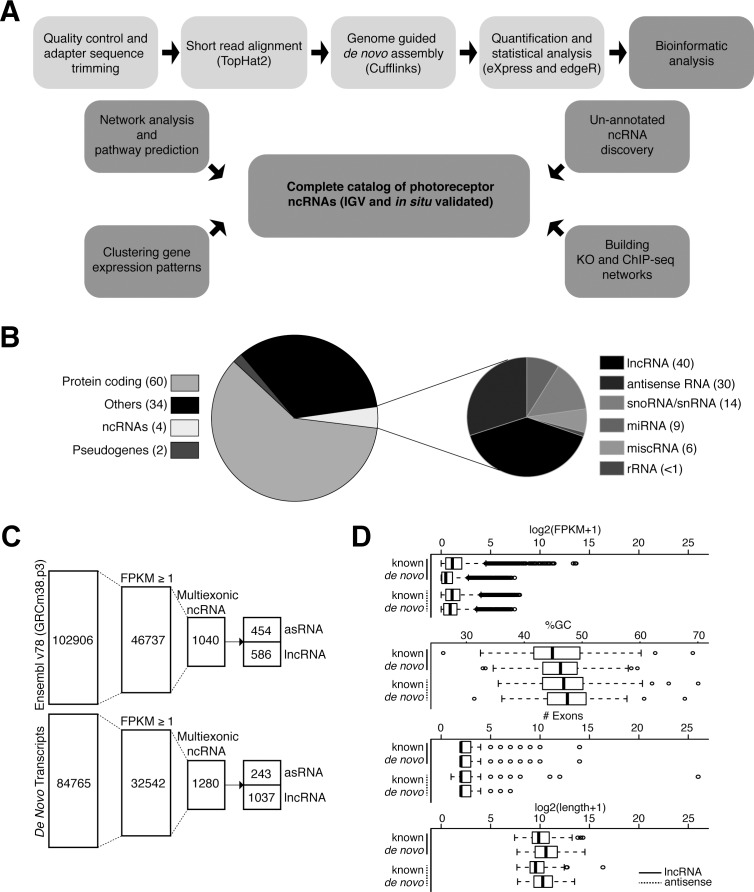
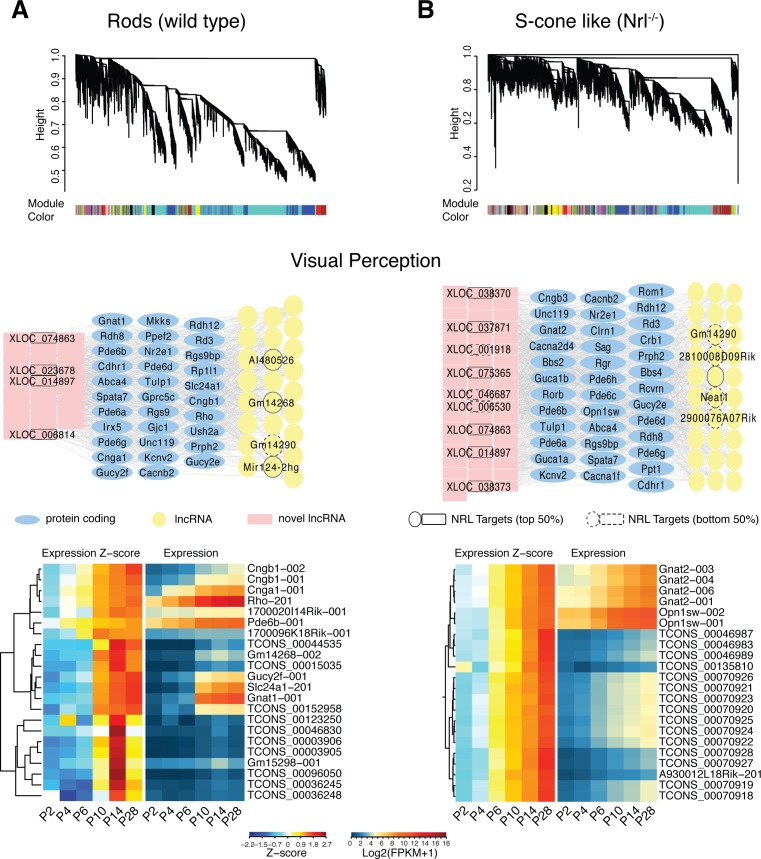
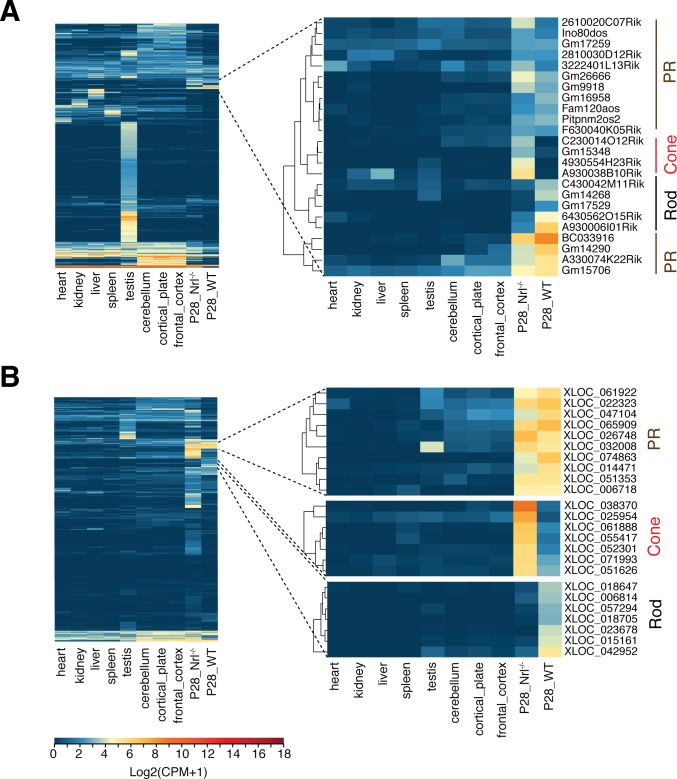
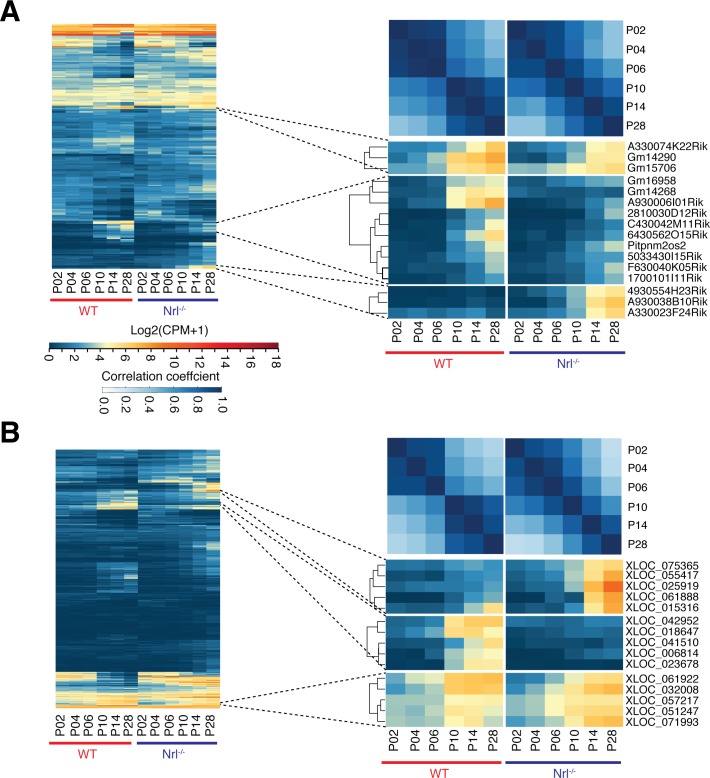
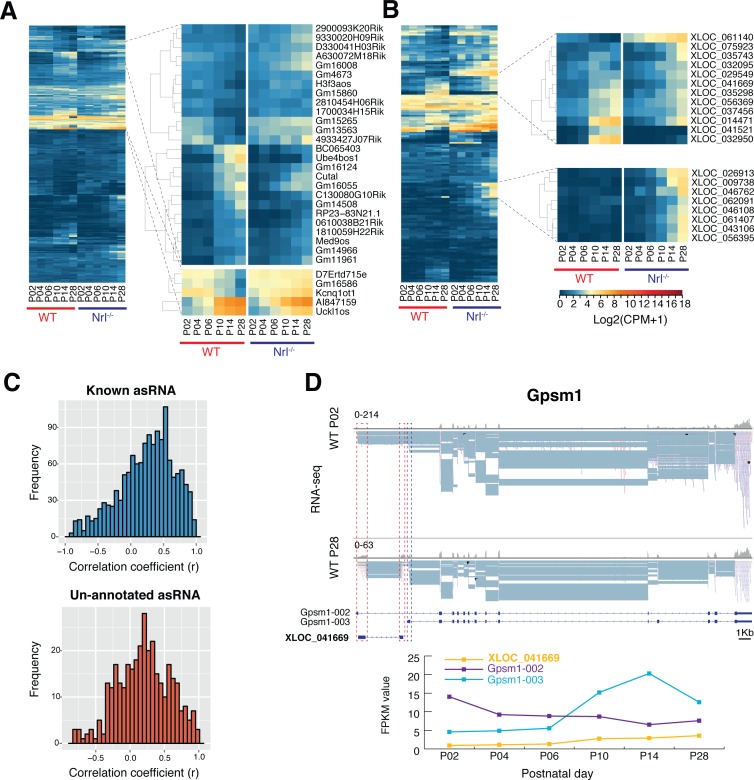
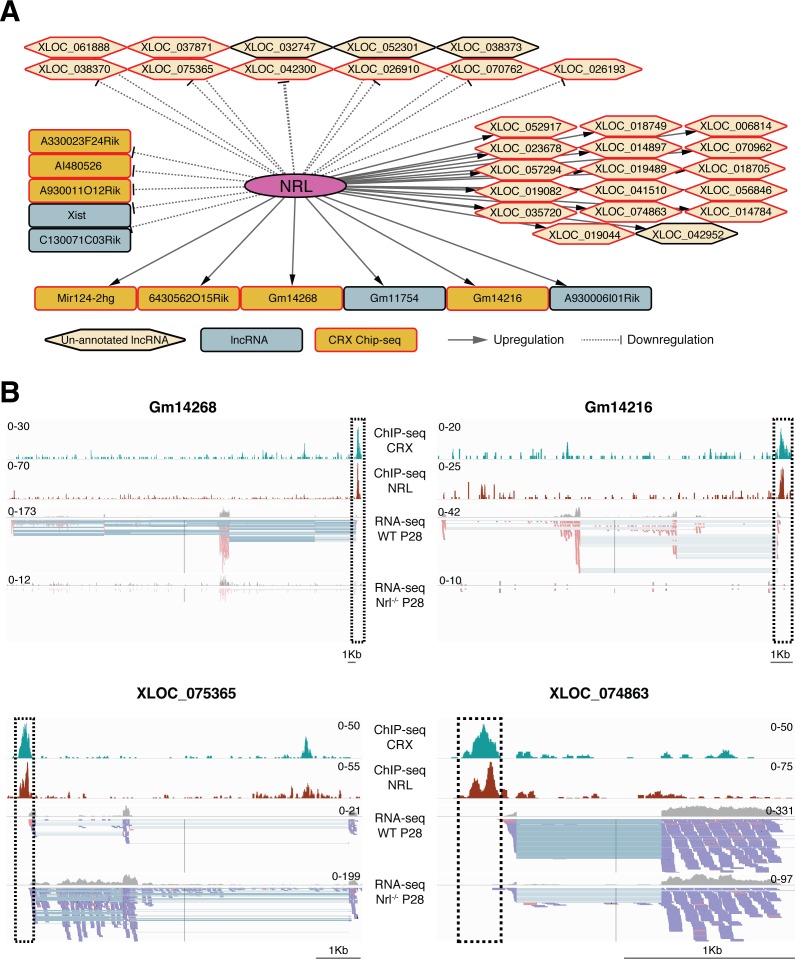
NcRNA profiles demonstrated dynamic yet specific expression signature and coexpression clusters during rod development. In addition to currently annotated 586 lncRNAs and 454 asRNAs, we identified 1037 lncRNAs and 243 asRNAs by de novo assembly. Of these, 119 lncRNAs showed altered expression in the absence of NRL and included NRL binding sites in their promoter/enhancer regions. ISH studies validated the expression of 24 lncRNAs (including 12 previously unannotated) and 4 asRNAs in photoreceptors. Coexpression analysis demonstrated 63 functional modules and 209 significant antisense-gene correlations, allowing us to predict possible role of these lncRNAs in rods.
Our studies reveal coregulation of coding and noncoding transcripts in rod photoreceptors by NRL and establish the framework for deciphering the function of ncRNAs during retinal development.
通过新一代测序进行转录组分析可对与发育和疾病相关的表达模式进行定性和定量分析。然而,大多数转录序列并不编码蛋白质,关于非编码(nc)转录组在神经元亚型中的功能相关性知之甚少。本研究的目的是对小鼠视网膜光感受器中表达的长链非编码(lncRNA)和反义(asRNA)RNA进行全面分析。
在六个发育时间点,从流式分选的Nrlp-GFP(视杆细胞)和Nrlp-GFP;Nrl-/-(类S视锥细胞)小鼠光感受器中生成转录组图谱。进行生物信息学分析以鉴定新的非编码转录本,并评估它们受视杆细胞分化因子神经视网膜亮氨酸拉链(NRL)的调控情况。原位杂交(ISH)用于验证和细胞定位。
ncRNA图谱显示在视杆细胞发育过程中具有动态但特定的表达特征和共表达簇。除了目前注释的586个lncRNA和454个asRNA外,我们通过从头组装鉴定出1037个lncRNA和243个asRNA。其中,119个lncRNA在缺乏NRL时表达发生改变,并且在其启动子/增强子区域包含NRL结合位点。ISH研究验证了24个lncRNA(包括12个先前未注释的)和4个asRNA在光感受器中的表达。共表达分析显示了63个功能模块和209个显著的反义基因相关性,使我们能够预测这些lncRNA在视杆细胞中的可能作用。
我们的研究揭示了NRL对视杆细胞中编码和非编码转录本的共同调控,并建立了解读视网膜发育过程中ncRNA功能的框架。