Ito Ken, Hamamichi Shusei, Abe Takanori, Akagi Tsuyoshi, Shirota Hiroshi, Kawano Satoshi, Asano Makoto, Asano Osamu, Yokoi Akira, Matsui Junji, Umeda Izumi O, Fujii Hirofumi
Halichondrin Research Laboratory, Eisai Co., Ltd, Tsukuba, Japan.
Division of Functional Imaging, National Cancer Center, Kashiwa, Japan.
Cancer Sci. 2017 Nov;108(11):2273-2280. doi: 10.1111/cas.13392. Epub 2017 Sep 22.
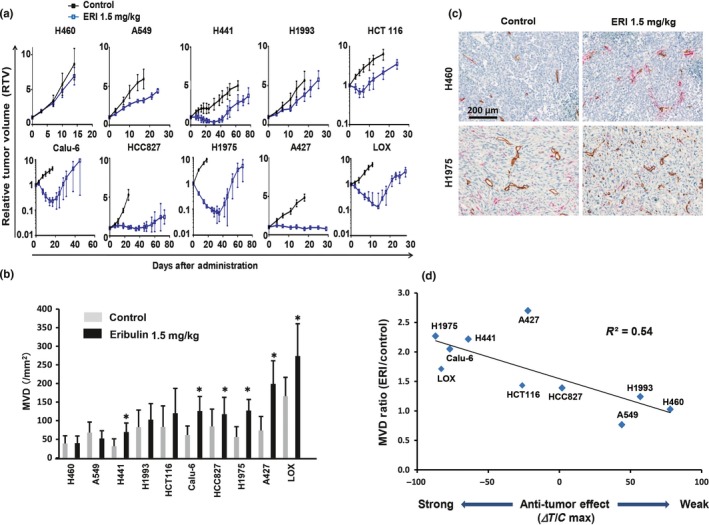
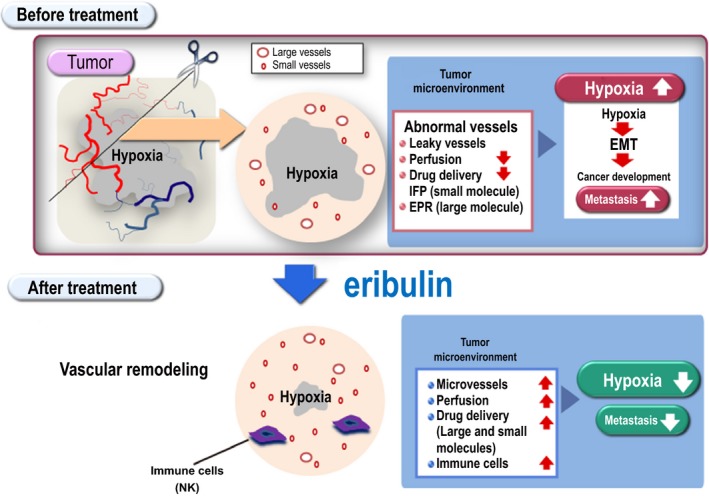
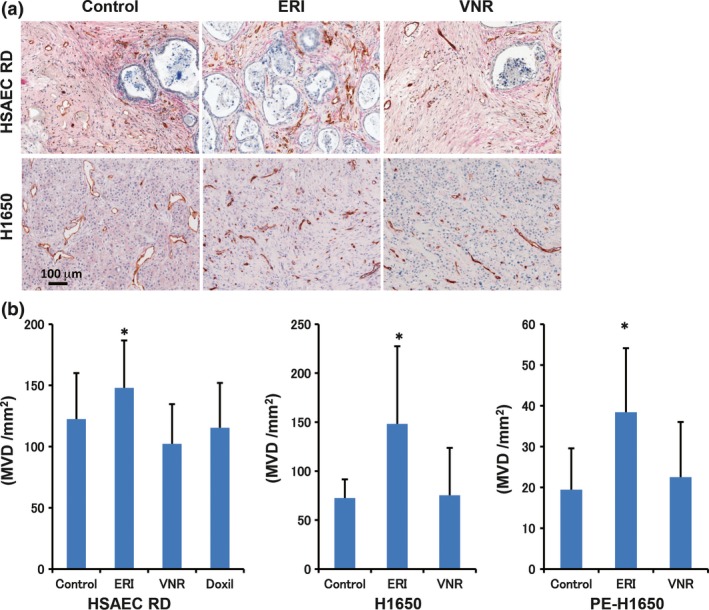
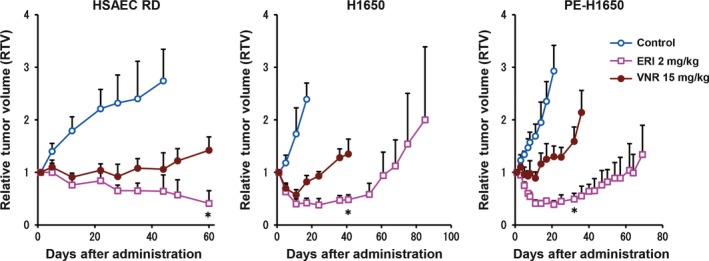
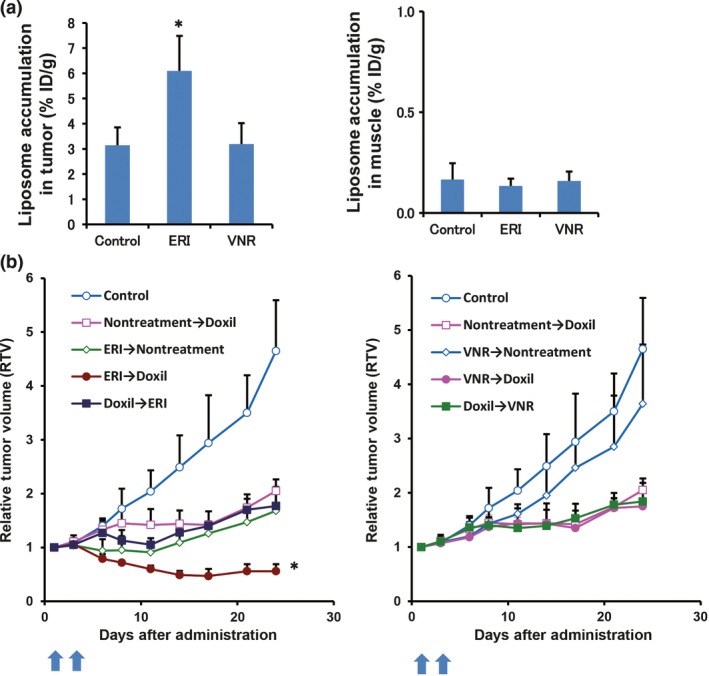
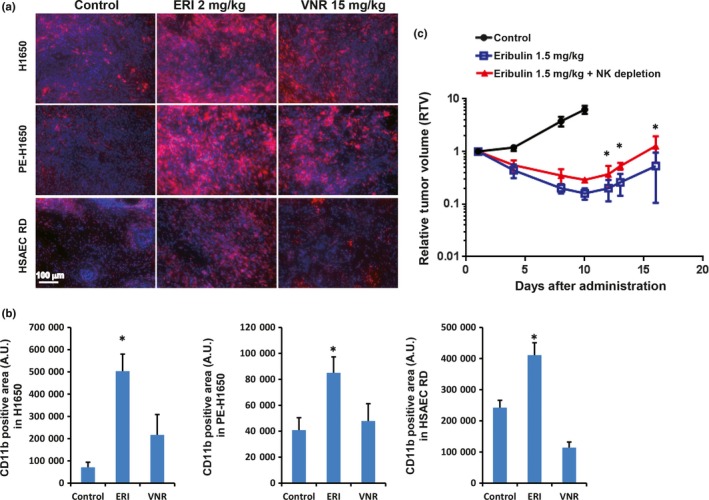
We previously reported that eribulin mesylate (eribulin), a tubulin-binding drug (TBD), could remodel tumor vasculature (i.e. increase tumor vessels and perfusion) in human breast cancer xenograft models. However, the role of this vascular remodeling in antitumor effects is not fully understood. Here, we investigated the effects of eribulin-induced vascular remodeling on antitumor activities in multiple human cancer xenograft models. Microvessel densities (MVD) were evaluated by immunohistochemistry (CD31 staining), and antitumor effects were examined in 10 human cancer xenograft models. Eribulin significantly increased MVD compared to the controls in six out of 10 models with a correlation between enhanced MVD levels and antitumor effects (R = 0.54). Because of increased MVD, we next used radiolabeled liposomes to examine whether eribulin treatment would result in increased tumoral accumulation levels of these macromolecules and, indeed, we found that eribulin, unlike vinorelbine (another TBD) enhanced them. As eribulin increased accumulation of radiolabeled liposomes, we postulated that this treatment might enhance the antitumor effect of Doxil (a liposomal anticancer agent) and facilitate recruitment of immune cells into the tumor. As expected, eribulin enhanced antitumor activity of Doxil in a post-erlotinib treatment H1650 (PE-H1650) xenograft model. Furthermore, infiltrating CD11b-positive immune cells were significantly increased in multiple eribulin-treated xenografted tumors, and natural killer (NK) cell depletion reduced the antitumor effects of eribulin. These findings suggest a contribution of the immune cells for antitumor activities of eribulin. Taken together, our results suggest that vascular remodeling induced by eribulin acts as a microenvironment modulator and, consequently, this alteration enhanced the antitumor effects of eribulin.
我们之前报道过,甲磺酸艾瑞布林(艾瑞布林)作为一种微管结合药物(TBD),可在人乳腺癌异种移植模型中重塑肿瘤血管(即增加肿瘤血管和灌注)。然而,这种血管重塑在抗肿瘤作用中的角色尚未完全明确。在此,我们研究了艾瑞布林诱导的血管重塑对多种人类癌症异种移植模型中抗肿瘤活性的影响。通过免疫组织化学(CD31染色)评估微血管密度(MVD),并在10种人类癌症异种移植模型中检测抗肿瘤效果。与对照组相比,在10个模型中的6个模型里,艾瑞布林显著增加了MVD,且MVD水平增强与抗肿瘤效果之间存在相关性(R = 0.54)。由于MVD增加,接下来我们使用放射性标记脂质体来检测艾瑞布林治疗是否会导致这些大分子在肿瘤中的蓄积水平增加,事实上,我们发现艾瑞布林与长春瑞滨(另一种TBD)不同,它能增强这种蓄积。由于艾瑞布林增加了放射性标记脂质体的蓄积,我们推测这种治疗可能会增强阿霉素脂质体(一种脂质体抗癌药物)的抗肿瘤作用,并促进免疫细胞向肿瘤的募集。正如预期的那样,在厄洛替尼治疗后的H1650(PE - H1650)异种移植模型中,艾瑞布林增强了阿霉素脂质体的抗肿瘤活性。此外,在多个接受艾瑞布林治疗的异种移植肿瘤中,浸润的CD11b阳性免疫细胞显著增加,并且自然杀伤(NK)细胞耗竭降低了艾瑞布林的抗肿瘤效果。这些发现表明免疫细胞对艾瑞布林的抗肿瘤活性有贡献。综上所述,我们的结果表明,艾瑞布林诱导的血管重塑作为一种微环境调节剂,因此这种改变增强了艾瑞布林的抗肿瘤效果。