Departments of Molecular Microbiology and Pathology & Immunology, Washington University in St. Louis School of Medicine, St. Louis, Missouri, USA.
Departments of Molecular Microbiology and Pathology & Immunology, Washington University in St. Louis School of Medicine, St. Louis, Missouri, USA
mBio. 2017 Sep 5;8(5):e00940-17. doi: 10.1128/mBio.00940-17.
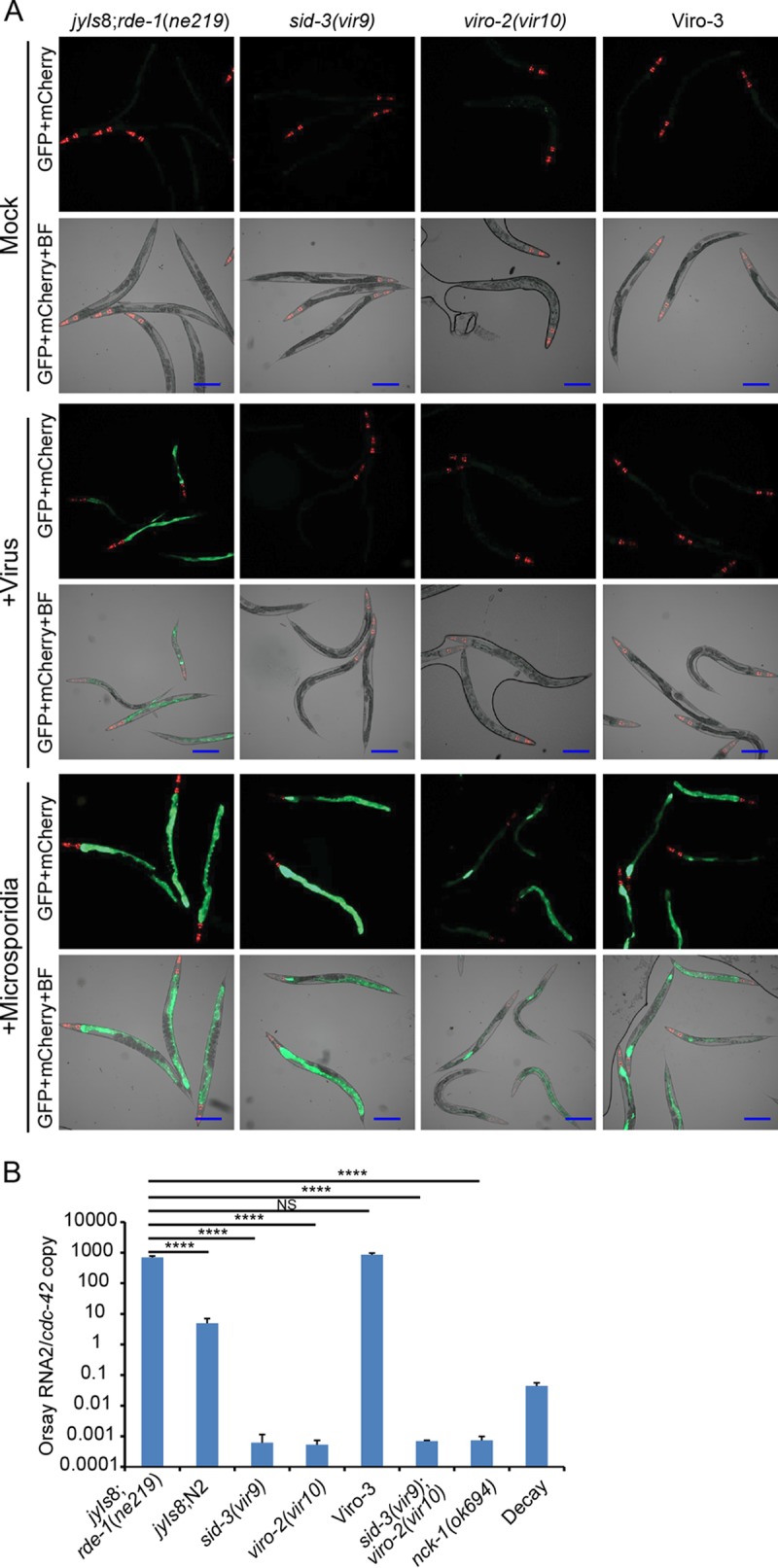
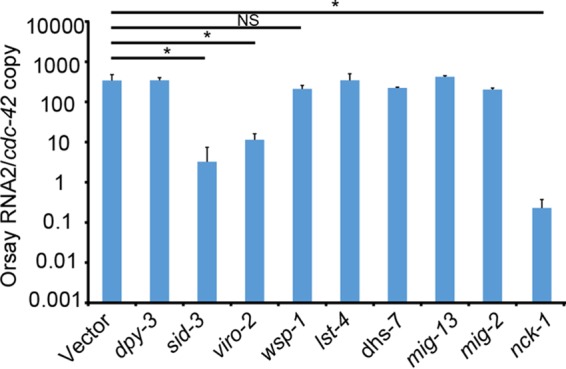
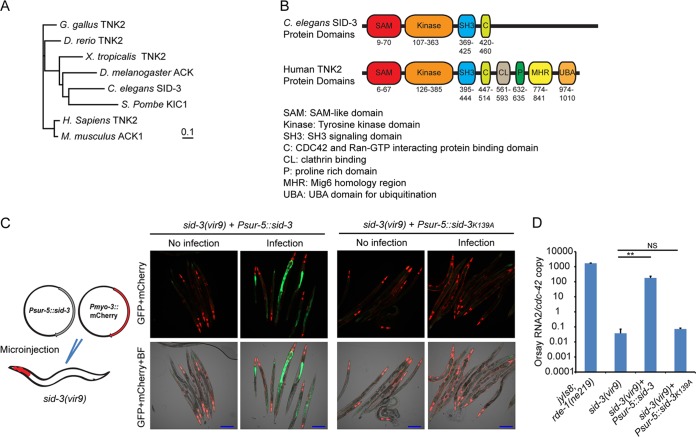
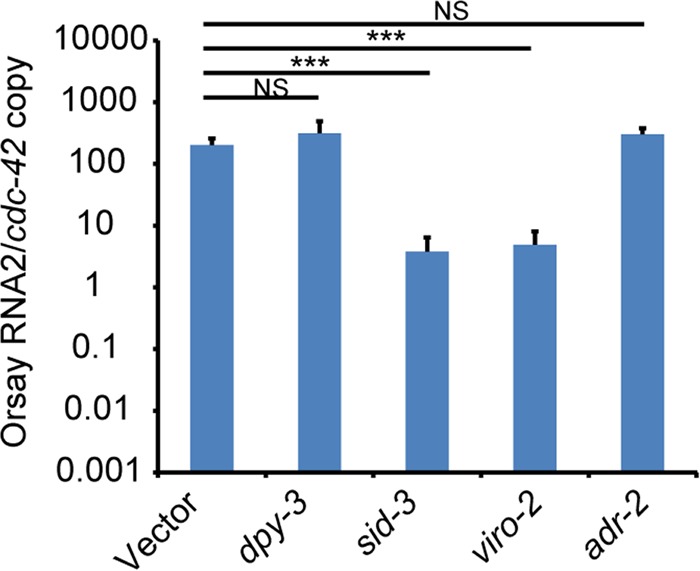
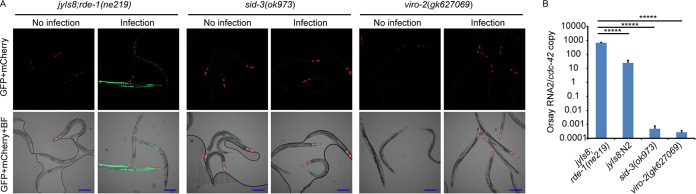
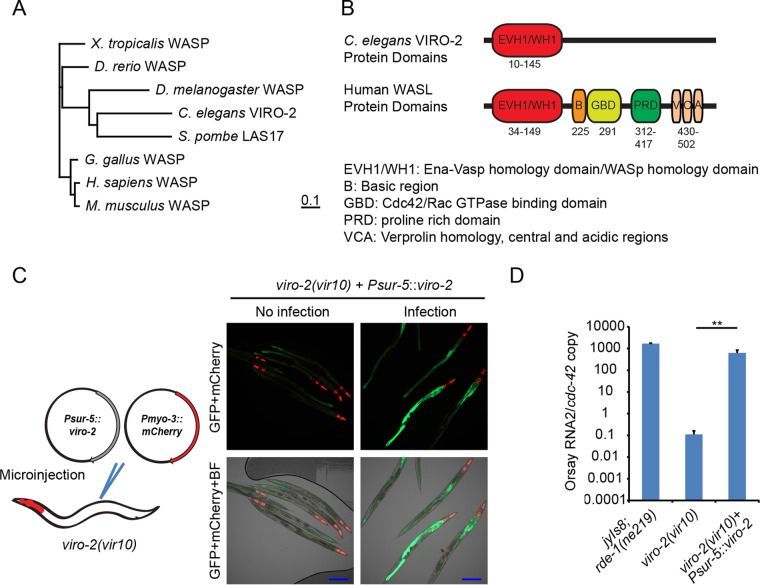
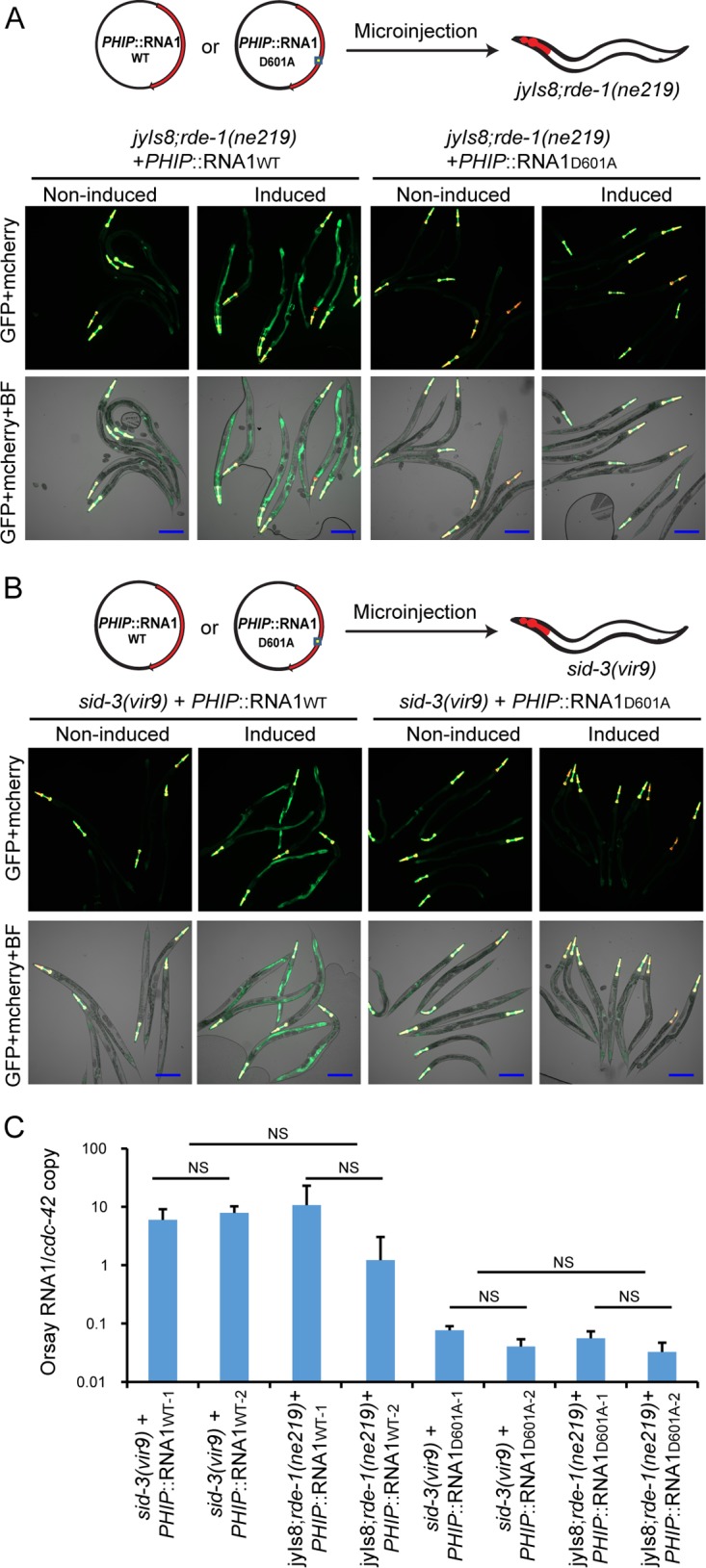
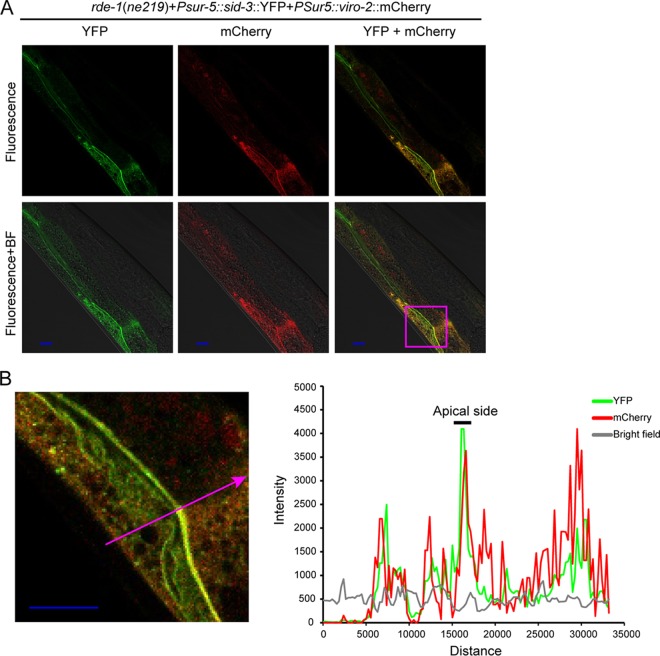
Many fundamental biological discoveries have been made in The discovery of Orsay virus has enabled studies of host-virus interactions in this model organism. To identify host factors critical for Orsay virus infection, we designed a forward genetic screen that utilizes a virally induced green fluorescent protein (GFP) reporter. Following chemical mutagenesis, two Viro (irus nduced eporter ff) mutants that failed to express GFP were mapped to , a nonreceptor tyrosine kinase, and B0280.13 (renamed ), an ortholog of human Wiskott-Aldrich syndrome protein (WASP). Both mutants yielded Orsay virus RNA levels comparable to that of the residual input virus, suggesting that they are not permissive for Orsay virus replication. In addition, we demonstrated that both genes affect an early prereplication stage of Orsay virus infection. Furthermore, it is known that the human ortholog of SID-3, activated CDC42-associated kinase (ACK1/TNK2), is capable of phosphorylating human WASP, suggesting that VIRO-2 may be a substrate for SID-3 in A targeted RNA interference (RNAi) knockdown screen further identified the gene , which has a human ortholog that interacts with TNK2 and WASP, as required for Orsay virus infection. Thus, genetic screening in identified critical roles in virus infection for evolutionarily conserved genes in a known human pathway. Orsay virus is the only known virus capable of naturally infecting the model organism , which shares many evolutionarily conserved genes with humans. We exploited the robust genetic tractability of to identify three host genes, , , and , which are essential for Orsay virus infection. Mutant animals that lack these three genes are highly defective in viral replication. Strikingly, the human orthologs of these three genes, activated CDC42-associated kinase (TNK2), Wiskott-Aldrich syndrome protein (WASP), and noncatalytic region of tyrosine kinase adaptor protein 1 (NCK1) are part of a known signaling pathway in mammals. These results suggest that TNK2, WASP, and NCK1 may play important roles in mammalian virus infection.
许多基础生物学发现都是在 中做出的。奥赛病毒的发现使人们能够在这个模式生物中研究宿主-病毒相互作用。为了鉴定对奥赛病毒感染至关重要的宿主因子,我们设计了一个利用病毒诱导的绿色荧光蛋白(GFP)报告器的正向遗传筛选。在化学诱变后,两个未能表达 GFP 的 Viro(irus nduced eporter ff)突变体被定位到 ,一个非受体酪氨酸激酶和 B0280.13(重命名为 ),人类威特综合征蛋白(WASP)的同源物。这两个突变体产生的奥赛病毒 RNA 水平与残留输入病毒相当,表明它们对奥赛病毒复制不是许可的。此外,我们证明这两个基因都影响奥赛病毒感染的早期复制前阶段。此外,已知人类 SID-3 的同源物,激活 CDC42 相关激酶(ACK1/TNK2),能够磷酸化人类 WASP,这表明 VIRO-2 可能是 中的 SID-3 的底物。 靶向 RNA 干扰(RNAi)敲低筛选进一步鉴定了 基因,该基因在人类中具有与 TNK2 和 WASP 相互作用的同源物,是奥赛病毒感染所必需的。因此,在 中进行的遗传筛选确定了在已知的人类途径中,进化保守基因在病毒感染中的关键作用。奥赛病毒是唯一一种能够自然感染模式生物的病毒,它与人类有许多进化保守的基因。我们利用 强大的遗传可操作性,鉴定了三个宿主基因 、 、和 ,它们是奥赛病毒感染所必需的。缺乏这三个基因的突变动物在病毒复制中高度缺陷。引人注目的是,这三个基因的人类同源物,激活 CDC42 相关激酶(TNK2)、威特综合征蛋白(WASP)和酪氨酸激酶衔接蛋白 1 的非催化区域(NCK1)是哺乳动物中已知信号通路的一部分。这些结果表明,TNK2、WASP 和 NCK1 可能在哺乳动物病毒感染中发挥重要作用。