Gallay Philippe A, Chatterji Udayan, Kirchhoff Aaron, Gandarilla Angel, Gunawardana Manjula, Pyles Richard B, Marzinke Mark A, Moss John A, Baum Marc M
Department of Immunology & Microbiology, The Scripps Research Institute; La Jolla, California, United States of America.
Department of Chemistry, Oak Crest Institute of Science; Monrovia, California, United States of America.
PLoS One. 2017 Sep 7;12(9):e0184303. doi: 10.1371/journal.pone.0184303. eCollection 2017.
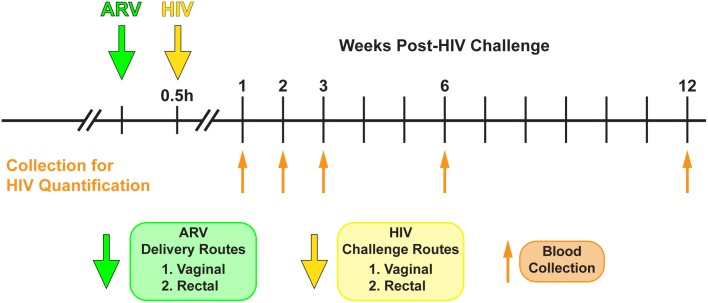
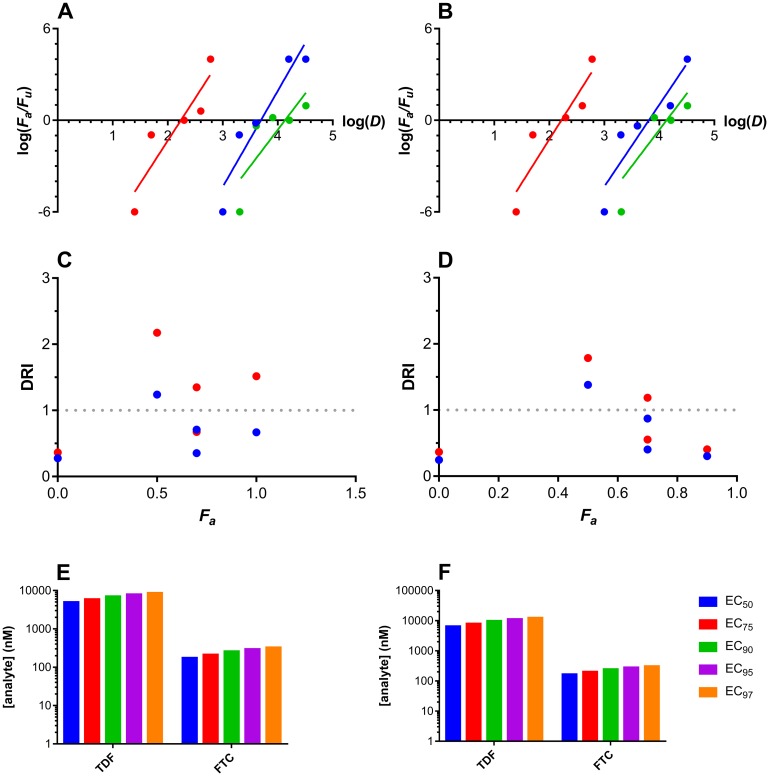
With more than 7,000 new HIV infections daily worldwide, there is an urgent need for non-vaccine biomedical prevention (nBP) strategies that are safe, effective, and acceptable. Clinical trials have demonstrated that pre-exposure prophylaxis (PrEP) with antiretrovirals (ARVs) can be effective at preventing HIV infection. In contrast, other trials using the same ARVs failed to show consistent efficacy. Topical (vaginal and rectal) dosing is a promising regimen for HIV PrEP as it leads to low systematic drug exposure. A series of titration studies were carried out in bone marrow/liver/thymus (BLT) mice aimed at determining the adequate drug concentrations applied vaginally or rectally that offer protection against rectal or vaginal HIV challenge. The dose-response relationship of these agents was measured and showed that topical tenofovir disoproxil fumarate (TDF) and emtricitabine (FTC) can offer 100% protection against rectal or vaginal HIV challenges. From the challenge data, EC50 values of 4.6 μM for TDF and 0.6 μM for FTC for HIV vaginal administration and 6.1 μM TDF and 0.18 μM for FTC for rectal administration were obtained. These findings suggest that the BLT mouse model is highly suitable for studying the dose-response relationship in single and combination ARV studies of vaginal or rectal HIV exposure. Application of this sensitive HIV infection model to more complex binary and ternary ARV combinations, particularly where agents have different mechanisms of action, should allow selection of optimal ARV combinations to be advanced into pre-clinical and clinical development as nBP products.
全球每天有超过7000例新的艾滋病毒感染病例,因此迫切需要安全、有效且可接受的非疫苗生物医学预防(nBP)策略。临床试验表明,使用抗逆转录病毒药物(ARV)进行暴露前预防(PrEP)可有效预防艾滋病毒感染。相比之下,使用相同ARV的其他试验未能显示出一致的疗效。局部(阴道和直肠)给药是艾滋病毒PrEP的一种有前景的给药方案,因为它导致较低的全身药物暴露。针对确定经阴道或直肠应用的足以预防直肠或阴道艾滋病毒攻击的适当药物浓度,在骨髓/肝脏/胸腺(BLT)小鼠中进行了一系列滴定研究。测量了这些药物的剂量反应关系,结果表明,局部应用替诺福韦酯(TDF)和恩曲他滨(FTC)可提供100%的保护,防止直肠或阴道艾滋病毒攻击。根据攻击数据,经阴道给药时TDF的EC50值为4.6μM,FTC为0.6μM;经直肠给药时TDF为6.1μM,FTC为0.18μM。这些发现表明,BLT小鼠模型非常适合研究阴道或直肠艾滋病毒暴露的单一和联合ARV研究中的剂量反应关系。将这种敏感的艾滋病毒感染模型应用于更复杂的二元和三元ARV组合,特别是在药物具有不同作用机制的情况下,应该能够选择最佳的ARV组合,作为nBP产品推进到临床前和临床开发阶段。