Department of Ultrasound in Medicine, Shanghai Jiao Tong University Affiliated Sixth People's Hospital, Shanghai, China.
Shanghai Institute of Ultrasound in Medicine, Shanghai, China.
Sci Rep. 2017 Sep 11;7(1):11235. doi: 10.1038/s41598-017-08201-9.
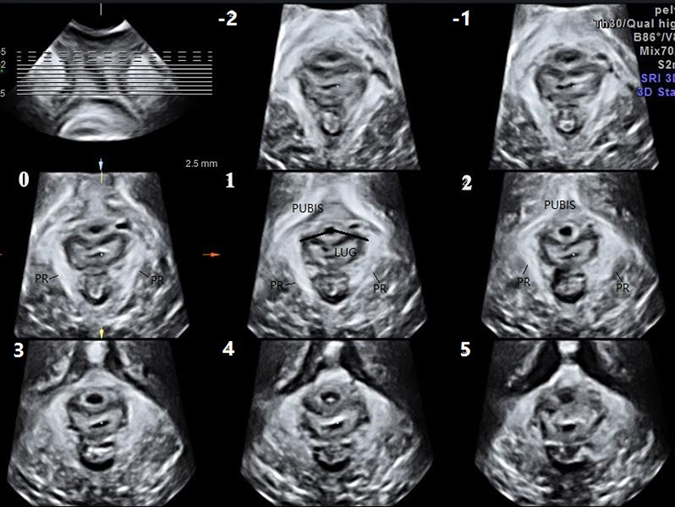
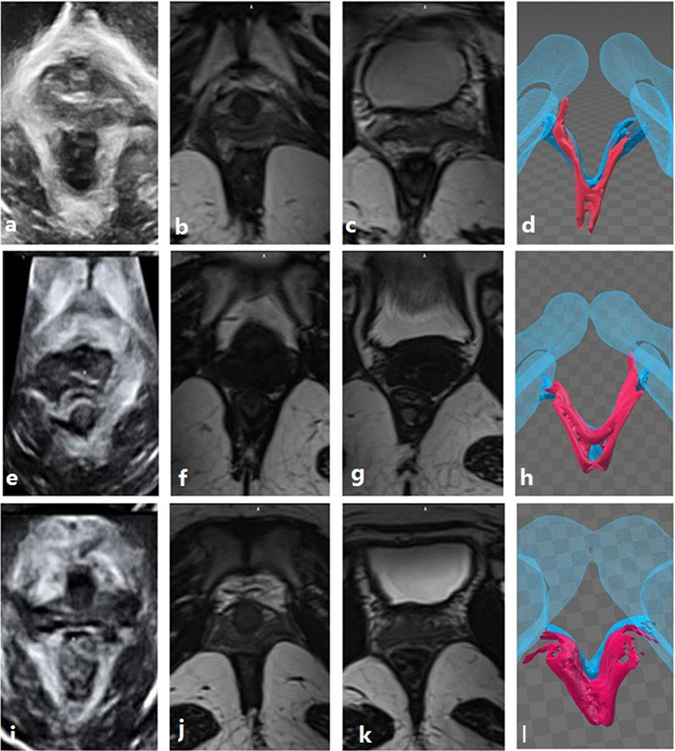
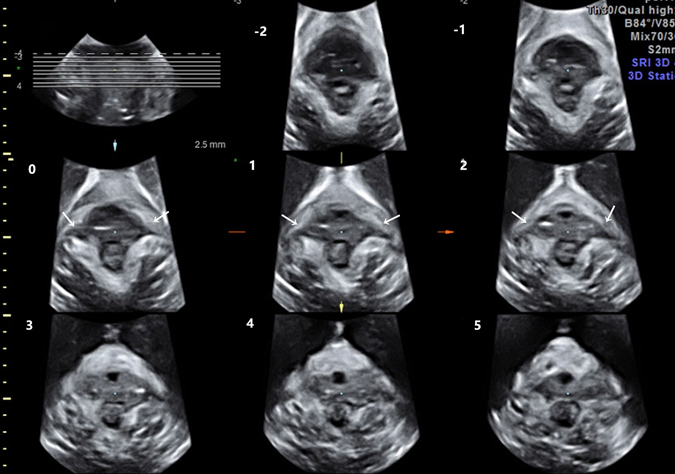
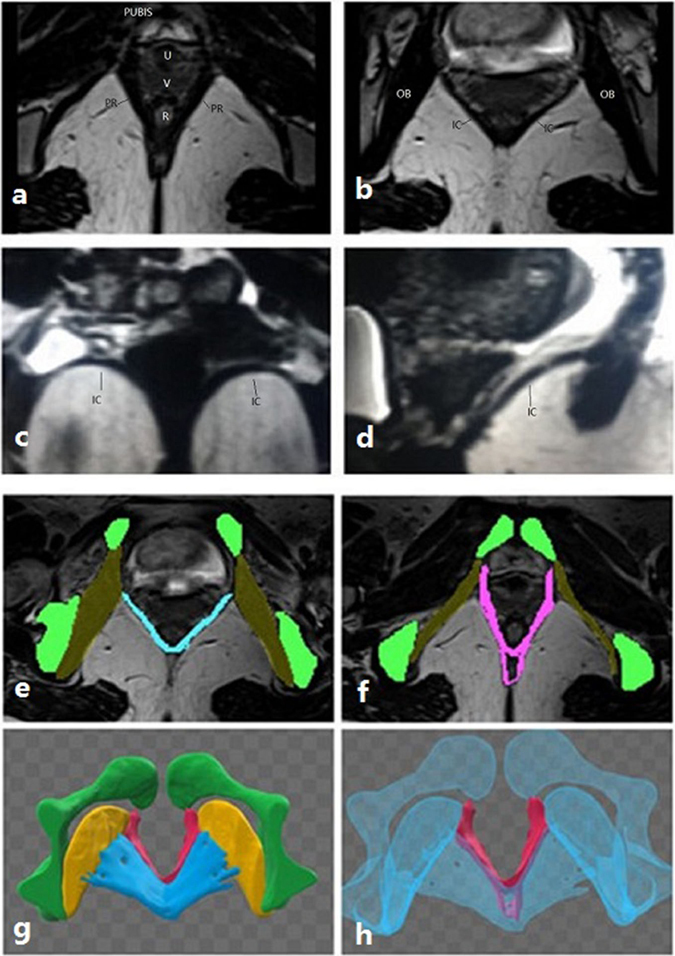
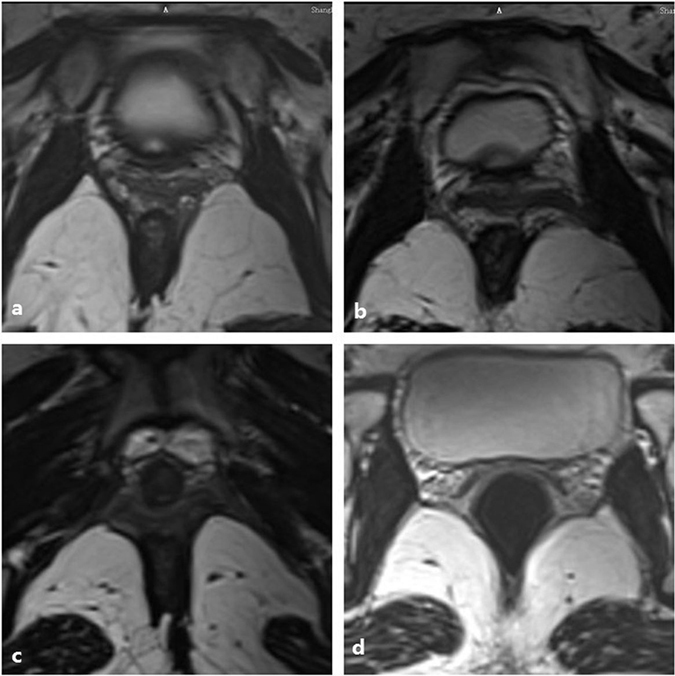
Vaginal delivery may cause levator avulsion, which may increase the risk of pelvic floor dysfunction (PFD). To explore the morphological changes of the levator ani muscle (including the puborectalis and iliococcygeus) and levator avulsion after vaginal delivery, translabial tomographic ultrasound imaging (TUI) was used to examine 80 women 45-60 days after their vaginal delivery. Subsequently, magnetic resonance imaging (MRI) was performed if at least one-sided puborectalis avulsion was found on TUI. The incidence of puborectalis avulsion in these postpartum women was 13.75% in this study. Both MRI and TUI can detect puborectalis avulsion well, and their results have good consistency. Iliococcygeus muscle injury is difficult to detect using TUI. However, MRI is a good way to observe the morphological changes of the iliococcygeus, which may also be damaged during vaginal delivery. Interestingly, our study reveals that iliococcygeus muscle injury is often associated with severe puborectalis muscle tear.
阴道分娩可能导致会阴撕裂,这可能增加盆底功能障碍(PFD)的风险。为了探讨阴道分娩后肛提肌(包括耻骨直肠肌和髂尾肌)和会阴撕裂的形态变化,本研究使用经阴道断层超声成像(TUI)检查了 80 名阴道分娩后 45-60 天的女性。随后,如果在 TUI 上发现至少一侧耻骨直肠肌撕裂,则进行磁共振成像(MRI)检查。在这些产后女性中,耻骨直肠肌撕裂的发生率为 13.75%。MRI 和 TUI 均可很好地检测耻骨直肠肌撕裂,且两者结果具有良好的一致性。TUI 难以检测髂尾肌损伤。然而,MRI 是观察髂尾肌形态变化的良好方法,其在阴道分娩过程中也可能受损。有趣的是,我们的研究表明,髂尾肌损伤常与严重的耻骨直肠肌撕裂有关。