Auger Jean-Philippe, Santinón Agustina, Roy David, Mossman Karen, Xu Jianguo, Segura Mariela, Gottschalk Marcelo
Research Group on Infectious Diseases in Production Animals (GREMIP), Swine and Poultry Infectious Diseases Research Center (CRIPA), Faculty of Veterinary Medicine, Department of Pathology and Microbiology, University of Montreal, Saint-Hyacinthe, QC, Canada.
Department of Biochemistry and Biomedical Sciences, McMaster University, Hamilton, ON, Canada.
Front Immunol. 2017 Aug 28;8:1039. doi: 10.3389/fimmu.2017.01039. eCollection 2017.
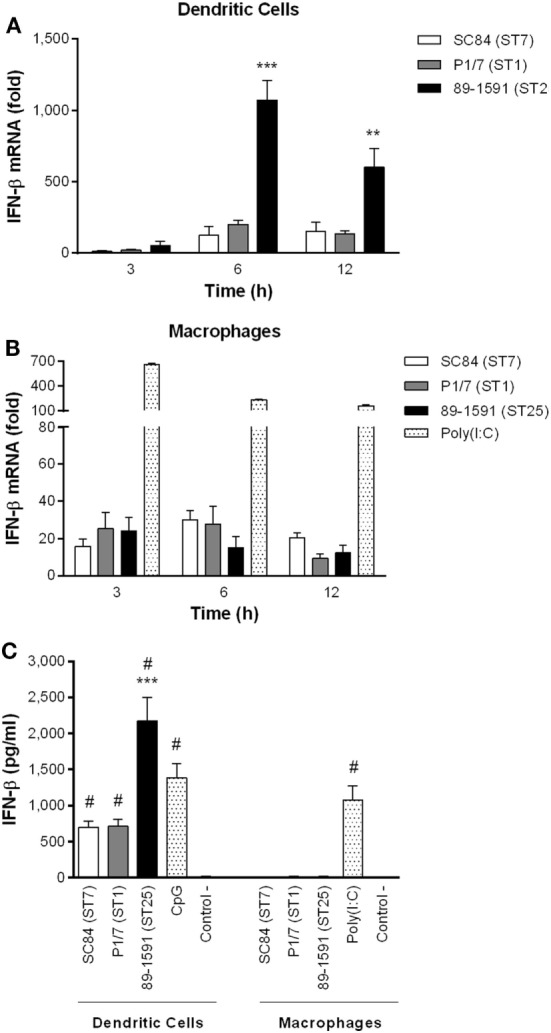
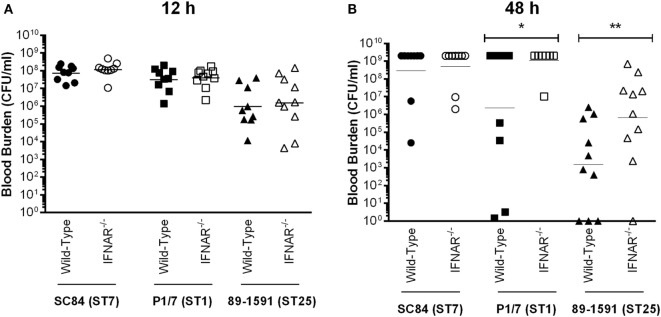
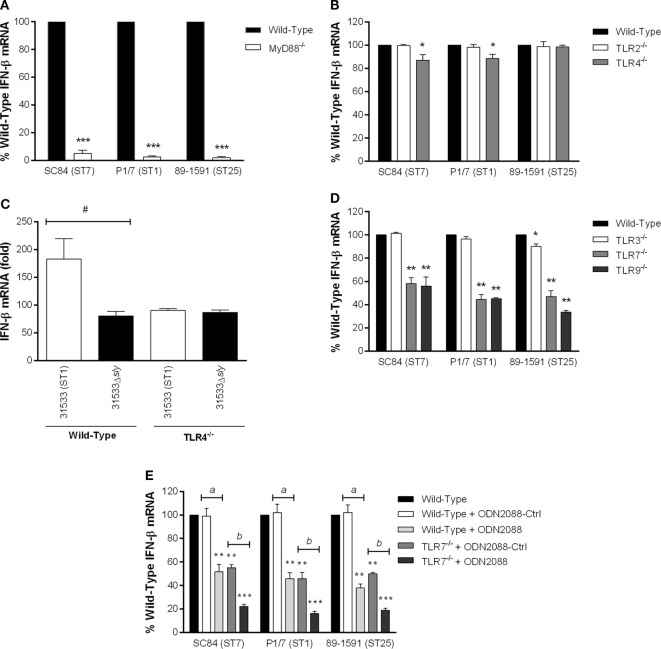
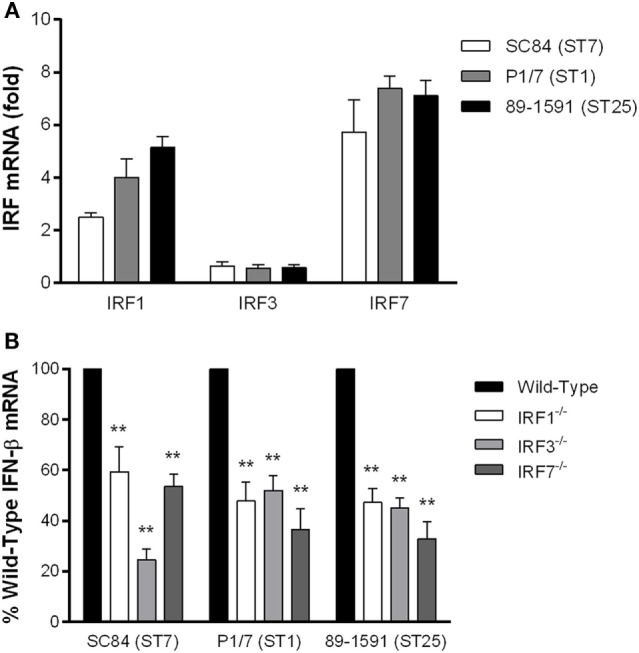
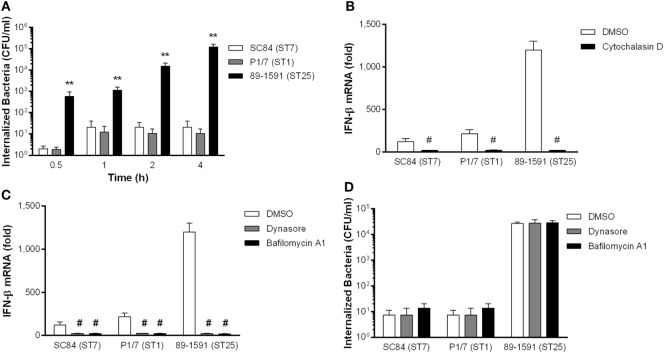
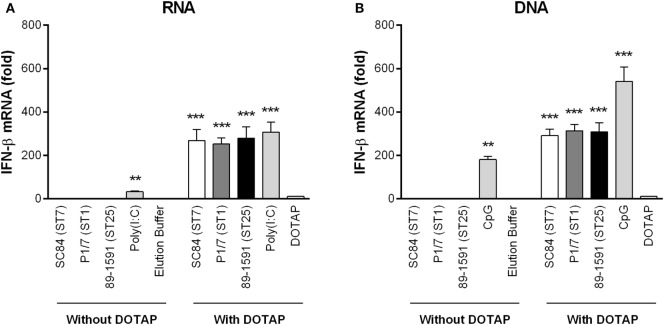
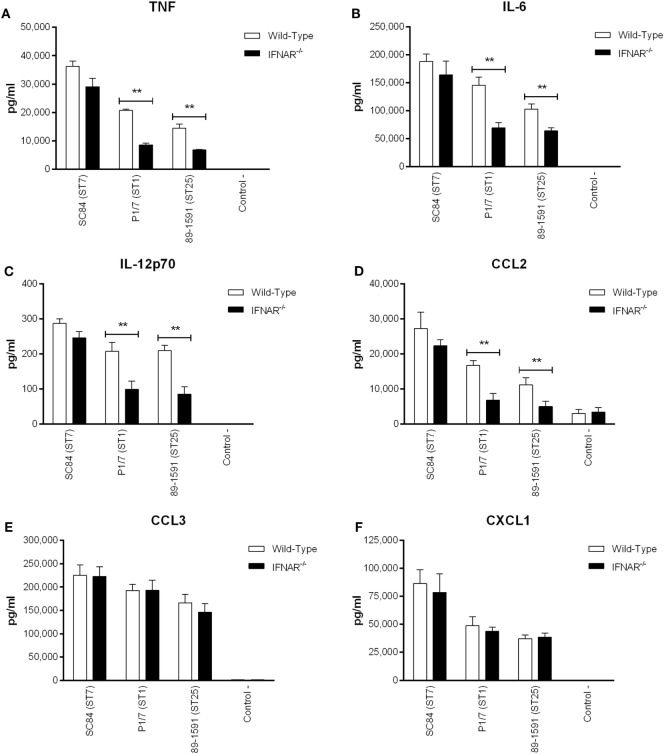
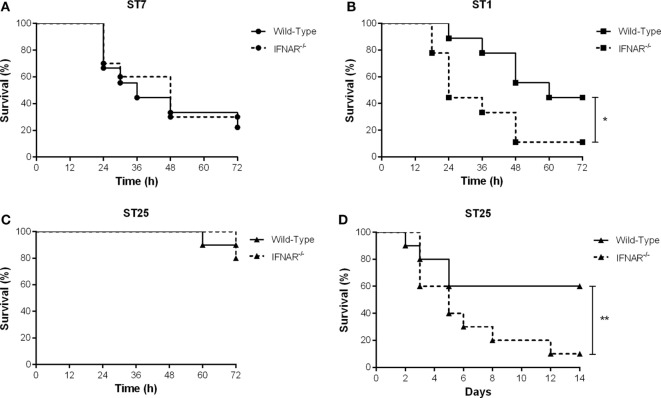
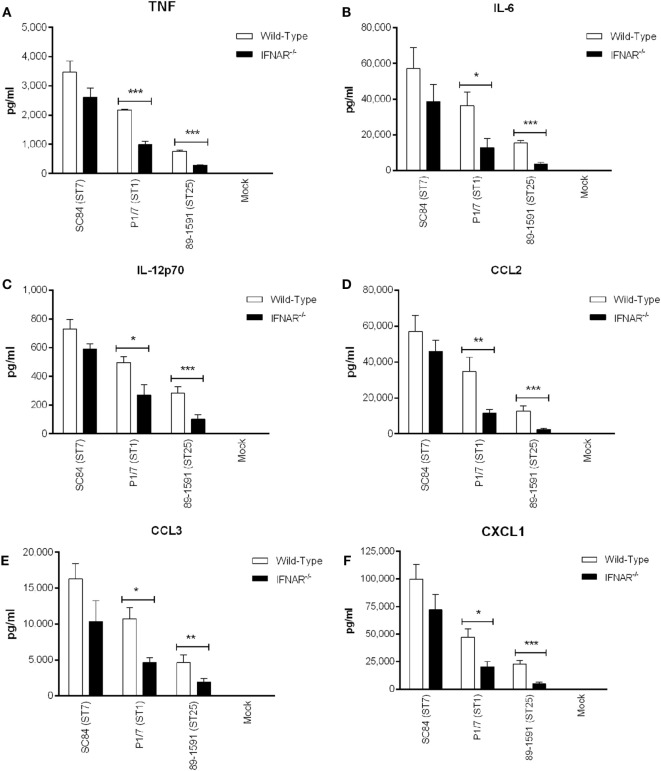
serotype 2 is an important porcine bacterial pathogen and emerging zoonotic agent mainly responsible for sudden death, septic shock, and meningitis, with exacerbated inflammation being a hallmark of the infection. However, serotype 2 strains are genotypically and phenotypically heterogeneous, being composed of a multitude of sequence types (STs) whose virulence greatly varies: the virulent ST1 (Eurasia), highly virulent ST7 (responsible for the human outbreaks in China), and intermediate virulent ST25 (North America) are the most important worldwide. Even though type I interferons (IFNs) are traditionally associated with important antiviral functions, recent studies have demonstrated that they may also play an important role during infections with extracellular bacteria. Upregulation of IFN-β levels was previously observed in mice following infection with this pathogen. Consequently, the implication of IFN-β in the serotype 2 pathogenesis, which has always been considered a strict extracellular bacterium, was evaluated using strains of varying virulence. This study demonstrates that intermediate virulent strains are significantly more susceptible to phagocytosis than virulent strains. Hence, subsequent localization of these strains within the phagosome results in recognition of bacterial nucleic acids by Toll-like receptors 7 and 9, leading to activation of the interferon regulatory factors 1, 3, and 7 and production of IFN-β. Type I IFN, whose implication depends on the virulence level of the strain, is involved in host defense by participating in the modulation of systemic inflammation, which is responsible for the clearance of blood bacterial burden. As such, when induced by intermediate, and to a lesser extent, virulent strains, type I IFN plays a beneficial role in host survival. The highly virulent ST7 strain, however, hastily induces a septic shock that cannot be controlled by type I IFN, leading to rapid death of the host. A better understanding of the underlying mechanisms involved in the control of inflammation and subsequent bacterial burden could help to develop control measures for this important porcine and zoonotic agent.
2型血清型是一种重要的猪源细菌病原体,也是一种新出现的人畜共患病原体,主要导致猝死、感染性休克和脑膜炎,炎症加剧是该感染的一个标志。然而,2型血清型菌株在基因型和表型上具有异质性,由多种序列类型(STs)组成,其毒力差异很大:毒性强的ST1(欧亚大陆)、高毒力的ST7(在中国导致人类疫情爆发)和中等毒力的ST25(北美)是全球最重要的。尽管I型干扰素(IFNs)传统上与重要的抗病毒功能相关,但最近的研究表明,它们在细胞外细菌感染期间也可能发挥重要作用。先前在感染这种病原体的小鼠中观察到IFN-β水平上调。因此,使用不同毒力的菌株评估了IFN-β在2型血清型发病机制中的作用,2型血清型一直被认为是一种严格的细胞外细菌。这项研究表明,中等毒力菌株比毒力菌株更容易被吞噬。因此,这些菌株随后在吞噬体内的定位导致Toll样受体7和9识别细菌核酸,从而激活干扰素调节因子1、3和7并产生IFN-β。I型干扰素的作用取决于菌株的毒力水平,它通过参与全身炎症的调节来参与宿主防御反应,而全身炎症负责清除血液中的细菌负荷。因此,当由中等毒力菌株以及在较小程度上由毒力菌株诱导时,I型干扰素在宿主存活中发挥有益作用。然而,高毒力的ST7菌株会迅速引发无法被I型干扰素控制的感染性休克,导致宿主迅速死亡。更好地了解炎症控制和随后细菌负荷所涉及的潜在机制,有助于制定针对这种重要的猪源和人畜共患病原体的控制措施。