Lim Ji Hyae, Han You Jung, Kim Hyun Jin, Kwak Dong Wook, Park So Yeon, Chun Sun-Hee, Ryu Hyun Mee
Laboratory of Medical Genetics, Medical Research Institute, Cheil General Hospital and Women's Healthcare Center, Seoul, South Korea.
Department of Obstetrics and Gynecology, Cheil General Hospital and Women's Healthcare Center, Dankook University College of Medicine, Seoul, South Korea.
BMC Genomics. 2017 Sep 12;18(1):720. doi: 10.1186/s12864-017-3993-y.
We performed whole human genome expression analysis in placenta tissue (normal and T21) samples in order to investigate gene expression into the pathogenesis of trisomy 21 (T21) placenta. We profiled the whole human genome expression of placental samples from normal and T21 fetuses using the GeneChip Human Genome U133 plus 2.0 array. Based on these data, we predicted the functions of differentially expressed genes using bioinformatics tools.
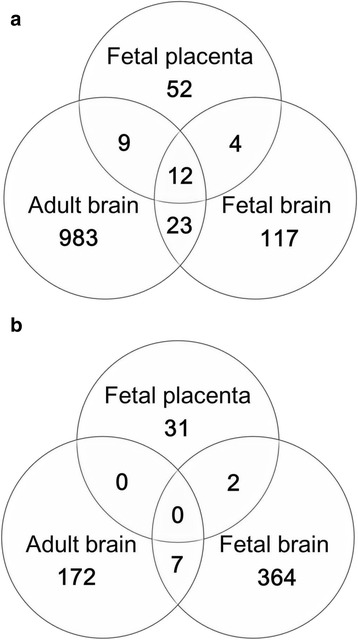
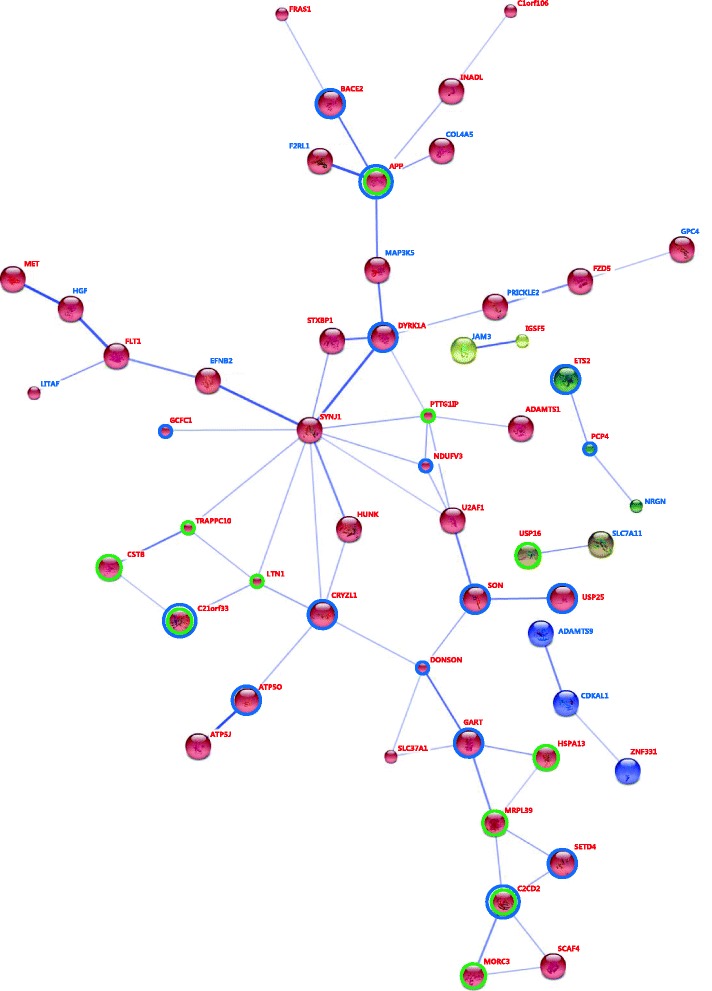
A total of 110 genes had different expression patterns in the T21 placentas than they did in the normal placentas. Among them, 77 genes were up-regulated in the T21 placenta and 33 genes were down-regulated compared to their respective levels in normal placentas. Over half of the up-regulated genes (59.7%, n = 46) were located on HSA21. Up-regulated genes in the T21 placentas were significantly associated with T21 and its complications including mental retardation and neurobehavioral manifestations, whereas down-regulated genes were significantly associated with diseases, such as cystitis, metaplasia, pathologic neovascularization, airway obstruction, and diabetes mellitus. The interactive signaling network showed that 53 genes (40 up-regulated genes and 13 down-regulated genes) were an essential component of the dynamic complex of signaling (P < 1.39e-08).
Our findings provide a broad overview of whole human genome expression in the placentas of fetuses with T21 and a possibility that these genes regulate biological pathways that have been involved in T21 and T21 complications. Therefore, these results could contribute to future research efforts concerning gene involvement in the disease's pathogenesis.
我们对胎盘组织(正常和21三体)样本进行了全人类基因组表达分析,以研究基因表达在21三体(T21)胎盘发病机制中的作用。我们使用基因芯片人类基因组U133 Plus 2.0阵列对正常和T21胎儿胎盘样本的全人类基因组表达进行了分析。基于这些数据,我们使用生物信息学工具预测了差异表达基因的功能。
共有110个基因在T21胎盘中的表达模式与正常胎盘中不同。其中,与正常胎盘各自水平相比,77个基因在T21胎盘中上调,33个基因下调。超过一半的上调基因(59.7%,n = 46)位于21号染色体上。T21胎盘中上调的基因与T21及其并发症(包括智力迟钝和神经行为表现)显著相关,而下调的基因与膀胱炎、化生、病理性血管生成、气道阻塞和糖尿病等疾病显著相关。交互式信号网络显示,53个基因(40个上调基因和13个下调基因)是信号动态复合体的重要组成部分(P < 1.39e-08)。
我们的研究结果提供了T21胎儿胎盘全人类基因组表达的广泛概况,并表明这些基因可能调节参与T21及其并发症的生物学途径。因此,这些结果可能有助于未来关于基因参与该疾病发病机制的研究工作。