Department of Anaesthesiology, Pharmacology & Therapeutics, University of British Columbia (UBC), 217-2176 Health Sciences Mall, Vancouver, British Columbia, V6T 1Z3, Canada.
Centre for Heart and Lung Innovation, St. Paul's Hospital, 1081 Burrard Street, Rm 166, Vancouver, British Columbia, Canada.
Skelet Muscle. 2017 Sep 12;7(1):19. doi: 10.1186/s13395-017-0135-9.
Duchenne muscular dystrophy (DMD) is caused by loss of dystrophin expression and leads to severe ambulatory and cardiac function decline. However, the dystrophin-deficient mdx murine model of DMD only develops a very mild form of the disease. Our group and others have shown vascular abnormalities in animal models of MD, a likely consequence of the fact that blood vessels express the same dystrophin-associated glycoprotein complex (DGC) proteins as skeletal muscles.
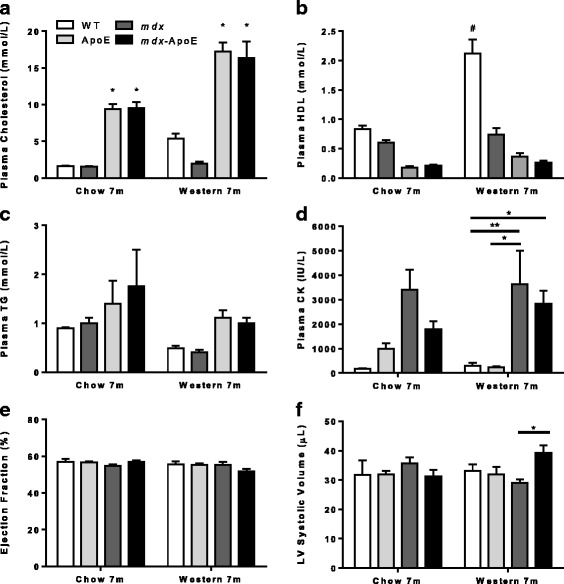
To test the blood vessel contribution to muscle damage in DMD, mdx mice were given elevated lipid levels via apolipoprotein E (ApoE) gene knockout combined with normal chow or lipid-rich Western diets. Ambulatory function and heart function (via echocardiogram) were assessed at 4 and 7 months of age. After sacrifice, muscle histology and aortic staining were used to assess muscle pathology and atherosclerosis development, respectively. Plasma levels of total cholesterol, high-density lipoprotein (HDL), triglycerides, and creatine kinase (CK) were also measured.
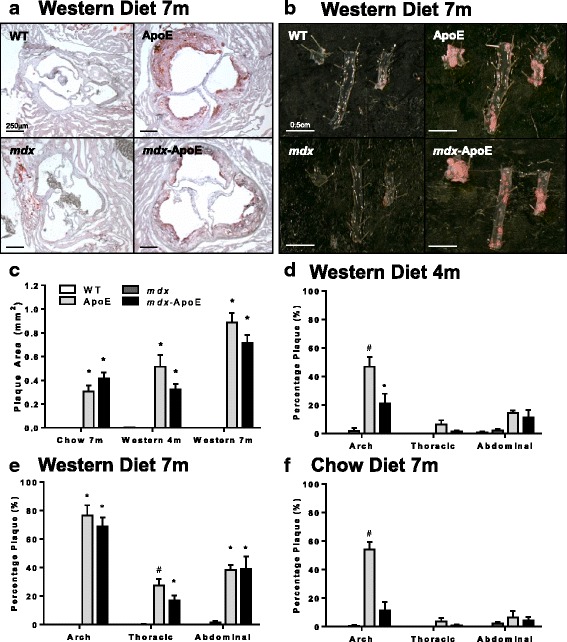
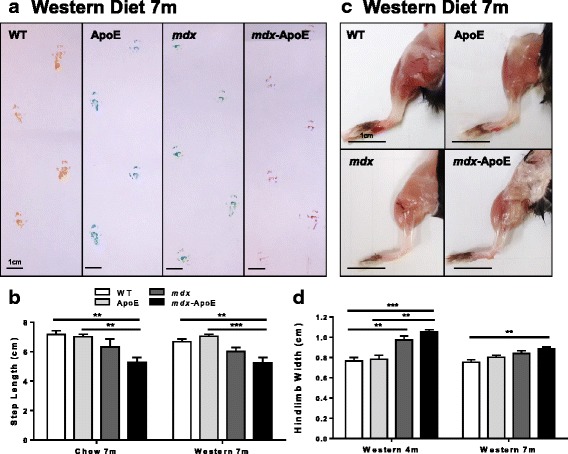
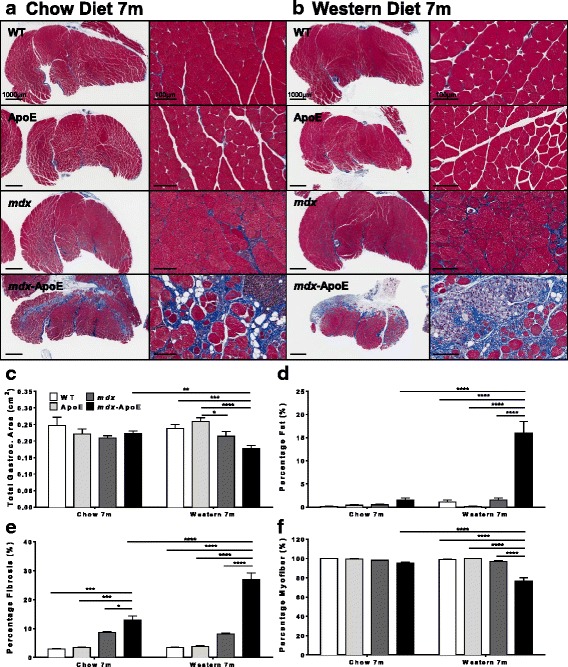
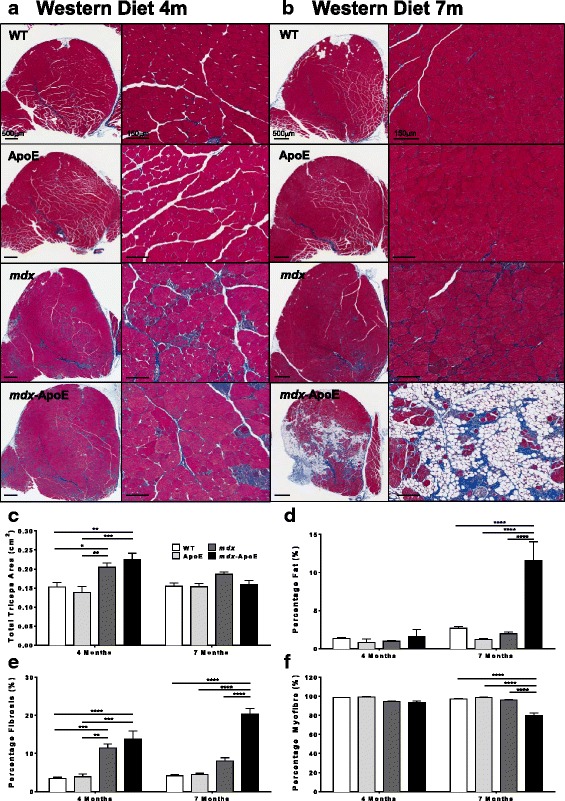
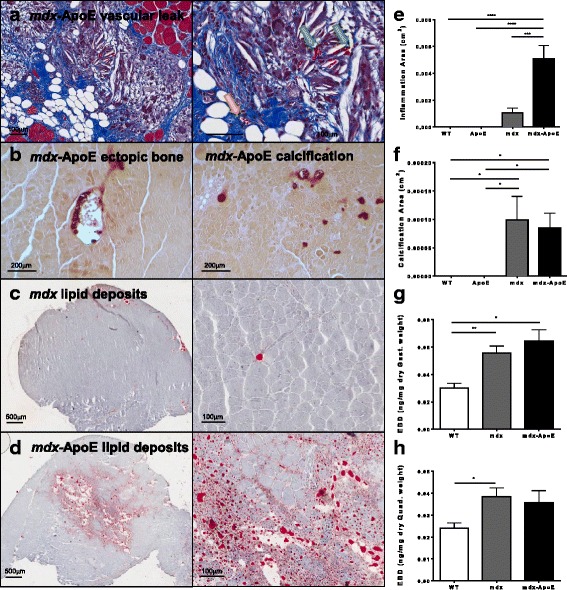
Although there was an increase in left ventricular heart volume in mdx-ApoE mice compared to that in mdx mice, parameters of heart function were not affected. Compared with wild-type and ApoE-null, only mdx-ApoE KO mice showed significant ambulatory dysfunction. Despite no significant difference in plasma CK, histological analyses revealed that elevated plasma lipids in chow- and Western diet-fed mdx-ApoE mice was associated with severe exacerbation of muscle pathology compared to mdx mice: significant increase in myofiber damage and fibrofatty replacement in the gastrocnemius and triceps brachii muscles, more reminiscent of human DMD pathology. Finally, although both ApoE and mdx-ApoE groups displayed increased plasma lipids, mdx-ApoE exhibited atherosclerotic plaque deposition equal to or less than that of ApoE mice.
Since others have shown that lipid abnormalities correlate with DMD severity, our data suggest that plasma lipids could be primary contributors to human DMD severity and that the notoriously mild phenotype of mdx mice might be attributable in part to their endogenously low plasma lipid profiles. Hence, DMD patients may benefit from lipid-lowering and vascular-targeted therapies.
杜氏肌营养不良症(DMD)是由肌营养不良蛋白表达缺失引起的,导致严重的运动和心脏功能下降。然而,DMD 的 mdx 鼠模型仅表现出非常轻微的疾病形式。我们的研究小组和其他研究小组已经在 MD 的动物模型中发现了血管异常,这可能是由于血管表达与骨骼肌相同的肌营养不良蛋白相关糖蛋白复合物(DGC)蛋白的结果。
为了测试 DMD 中血管对肌肉损伤的贡献,通过载脂蛋白 E(ApoE)基因敲除结合正常饮食或富含脂质的西方饮食,给 mdx 小鼠升高脂质水平。在 4 个月和 7 个月时评估运动功能和心脏功能(通过超声心动图)。处死动物后,使用肌肉组织学和主动脉染色分别评估肌肉病理学和动脉粥样硬化发展。还测量了血浆总胆固醇、高密度脂蛋白(HDL)、甘油三酯和肌酸激酶(CK)水平。
尽管与 mdx 小鼠相比,mdx-ApoE 小鼠的左心室心脏体积增加,但心脏功能参数未受影响。与野生型和 ApoE 缺失型相比,只有 mdx-ApoE KO 小鼠表现出明显的运动功能障碍。尽管血浆 CK 无显著差异,但组织学分析显示,在正常饮食和西方饮食喂养的 mdx-ApoE 小鼠中,升高的血浆脂质与 mdx 小鼠相比,肌肉病理学显著恶化:比目鱼肌和肱三头肌的肌纤维损伤和纤维脂肪替代显著增加,更类似于人类 DMD 病理学。最后,尽管 ApoE 和 mdx-ApoE 两组的血浆脂质均增加,但 mdx-ApoE 的动脉粥样硬化斑块沉积与 ApoE 小鼠相等或低于 ApoE 小鼠。
由于其他人已经表明脂质异常与 DMD 严重程度相关,我们的数据表明,血浆脂质可能是导致人类 DMD 严重程度的主要因素,而 mdx 小鼠明显的轻度表型可能部分归因于其内在的低血浆脂质谱。因此,DMD 患者可能受益于降脂和血管靶向治疗。