Department of Otolaryngology‑Head Neck Surgery, Third Xiangya Hospital, Central South University, Changsha, Hunan 410013, P.R. China.
Department of Otolaryngology‑Head Neck Surgery, Central Hospital, Xiangtan, Hunan 411100, P.R. China.
Mol Med Rep. 2017 Nov;16(5):6558-6569. doi: 10.3892/mmr.2017.7411. Epub 2017 Aug 31.
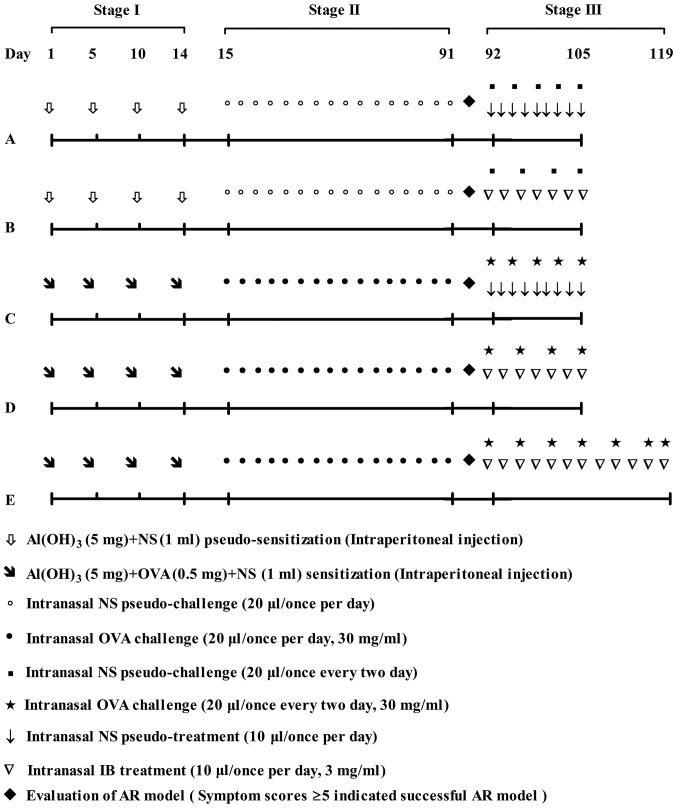
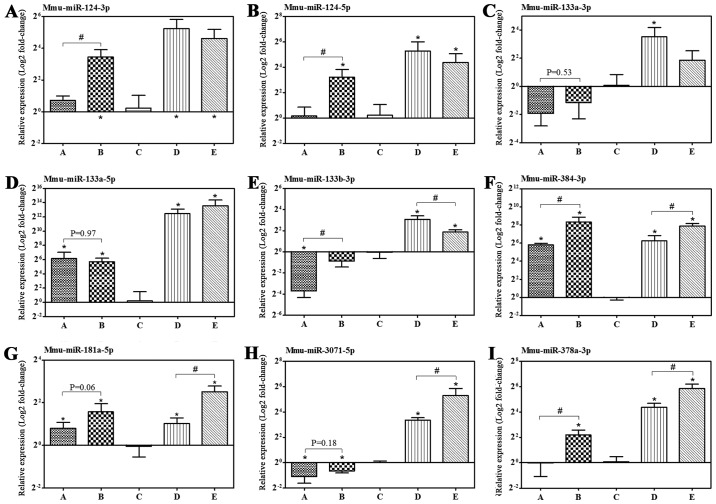
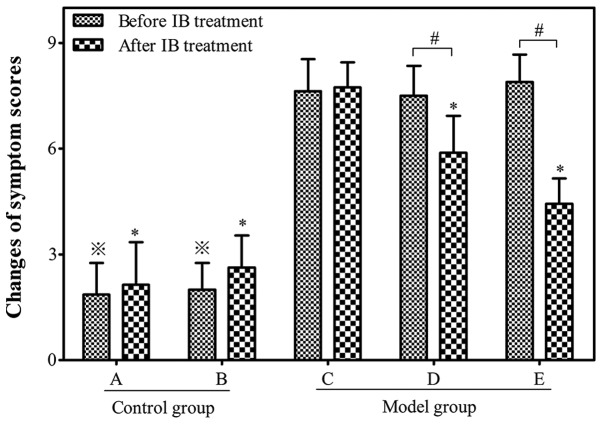
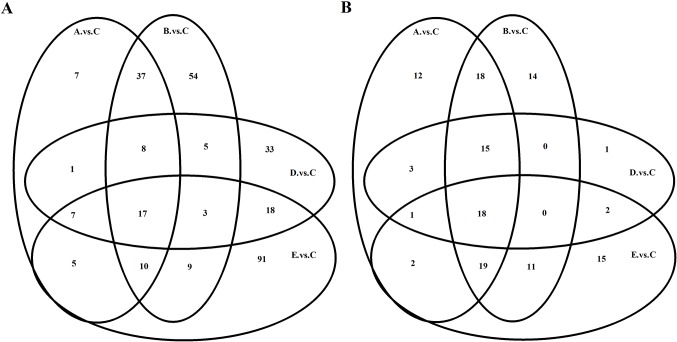
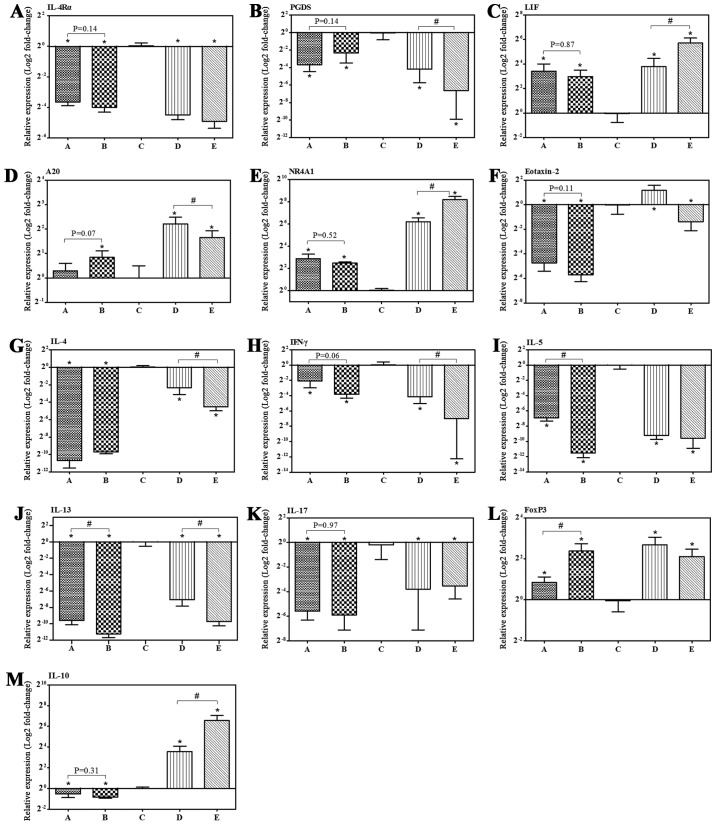
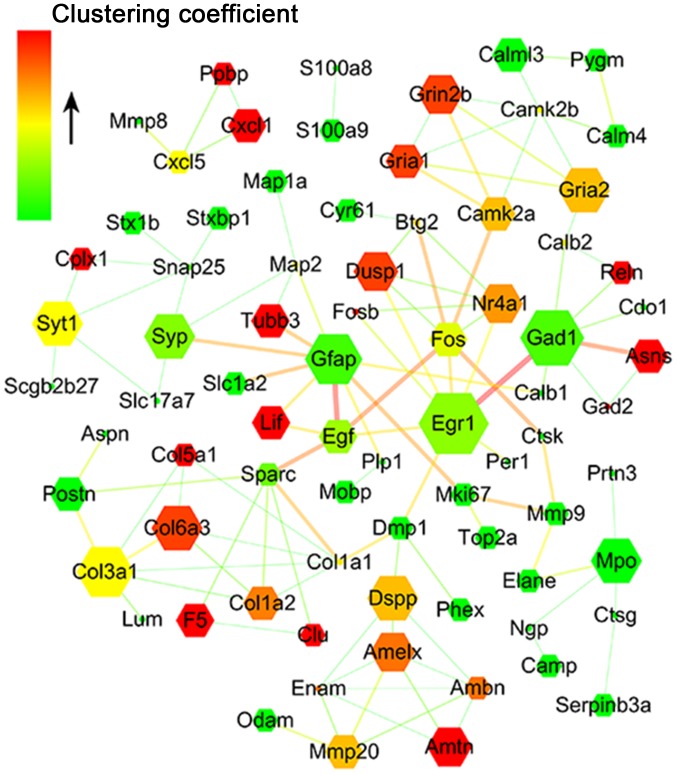
Anticholinergic agent, ipratropium bromide (IB) ameliorates symptoms of allergic rhinitis (AR) using neuroimmunologic mechanisms. However, the underlying molecular mechanism remains largely unclear. In the present study, 27 mice with AR induced by ovalbumin were randomly allocated to one of three groups: Model group, model group with IB treatment for 2 weeks, and model group with IB treatment for 4 weeks. Allergic symptoms were evaluated according to symptoms scores. Differentially expressed genes [microRNAs (miRNAs) and messenger RNAs (mRNAs)] of nasal mucosa were identified by microarray analysis. The expression levels of candidate genes were measured by reverse transcription‑quantitative polymerase chain reaction (RT‑qPCR). The data indicates that the symptoms scores in allergic mice were significantly reduced by IB treatment. In the nasal mucosa of allergic mice with IB treatment, 207 mRNAs and 87 miRNAs were differentially expressed, when compared with the sham group. IB treatment significantly downregulated the expression levels of interleukin‑4Rα and prostaglandin D2 synthase, whereas the leukemia inhibitory factor, A20 and nuclear receptor subfamily 4, group A, member 1 expression levels were upregulated. Similarly, the expression levels of mmu‑miR‑124‑3p/5p, ‑133b‑5p, ‑133a‑3p/5p, ‑384‑3p, ‑181a‑5p, ‑378a‑5p and ‑3071‑5p were significantly increased. RT‑qPCR data further validated these mRNA and miRNA expression levels. Thus, IB treatment regulated expression of allergic immune‑associated mRNAs and miRNAs of the nasal mucosa in allergic mice, which may be associated with ameliorated nasal allergic symptoms.
抗胆碱能药物,溴化异丙托品(IB)通过神经免疫机制改善过敏性鼻炎(AR)的症状。然而,其潜在的分子机制在很大程度上尚不清楚。在本研究中,27 只卵白蛋白诱导的 AR 小鼠被随机分为三组:模型组、模型组用 IB 治疗 2 周、模型组用 IB 治疗 4 周。根据症状评分评估过敏症状。通过微阵列分析鉴定鼻黏膜差异表达基因[microRNAs(miRNAs)和信使 RNAs(mRNAs)]。通过逆转录-定量聚合酶链反应(RT-qPCR)测量候选基因的表达水平。结果表明,IB 治疗可显著减轻过敏小鼠的症状评分。在 IB 治疗的过敏小鼠鼻黏膜中,与假手术组相比,有 207 个 mRNAs 和 87 个 miRNAs 表达差异。IB 治疗显著下调白细胞介素-4Rα 和前列腺素 D2 合酶的表达水平,而白血病抑制因子、A20 和核受体亚家族 4、A 组、成员 1 的表达水平上调。同样,mmu-miR-124-3p/5p、-133b-5p、-133a-3p/5p、-384-3p、-181a-5p、-378a-5p 和-3071-5p 的表达水平也显著升高。RT-qPCR 数据进一步验证了这些 mRNA 和 miRNA 的表达水平。因此,IB 治疗调节了过敏小鼠鼻黏膜中与过敏免疫相关的 mRNA 和 miRNA 的表达,这可能与改善的鼻过敏症状有关。