Link Theresa, Kuithan Friederike, Ehninger Armin, Kuhlmann Jan Dominik, Kramer Michael, Werner Andreas, Gatzweiler Axel, Richter Barbara, Ehninger Gerhard, Baretton Gustavo, Bachmann Michael, Wimberger Pauline, Friedrich Katrin
Department of Gynecology and Obstetrics, Medical Faculty and University Hospital Carl Gustav Carus, Technische Universität Dresden, Dresden, Germany.
National Center for Tumor Diseases (NCT), Partner Site Dresden, Dresden, Germany.
Oncotarget. 2017 Apr 29;8(33):54592-54603. doi: 10.18632/oncotarget.17523. eCollection 2017 Aug 15.
Prostate stem cell antigen (PSCA) has been suggested as biomarker and therapeutic target for prostate cancer. Recent advances showed that PSCA is up-regulated in other cancer entities, such as bladder or pancreatic cancer. However, the clinical relevance of PSCA-expression in breast cancer patients has not yet been established and is therefore addressed by the current study.
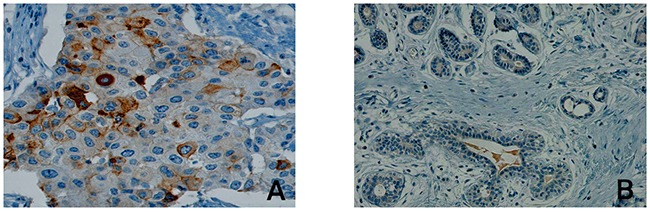
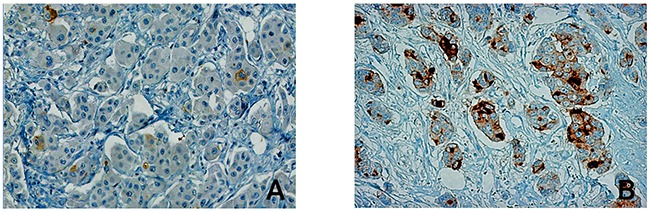
PSCA-protein expression was assessed in 405 breast cancer patients, using immunohistochemistry (PSCA antibody MB1) and tissue microarrays.
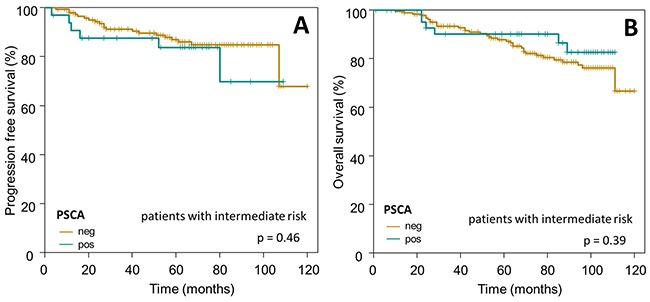
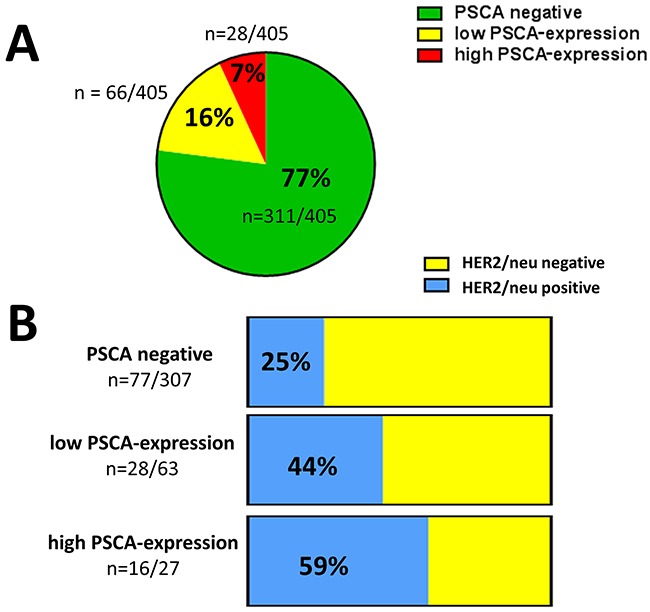
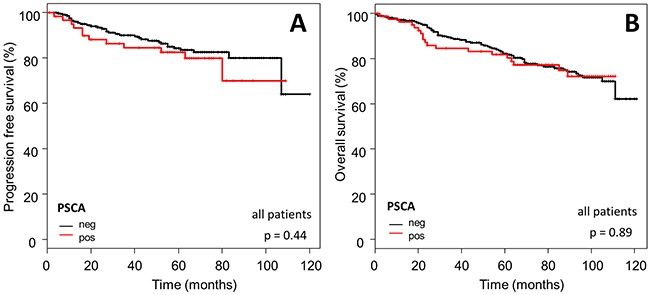
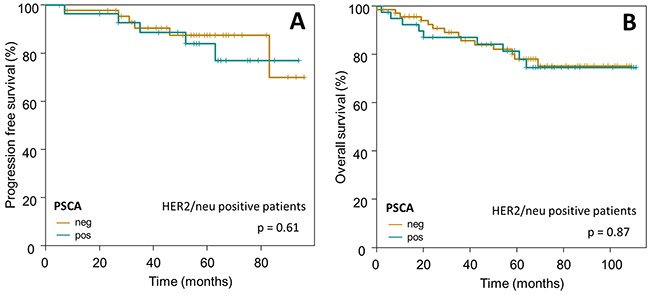
PSCA-expression was detected in 94/405 patients (23%) and correlated with unfavorable histopathological grade (p=0.011) and increased Ki67 proliferation index (p=0.006). We observed a strong positive correlation between PSCA-protein expression and HER2/neu receptor status (p<0.001). PSCA did not provide prognostic information in the analyzed cohort. Interestingly, the distribution of PSCA-expression among triple negative patients was comparable to the total population.
We identified a subgroup of PSCA-positive breast cancer patients, which could be amenable for a PSCA-targeted therapy. Moreover, given that we found a strong positive correlation between PSCA- and HER/neu expression, targeting PSCA may provide an alternative therapeutic option in case of trastuzumab resistance.
前列腺干细胞抗原(PSCA)已被提议作为前列腺癌的生物标志物和治疗靶点。最近的进展表明,PSCA在其他癌症实体中上调,如膀胱癌或胰腺癌。然而,PSCA在乳腺癌患者中的临床相关性尚未确立,因此本研究对其进行了探讨。
使用免疫组织化学(PSCA抗体MB1)和组织微阵列评估405例乳腺癌患者的PSCA蛋白表达。
在94/405例患者(23%)中检测到PSCA表达,其与不良组织病理学分级相关(p = 0.011),且Ki67增殖指数升高(p = 0.006)。我们观察到PSCA蛋白表达与HER2/neu受体状态之间存在强正相关(p < 0.001)。在分析的队列中,PSCA未提供预后信息。有趣的是,三阴性患者中PSCA表达的分布与总体人群相当。
我们确定了一组PSCA阳性乳腺癌患者,他们可能适合接受PSCA靶向治疗。此外,鉴于我们发现PSCA与HER/neu表达之间存在强正相关,在曲妥珠单抗耐药的情况下,靶向PSCA可能提供一种替代治疗选择。