Tang Yi, Qin Wei, Peng Wei, Tao Ye
Division of Nephrology, West China Hospital of Sichuan University, Sichuan, Chengdu, China.
Medicine (Baltimore). 2017 Sep;96(37):e8024. doi: 10.1097/MD.0000000000008024.
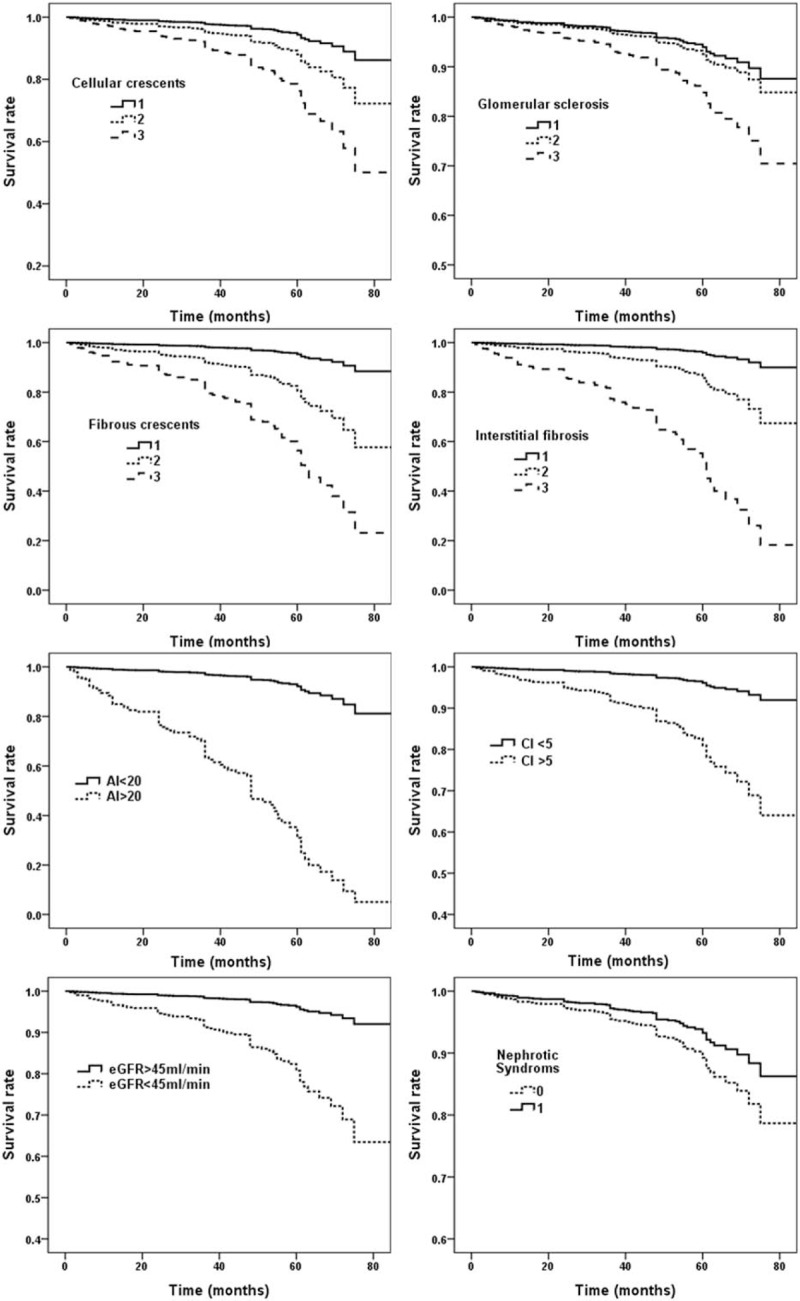
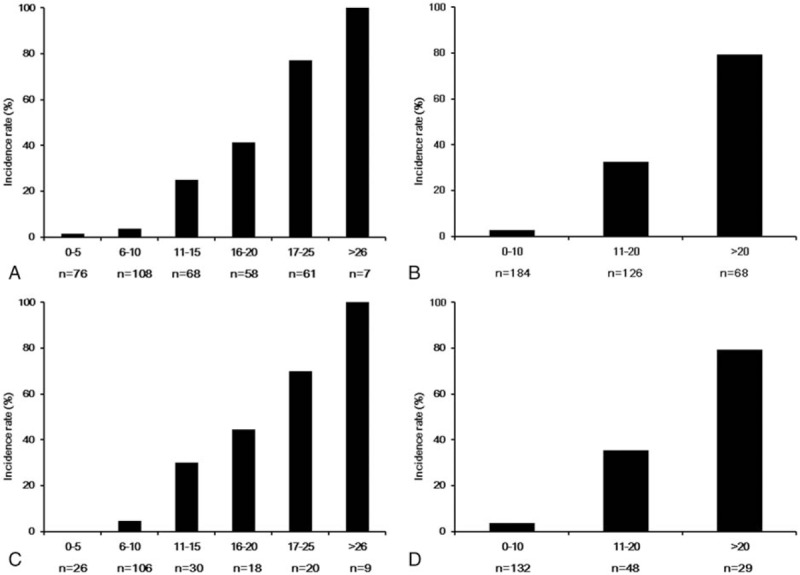
The risk assessment for developing end-stage renal disease (ESRD) remains unclear in patients with lupus nephritis (LN). The purpose of this study was to develop and validate a prediction rule for estimating the individual risk of ESRD in patients with LN using clinical and pathological data.A total of 599 patients with LN diagnosed by renal biopsy between June 2009 and June 2014 in West China Hospital of Sichuan University were retrospectively followed. Patients were randomly divided into derivation cohort (n = 379) and validation cohort (n = 220). The SLEDAI score was used to evaluate the clinical disease activity. Pathological lesions according to the International Society of Nephrology and the Renal Pathology Society (ISN/RPS) systems were meticulously evaluated. The risk factors for developing ESRD were evaluated using a Cox proportional hazard model with a stepwise backward elimination method.In the derivation cohort, 100 patients (26.5%) developed ESRD during the average 46.0 ± 21.1 months' follow-up. The final prediction model included cellular crescents, active index >20, glomerular sclerosis, fibrous crescents, interstitial fibrosis, chronic index >5, nephrotic syndrome, and eGFR <45 mL/min as independent risk factors for developing ESRD. To create a prediction rule, the score for each variable was weighted by the regression coefficients calculated using the relevant Cox model. The prediction rule was validated in the validation cohort. During the follow-up period, 45 patients (21.5%) in validation cohort progressed to ESRD.This study developed and validated a new prediction rule using clinical measures and pathological changes for developing ESRD in patients with LN.
狼疮性肾炎(LN)患者发生终末期肾病(ESRD)的风险评估仍不明确。本研究的目的是利用临床和病理数据,开发并验证一种用于估计LN患者发生ESRD个体风险的预测规则。对2009年6月至2014年6月在四川大学华西医院经肾活检确诊的599例LN患者进行回顾性随访。患者被随机分为推导队列(n = 379)和验证队列(n = 220)。使用SLEDAI评分评估临床疾病活动度。根据国际肾脏病学会和肾脏病理学会(ISN/RPS)系统对病理病变进行细致评估。采用逐步向后排除法的Cox比例风险模型评估发生ESRD的危险因素。在推导队列中,100例患者(26.5%)在平均46.0±21.1个月的随访期间发生了ESRD。最终的预测模型包括细胞性新月体、活动指数>20、肾小球硬化、纤维性新月体、间质纤维化、慢性指数>5、肾病综合征和估算肾小球滤过率(eGFR)<45 mL/min作为发生ESRD的独立危险因素。为创建预测规则,每个变量的得分由使用相关Cox模型计算的回归系数加权。该预测规则在验证队列中得到验证。在随访期间,验证队列中的45例患者(21.5%)进展为ESRD。本研究利用临床指标和病理变化开发并验证了一种用于预测LN患者发生ESRD的新预测规则。