
枫糖尿症:发病机制与治疗
Maple syrup urine disease: mechanisms and management.
作者信息
Blackburn Patrick R, Gass Jennifer M, Vairo Filippo Pinto E, Farnham Kristen M, Atwal Herjot K, Macklin Sarah, Klee Eric W, Atwal Paldeep S
机构信息
Center for Individualized Medicine.
Department of Health Sciences Research, Mayo Clinic, Jacksonville, FL.
出版信息
Appl Clin Genet. 2017 Sep 6;10:57-66. doi: 10.2147/TACG.S125962. eCollection 2017.
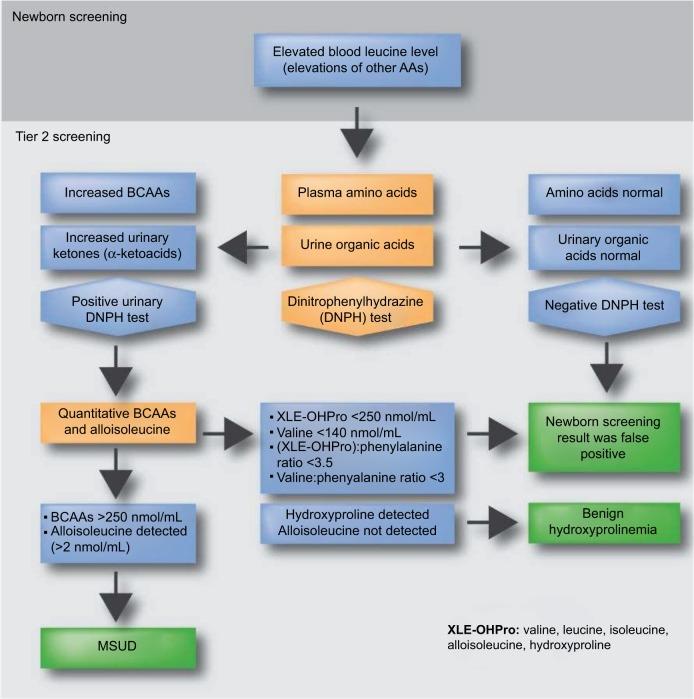
Maple syrup urine disease (MSUD) is an inborn error of metabolism caused by defects in the branched-chain α-ketoacid dehydrogenase complex, which results in elevations of the branched-chain amino acids (BCAAs) in plasma, α-ketoacids in urine, and production of the pathognomonic disease marker, alloisoleucine. The disorder varies in severity and the clinical spectrum is quite broad with five recognized clinical variants that have no known association with genotype. The classic presentation occurs in the neonatal period with developmental delay, failure to thrive, feeding difficulties, and maple syrup odor in the cerumen and urine, and can lead to irreversible neurological complications, including stereotypical movements, metabolic decompensation, and death if left untreated. Treatment consists of dietary restriction of BCAAs and close metabolic monitoring. Clinical outcomes are generally good in patients where treatment is initiated early. Newborn screening for MSUD is now commonplace in the United States and is included on the Recommended Uniform Screening Panel (RUSP). We review this disorder including its presentation, screening and clinical diagnosis, treatment, and other relevant aspects pertaining to the care of patients.
枫糖尿症(MSUD)是一种先天性代谢缺陷疾病,由支链α-酮酸脱氢酶复合体缺陷引起,导致血浆中支链氨基酸(BCAAs)升高、尿液中α-酮酸升高,并产生特征性疾病标志物别异亮氨酸。该疾病严重程度各异,临床谱相当广泛,有五种已确认的临床变异型,且与基因型无已知关联。典型表现出现在新生儿期,有发育迟缓、生长发育不良、喂养困难,以及耳垢和尿液中有枫糖浆气味,若不治疗可导致不可逆的神经并发症,包括刻板动作、代谢失代偿,甚至死亡。治疗包括限制BCAAs饮食和密切的代谢监测。早期开始治疗的患者临床结局通常良好。在美国,新生儿筛查枫糖尿症现已很普遍,并被列入推荐统一筛查项目(RUSP)。我们综述这种疾病,包括其表现、筛查与临床诊断、治疗以及与患者护理相关的其他方面。

 Zotero 插件