Wu Huijuan, Chen Jun, Li Dan, Liu Xiangyu, Li Lei, Wang Ke
Department of Gynecological Oncology, Tianjin Medical University Cancer Institute and Hospital, National Clinical Research Center of Cancer, Key Laboratory of Cancer Prevention and Therapy, Tianjin, 300060, PR China.
Department of Gynaecology and Obstetrics of Affiliated Hospital of Logistics University of PAP, Tianjin, 300162, PR China.
Transl Oncol. 2017 Dec;10(6):876-885. doi: 10.1016/j.tranon.2017.08.006. Epub 2017 Sep 27.
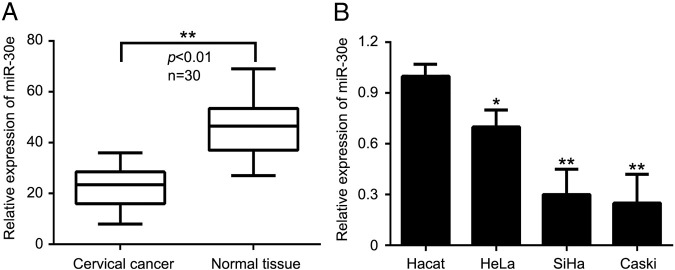
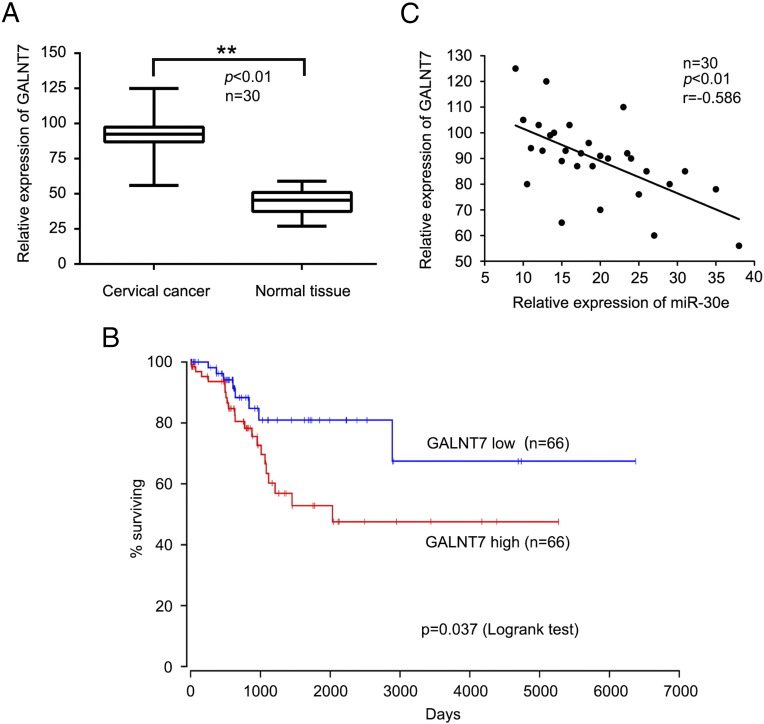
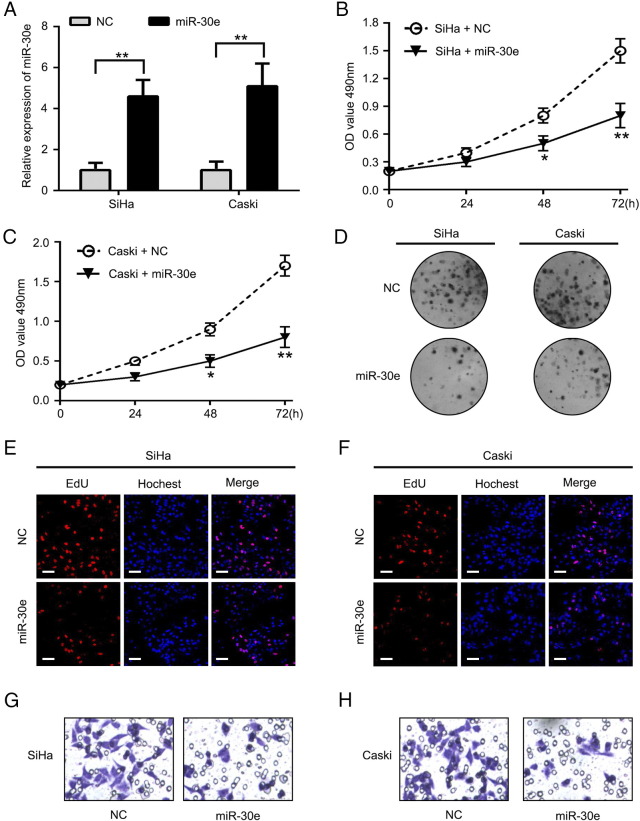
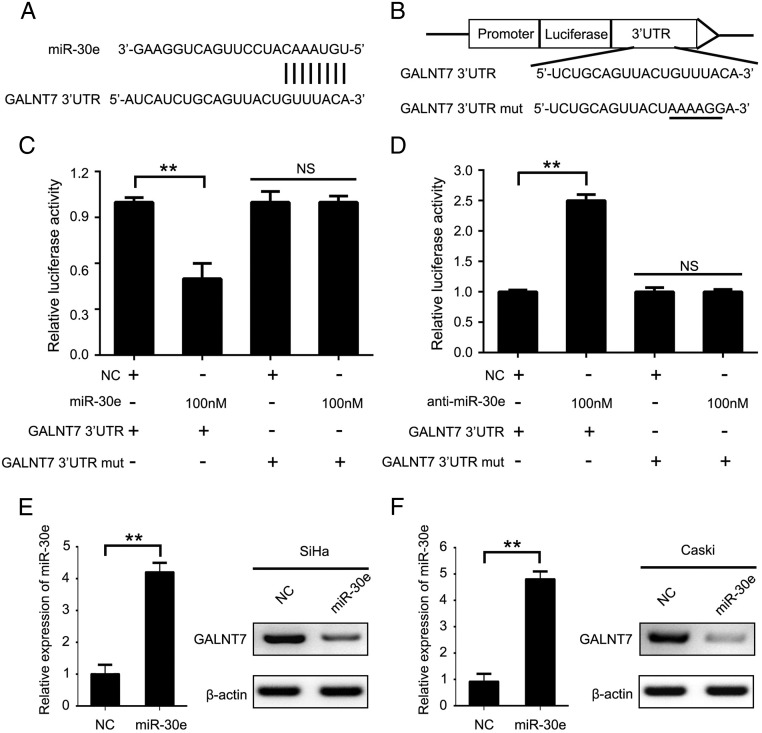
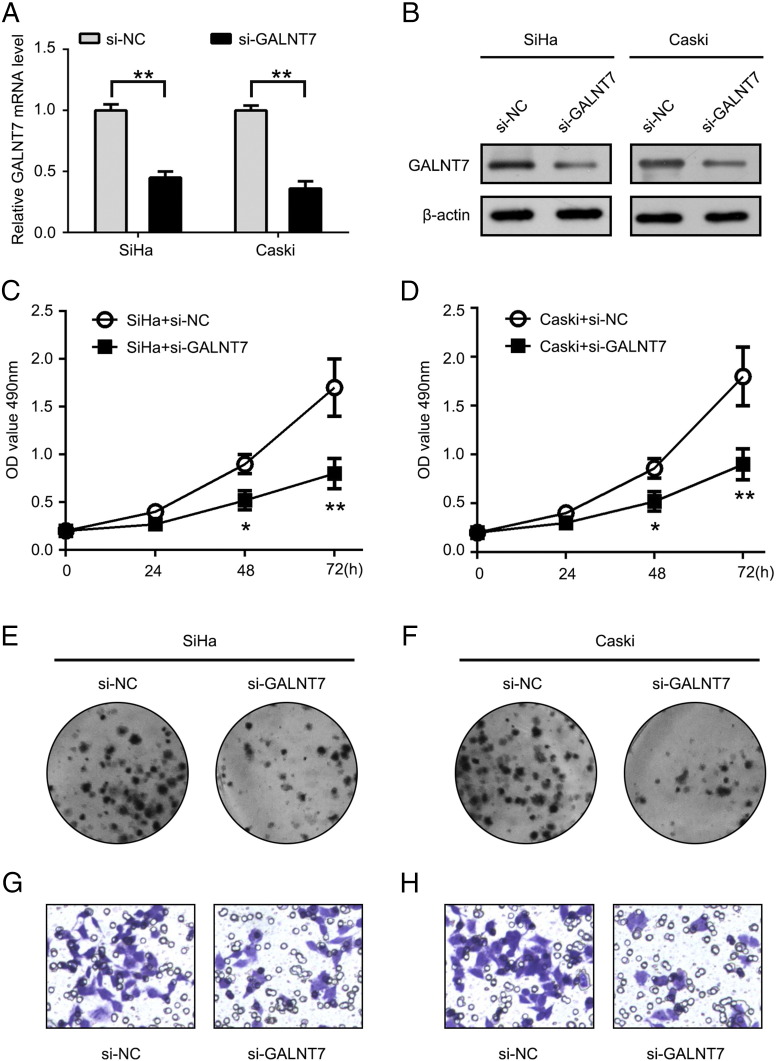
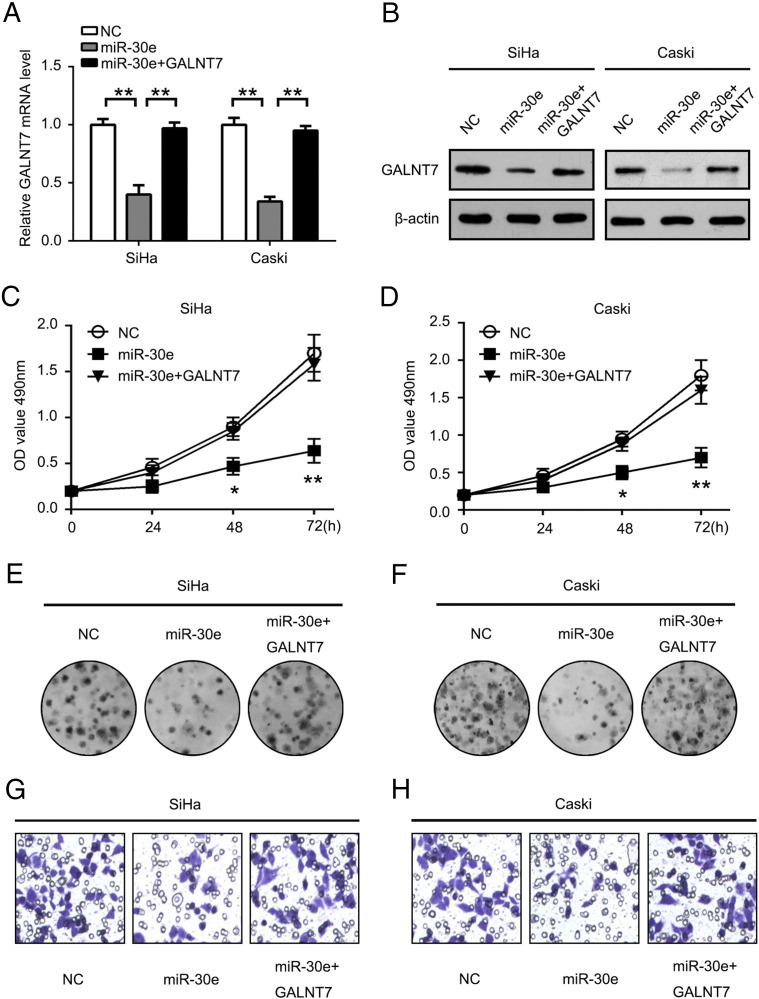
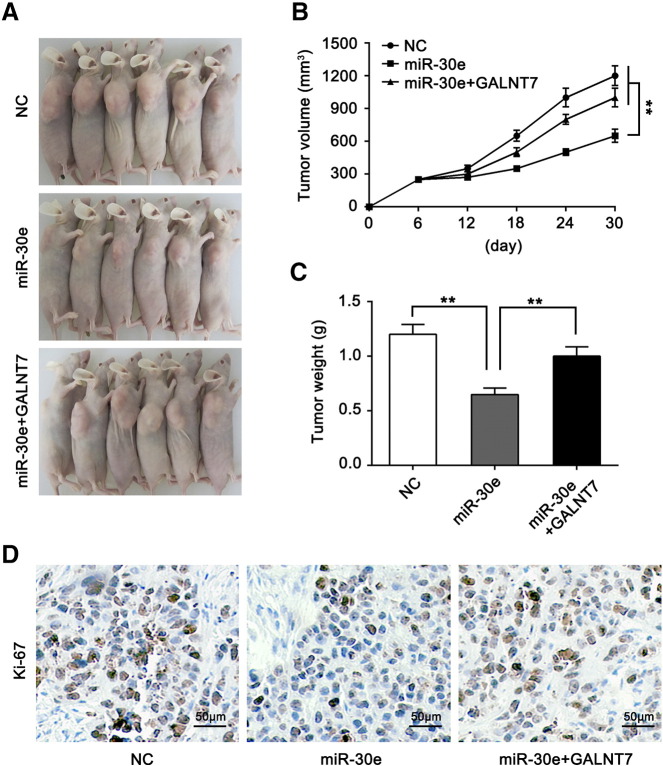
Cervical cancer is the third most common cancer in women worldwide. However, the underlying mechanism of occurrence and development of cervical cancer is obscure. In this study, we observed that miR-30e was downregulated in clinical cervical cancer tissues and cervical cancer cells. Next, overexpression of miR-30e reduced the cervical cancer cell growth through MTT, colony formation, EdU, and Transwell assay in SiHa and Caski cells. Subsequently, UDP-N-acetyl-D-galactosamine: polypeptide N-acetylgalactosaminyltransferase 7 (GALNT7) was identified as a potential miR-30e target by bioinformatics analysis. Moreover, we showed that miR-30e was able to bind to the 3'UTR of GALNT7 by luciferase reporter assay. In addition, the mRNA and protein levels of GALNT7 in cervical cancer cells were downregulated by miR-30e. And we validated that downregulation of GALNT7 repressed the proliferation of SiHa and Caski cells by MTT, colony formation, and Transwell assay. We identified that the restoration of GALNT7 expression was able to counteract the effect of miR-30e on cell proliferation of cervical cancer cells. Furthermore, we found that the expression levels of GALNT7 were frequently upregulated and negatively correlative to those of miR-30e in cervical cancer tissues. In addition, we validated that restoration of GALNT7 rescued the miR-30e-suppressed growth of cervical cancer xenografts in vivo. In conclusion, the current results suggest that miR-30e may function as tumor suppressors in cervical cancer through downregulation of GALNT7. Both miR-30e and its novel target, GALNT7, may play an important role in the process of cervical cancer.
宫颈癌是全球女性中第三大常见癌症。然而,宫颈癌发生和发展的潜在机制尚不清楚。在本研究中,我们观察到miR-30e在临床宫颈癌组织和宫颈癌细胞中表达下调。接下来,通过MTT、集落形成、EdU和Transwell实验发现,miR-30e过表达可抑制SiHa和Caski细胞中宫颈癌细胞的生长。随后,通过生物信息学分析确定UDP-N-乙酰-D-半乳糖胺:多肽N-乙酰半乳糖胺基转移酶7(GALNT7)是miR-30e的潜在靶点。此外,荧光素酶报告基因实验表明miR-30e能够与GALNT7的3'UTR结合。另外,miR-30e可下调宫颈癌细胞中GALNT7的mRNA和蛋白水平。并且我们通过MTT、集落形成和Transwell实验验证,GALNT7的下调可抑制SiHa和Caski细胞的增殖。我们发现恢复GALNT7的表达能够抵消miR-30e对宫颈癌细胞增殖的影响。此外,我们发现宫颈癌组织中GALNT7的表达水平经常上调,且与miR-30e的表达呈负相关。另外,我们验证了恢复GALNT7可挽救体内miR-30e抑制的宫颈癌异种移植瘤的生长。总之,目前的结果表明,miR-30e可能通过下调GALNT7在宫颈癌中发挥肿瘤抑制作用。miR-30e及其新靶点GALNT7可能在宫颈癌的发生过程中起重要作用。