Metzger Meredith B, Scales Jessica L, Dunklebarger Mitchell F, Weissman Allan M
Laboratory of Protein Dynamics and Signaling, Center for Cancer Research, National Cancer Institute, National Institutes of Health, Frederick, Maryland 21702
Laboratory of Protein Dynamics and Signaling, Center for Cancer Research, National Cancer Institute, National Institutes of Health, Frederick, Maryland 21702.
G3 (Bethesda). 2017 Nov 6;7(11):3731-3743. doi: 10.1534/g3.117.300227.
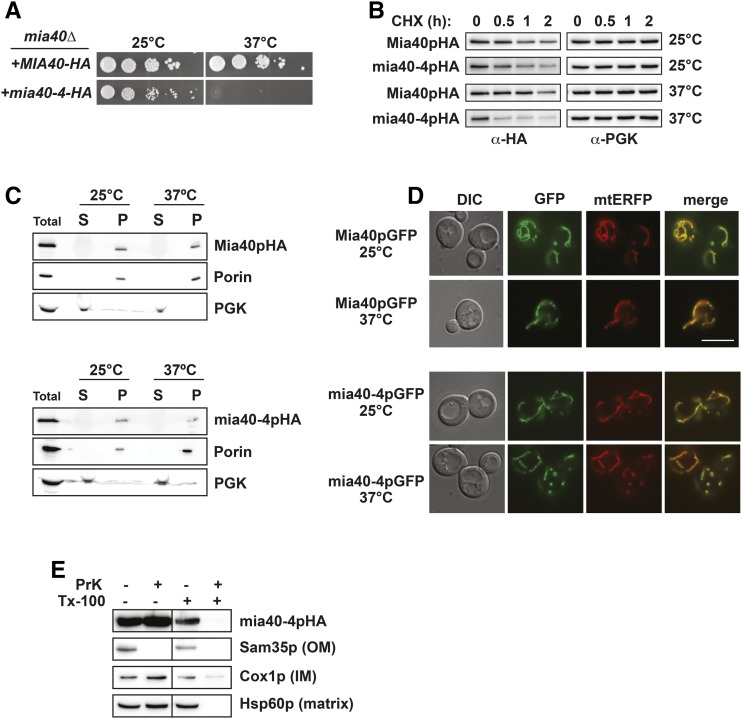
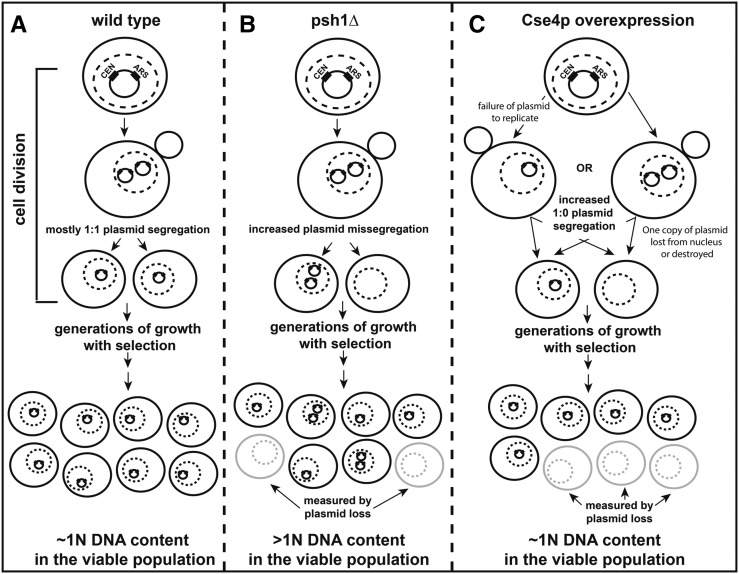
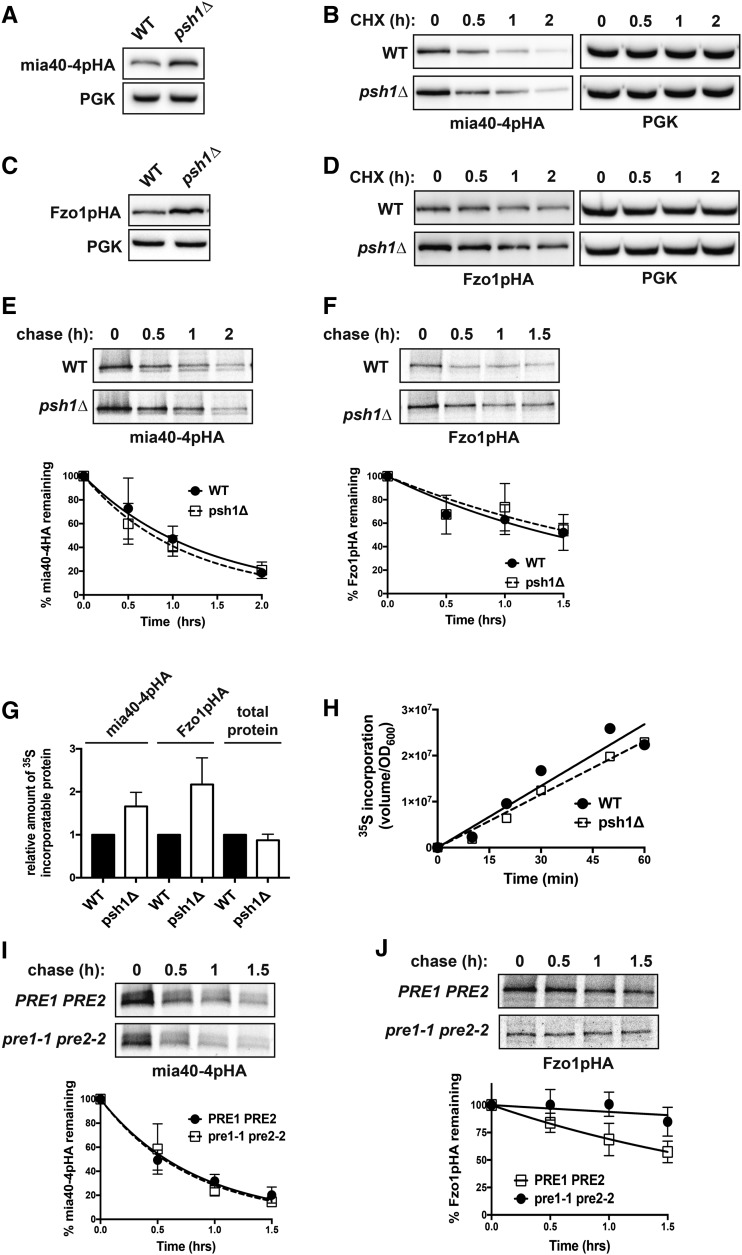
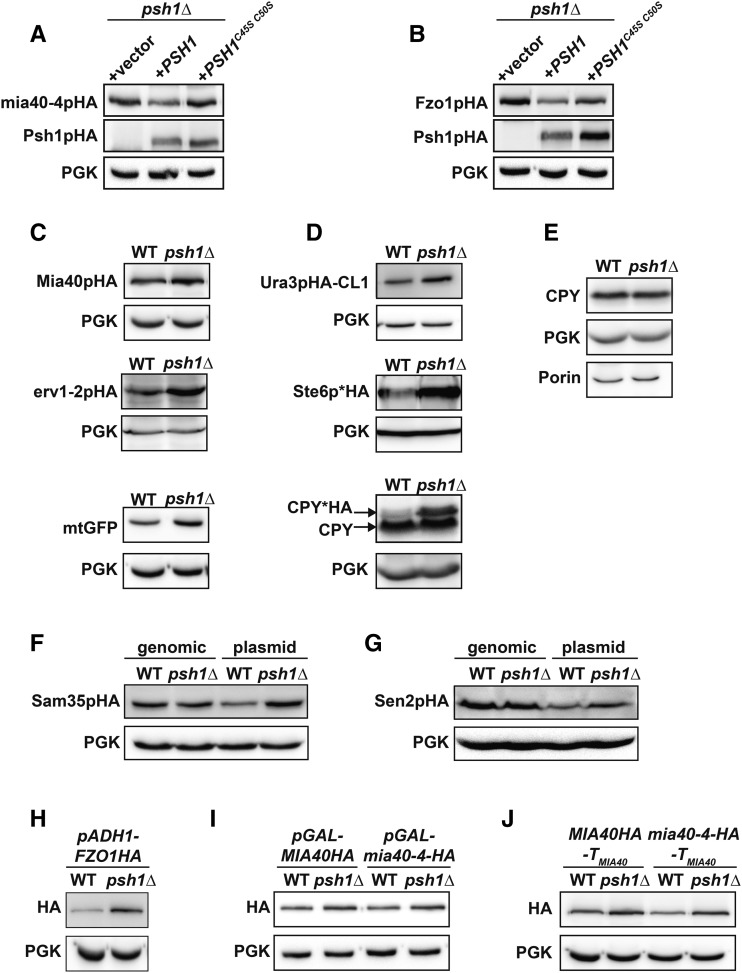
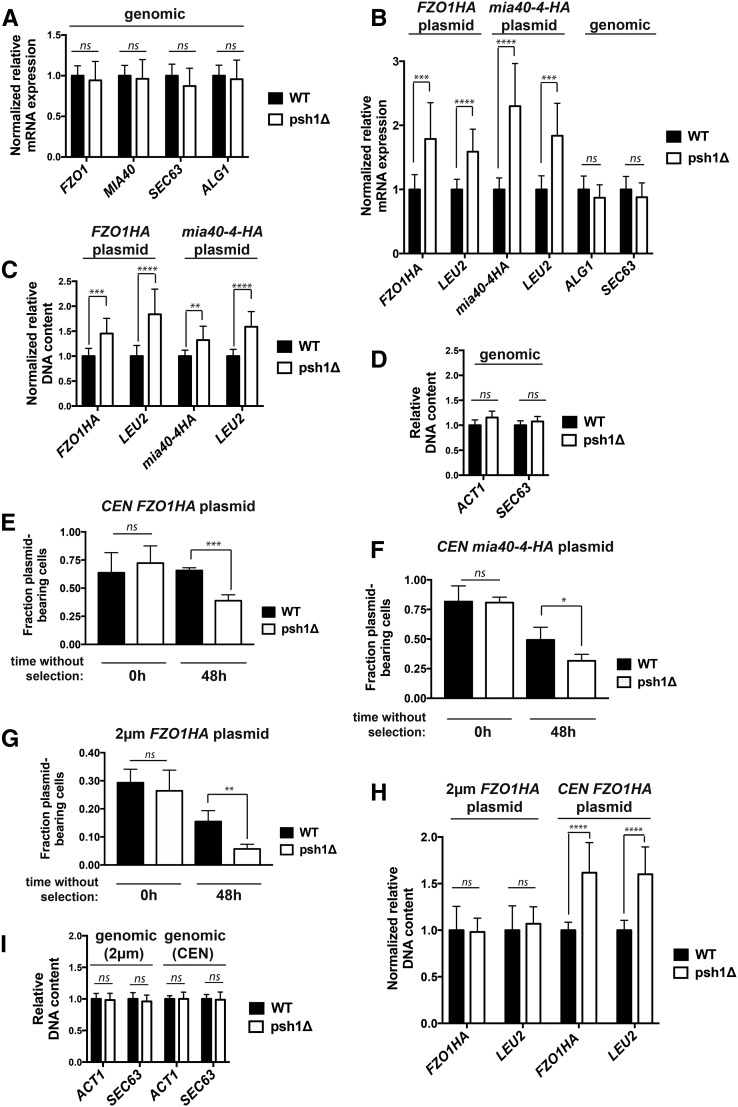
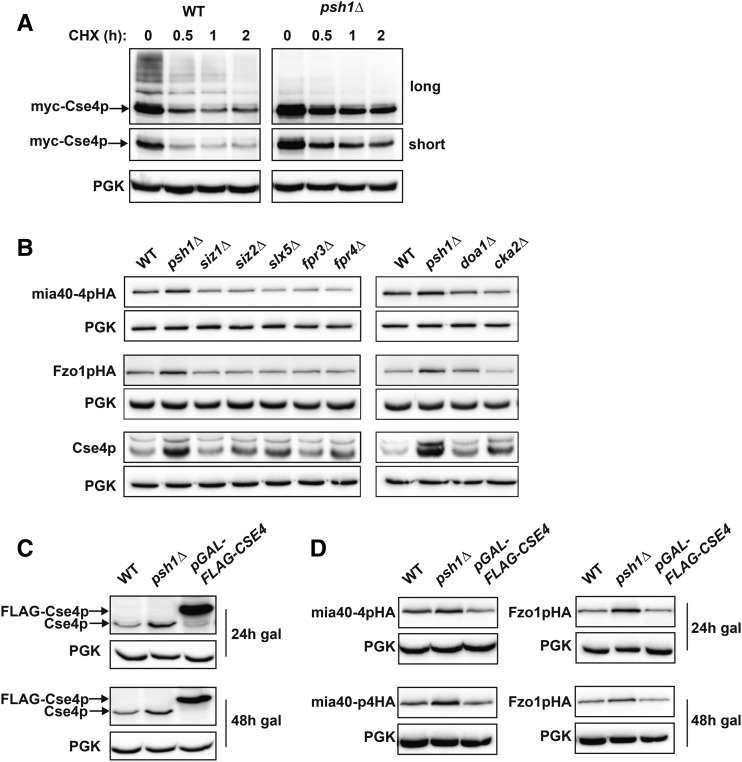
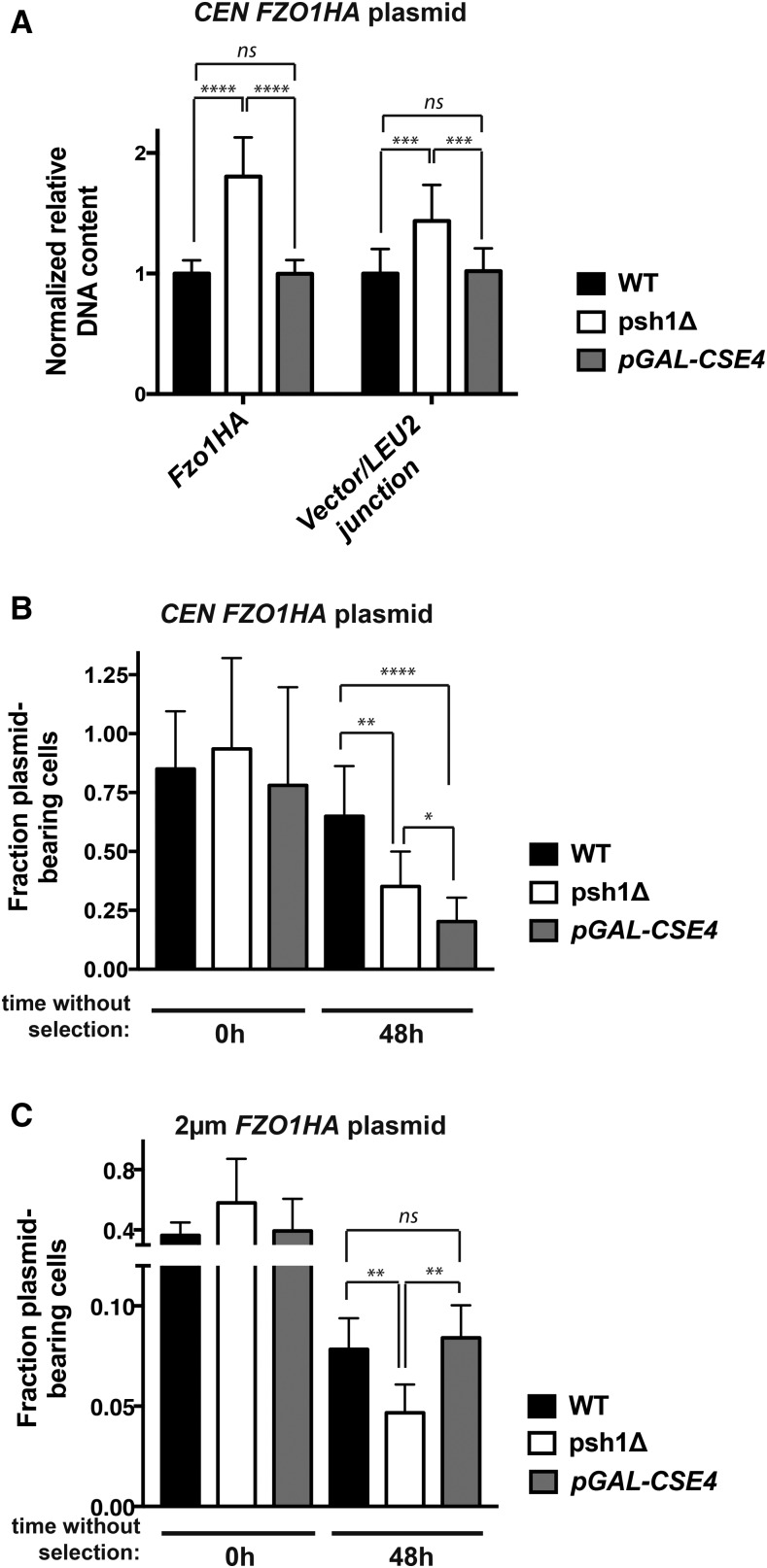
Protein degradation by the ubiquitin-proteasome system is essential to many processes. We sought to assess its involvement in the turnover of mitochondrial proteins in We find that deletion of a specific ubiquitin ligase (E3), Psh1p, increases the abundance of a temperature-sensitive mitochondrial protein, mia40-4pHA, when it is expressed from a centromeric plasmid. Deletion of Psh1p unexpectedly elevates the levels of other proteins expressed from centromeric plasmids. Loss of Psh1p does not increase the rate of turnover of mia40-4pHA, affect total protein synthesis, or increase the protein levels of chromosomal genes. Instead, appears to increase the incidence of missegregation of centromeric plasmids relative to their normal 1:1 segregation. After generations of growth with selection for the plasmid, ongoing missegregation would lead to elevated plasmid DNA, mRNA, and protein, all of which we observe in cells. The only known substrate of Psh1p is the centromeric histone H3 variant Cse4p, which is targeted for proteasomal degradation after ubiquitination by Psh1p However, Cse4p overexpression alone does not phenocopy in increasing plasmid DNA and protein levels. Instead, elevation of Cse4p leads to an apparent increase in 1:0 plasmid segregation events. Further, 2 μm high-copy yeast plasmids also missegregate in , but not when Cse4p alone is overexpressed. These findings demonstrate that Psh1p is required for the faithful inheritance of both centromeric and 2 μm plasmids. Moreover, the effects that loss of Psh1p has on plasmid segregation cannot be accounted for by increased levels of Cse4p.
泛素-蛋白酶体系统介导的蛋白质降解对许多过程至关重要。我们试图评估其在线粒体蛋白质周转中的作用。我们发现,缺失特定的泛素连接酶(E3)Psh1p后,当温度敏感型线粒体蛋白mia40-4pHA从着丝粒质粒表达时,其丰度会增加。意外的是,缺失Psh1p会提高从着丝粒质粒表达的其他蛋白质的水平。Psh1p的缺失不会增加mia40-4pHA的周转速率,不影响总蛋白质合成,也不会提高染色体基因的蛋白质水平。相反,相对于正常的1:1分离,Psh1p的缺失似乎会增加着丝粒质粒错分离的发生率。经过多代对质粒的选择培养后,持续的错分离会导致质粒DNA、mRNA和蛋白质水平升高,所有这些我们都在缺失Psh1p的细胞中观察到了。Psh1p唯一已知的底物是着丝粒组蛋白H3变体Cse4p,它在被Psh1p泛素化后靶向蛋白酶体降解。然而,单独过表达Cse4p并不会模拟缺失Psh1p时在增加质粒DNA和蛋白质水平方面的表型。相反,Cse4p水平的升高会导致1:0质粒分离事件明显增加。此外,2μm高拷贝酵母质粒在缺失Psh1p的细胞中也会错分离,但单独过表达Cse4p时不会。这些发现表明,Psh1p是着丝粒质粒和2μm质粒忠实遗传所必需的。此外,Psh1p缺失对质粒分离的影响不能用Cse4p水平的升高来解释。