Dushyanthen Sathana, Teo Zhi Ling, Caramia Franco, Savas Peter, Mintoff Christopher P, Virassamy Balaji, Henderson Melissa A, Luen Stephen J, Mansour Mariam, Kershaw Michael H, Trapani Joseph A, Neeson Paul J, Salgado Roberto, McArthur Grant A, Balko Justin M, Beavis Paul A, Darcy Phillip K, Loi Sherene
Peter MacCallum Cancer Centre, Melbourne, VIC, 3000, Australia.
Sir Peter MacCallum Department of Oncology, University of Melbourne, Parkville, VIC, 3010, Australia.
Nat Commun. 2017 Sep 19;8(1):606. doi: 10.1038/s41467-017-00728-9.
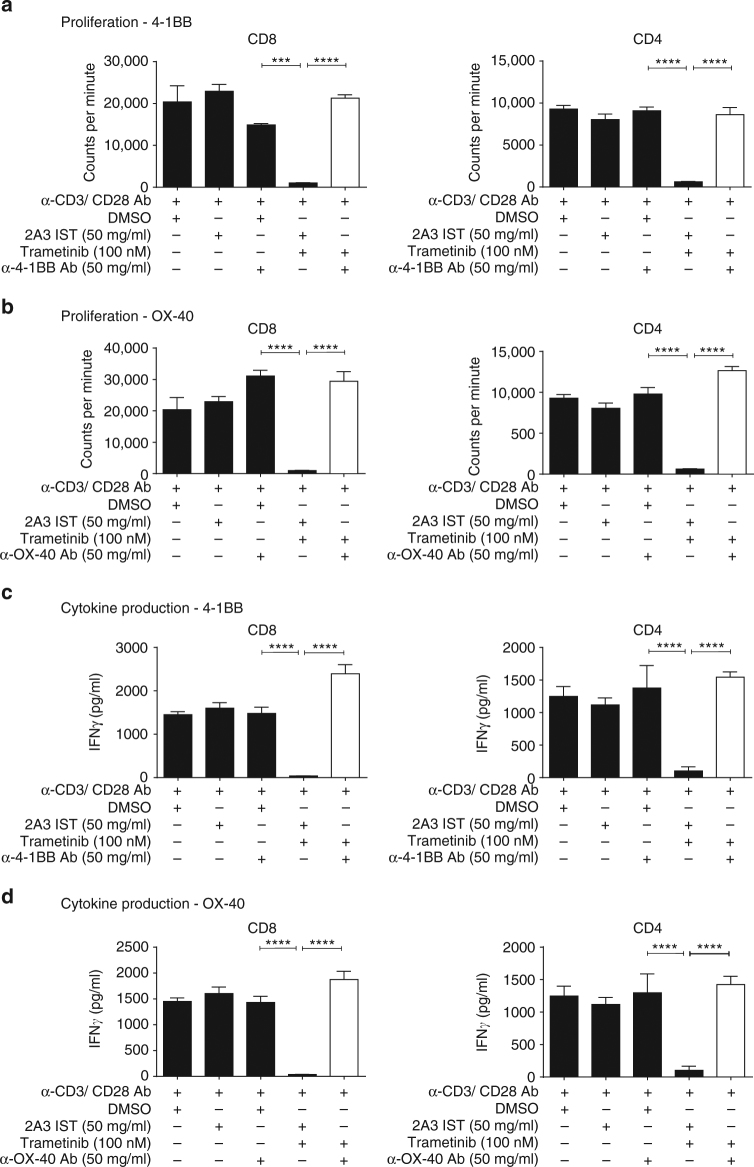
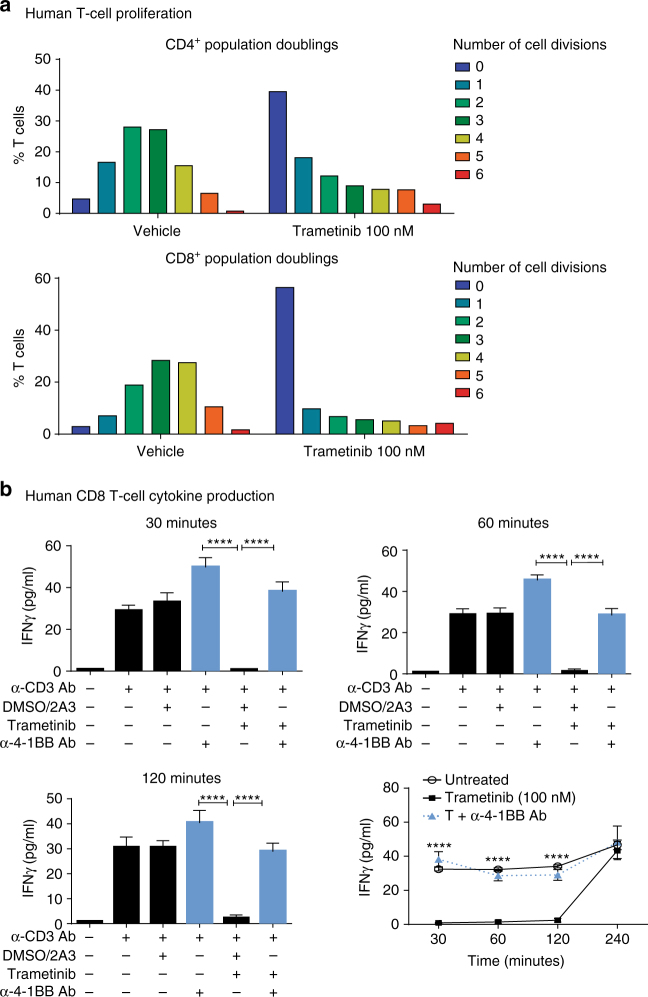
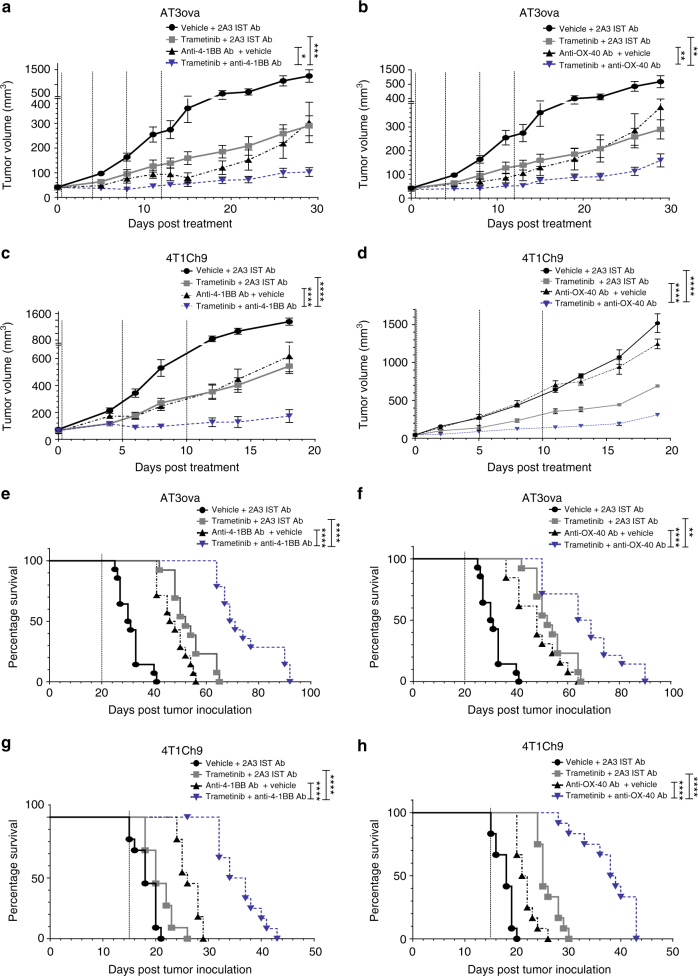
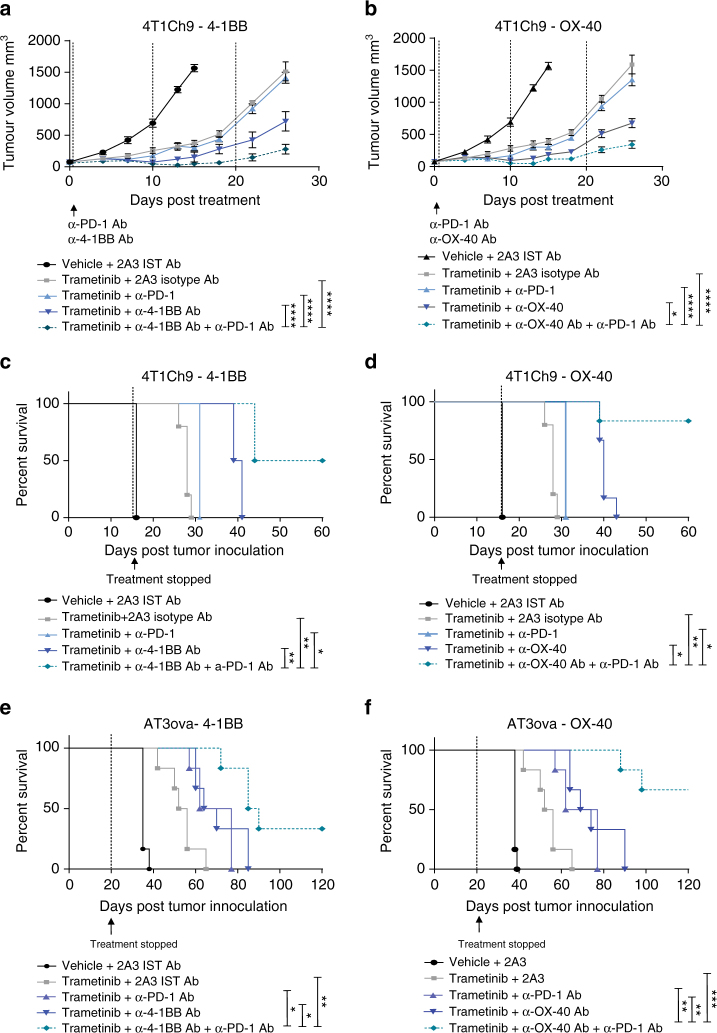
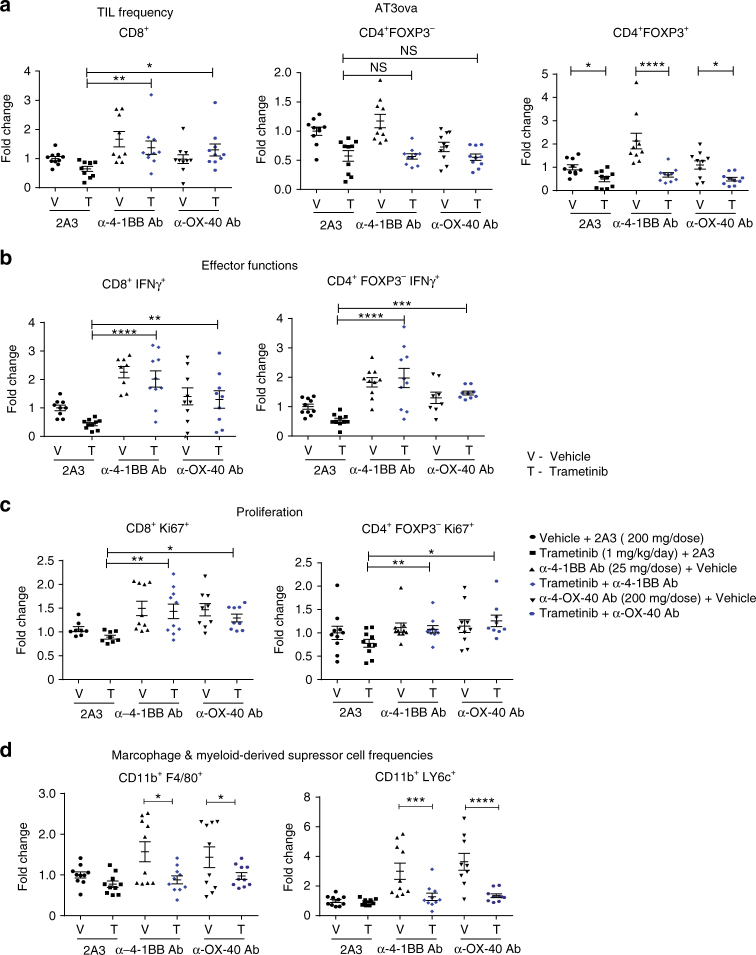
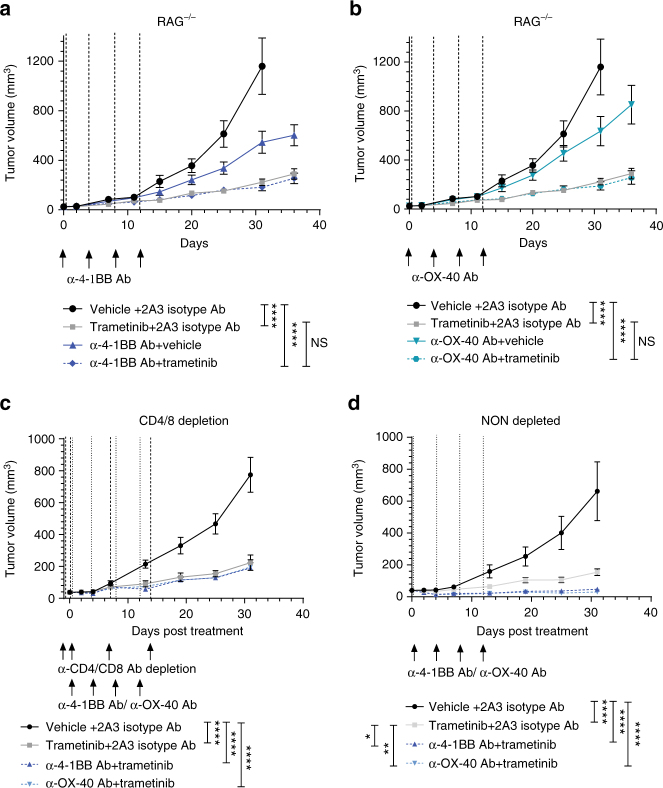
The presence of tumor-infiltrating lymphocytes in triple-negative breast cancers is correlated with improved outcomes. Ras/MAPK pathway activation is associated with significantly lower levels of tumor-infiltrating lymphocytes in triple-negative breast cancers and while MEK inhibition can promote recruitment of tumor-infiltrating lymphocytes to the tumor, here we show that MEK inhibition adversely affects early onset T-cell effector function. We show that α-4-1BB and α-OX-40 T-cell agonist antibodies can rescue the adverse effects of MEK inhibition on T cells in both mouse and human T cells, which results in augmented anti-tumor effects in vivo. This effect is dependent upon increased downstream p38/JNK pathway activation. Taken together, our data suggest that although Ras/MAPK pathway inhibition can increase tumor immunogenicity, the negative impact on T-cell activity is functionally important. This undesirable impact is effectively prevented by combination with T-cell immune agonist immunotherapies resulting in superior therapeutic efficacy.MEK inhibition in breast cancer is associated with increased tumour infiltrating lymphocytes (TILs), however, MAPK activity is required for T cells function. Here the authors show that TILs activity following MEK inhibition can be enhanced by agonist immunotherapy resulting in synergic therapeutic effects.
三阴性乳腺癌中肿瘤浸润淋巴细胞的存在与预后改善相关。Ras/MAPK通路激活与三阴性乳腺癌中肿瘤浸润淋巴细胞水平显著降低有关,虽然MEK抑制可促进肿瘤浸润淋巴细胞向肿瘤部位募集,但我们在此表明,MEK抑制对早期T细胞效应功能有不利影响。我们发现,α-4-1BB和α-OX-40 T细胞激动剂抗体可挽救MEK抑制对小鼠和人类T细胞的不利影响,从而在体内增强抗肿瘤作用。这种效应依赖于下游p38/JNK通路激活增加。综上所述,我们的数据表明,虽然Ras/MAPK通路抑制可增加肿瘤免疫原性,但对T细胞活性的负面影响在功能上很重要。通过与T细胞免疫激动剂免疫疗法联合使用可有效防止这种不良影响,从而产生卓越的治疗效果。乳腺癌中的MEK抑制与肿瘤浸润淋巴细胞(TILs)增加有关,然而,T细胞功能需要MAPK活性。本文作者表明,MEK抑制后TILs活性可通过激动剂免疫疗法增强,从而产生协同治疗效果。