Thomas Allison S, Jones Kimberley L, Gandhi Rajesh T, McMahon Deborah K, Cyktor Joshua C, Chan Dora, Huang Szu-Han, Truong Ronald, Bosque Alberto, Macedo Amanda B, Kovacs Colin, Benko Erika, Eron Joseph J, Bosch Ronald J, Lalama Christina M, Simmens Samuel, Walker Bruce D, Mellors John W, Jones R Brad
Department of Microbiology Immunology and Tropical Medicine, George Washington University, Washington, District of Columbia, United States of America.
Ragon Institute of MIT, MGH, and Harvard, Cambridge MA, United States of America.
PLoS Pathog. 2017 Sep 20;13(9):e1006629. doi: 10.1371/journal.ppat.1006629. eCollection 2017 Sep.
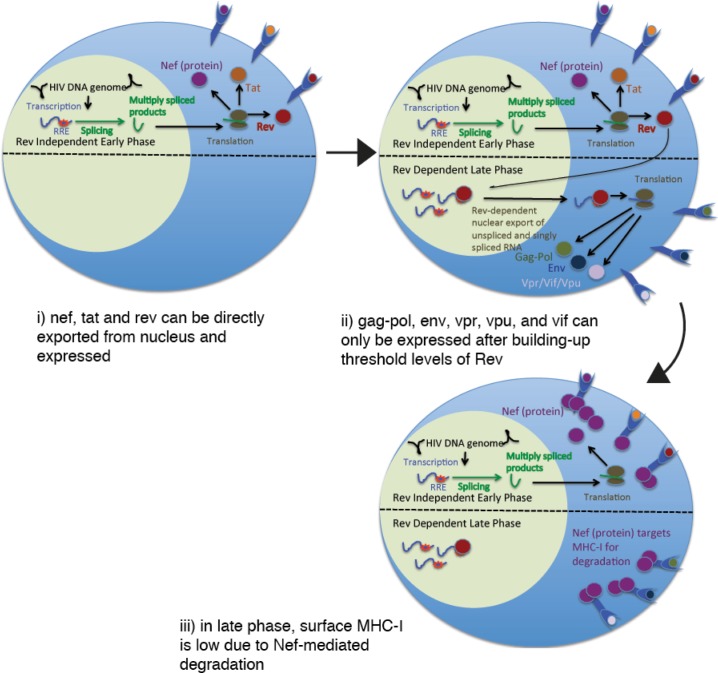
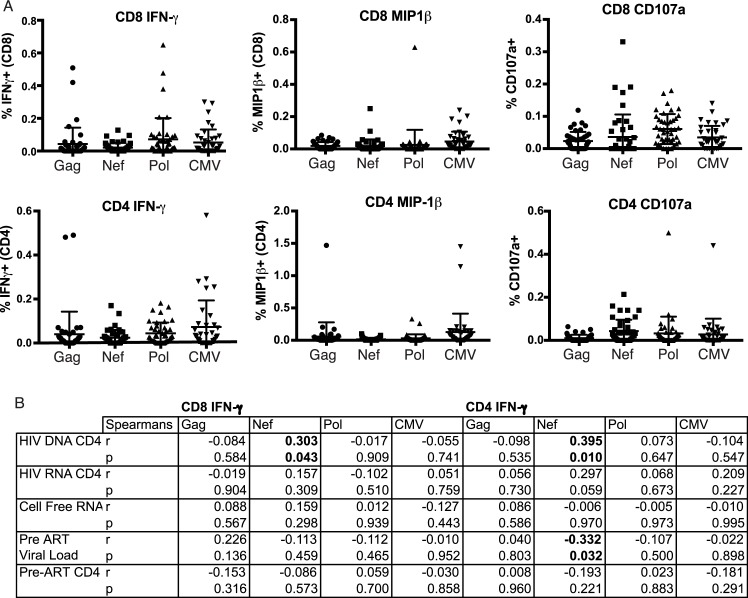
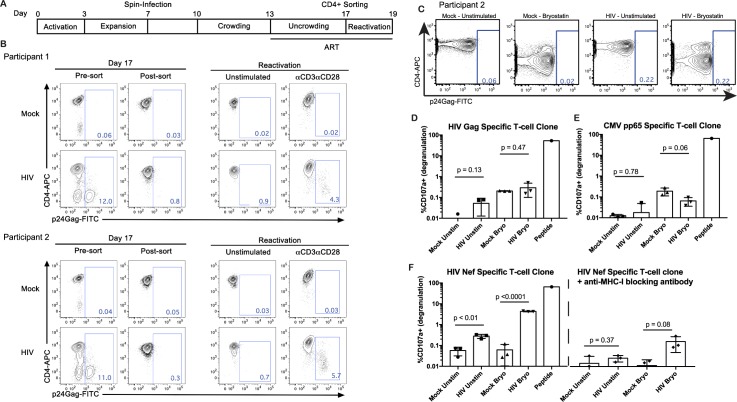
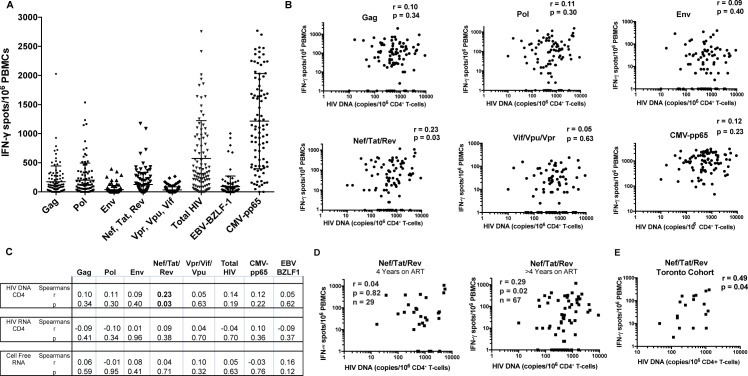
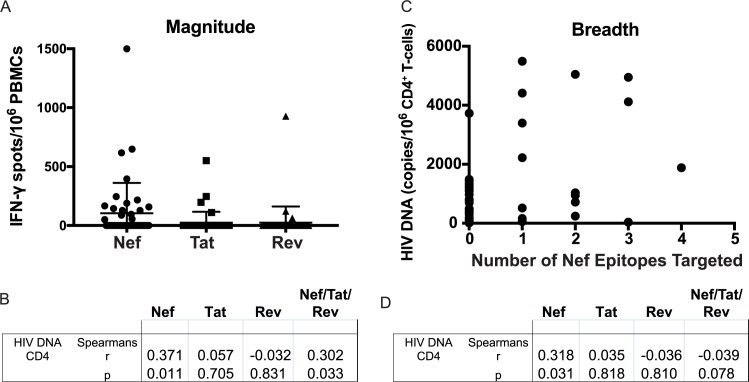
HIV-specific CD8+ T-cell responses limit viral replication in untreated infection. After the initiation of antiretroviral therapy (ART), these responses decay and the infected cell population that remains is commonly considered to be invisible to T-cells. We hypothesized that HIV antigen recognition may persist in ART-treated individuals due to low-level or episodic protein expression. We posited that if persistent recognition were occurring it would be preferentially directed against the early HIV gene products Nef, Tat, and Rev as compared to late gene products, such as Gag, Pol, and Env, which have higher barriers to expression. Using a primary cell model of latency, we observed that a Nef-specific CD8+ T-cell clone exhibited low-level recognition of infected cells prior to reactivation and robust recognition shortly thereafter. A Gag-specific CD8+ T-cell clone failed to recognized infected cells under these conditions, corresponding with a lack of detectable Gag expression. We measured HIV-specific T-cell responses in 96 individuals who had been suppressed on ART for a median of 7 years, and observed a significant, direct correlation between cell-associated HIV DNA levels and magnitudes of IFN-γ-producing Nef/Tat/Rev-specific T-cell responses. This correlation was confirmed in an independent cohort (n = 18). Correlations were not detected between measures of HIV persistence and T-cell responses to other HIV antigens. The correlation with Nef/Tat/Rev-specific T-cells was attributable to Nef-specific responses, the breadth of which also correlated with HIV DNA levels. These results suggest that ongoing Nef expression in ART-treated individuals drives preferential maintenance and/or expansion of T-cells reactive to this protein, implying sensing of infected cells by the immune system. The direct correlation, however, suggests that recognition does not result in efficient elimination of infected cells. These results raise the possibility that enhancing the cytolytic activity of Nef-specific T-cells may lead to reductions in infected cell frequencies, even in the absence of therapeutic latency reversal.
HIV特异性CD8 + T细胞反应可限制未经治疗的感染中的病毒复制。开始抗逆转录病毒治疗(ART)后,这些反应会衰减,而剩余的受感染细胞群体通常被认为对T细胞不可见。我们假设,由于低水平或间歇性蛋白质表达,HIV抗原识别可能在接受ART治疗的个体中持续存在。我们推测,如果持续识别发生,与晚期基因产物(如Gag、Pol和Env,其表达障碍较高)相比,它将优先针对早期HIV基因产物Nef、Tat和Rev。使用潜伏的原代细胞模型,我们观察到一个Nef特异性CD8 + T细胞克隆在重新激活之前对受感染细胞表现出低水平识别,此后不久则表现出强烈识别。在这些条件下,一个Gag特异性CD8 + T细胞克隆未能识别受感染细胞,这与缺乏可检测到的Gag表达相对应。我们测量了96名接受ART治疗中位数为7年的个体的HIV特异性T细胞反应,观察到细胞相关HIV DNA水平与产生IFN-γ的Nef/Tat/Rev特异性T细胞反应强度之间存在显著的直接相关性。在一个独立队列(n = 18)中证实了这种相关性。未检测到HIV持续存在指标与对其他HIV抗原的T细胞反应之间的相关性。与Nef/Tat/Rev特异性T细胞的相关性归因于Nef特异性反应,其广度也与HIV DNA水平相关。这些结果表明,接受ART治疗的个体中持续的Nef表达驱动了对该蛋白有反应的T细胞的优先维持和/或扩增,这意味着免疫系统能够感知受感染细胞。然而,直接相关性表明识别并未导致受感染细胞的有效清除。这些结果增加了一种可能性,即增强Nef特异性T细胞的细胞溶解活性可能导致受感染细胞频率降低,即使在没有治疗性潜伏逆转的情况下也是如此。