Department of Stem Cell Biology and Regenerative Medicine, Keck School of Medicine of the University of Southern California, Los Angeles, California, USA.
Board of Governors Regenerative Medicine Institute, Cedars-Sinai Medical Center, Los Angeles, California, USA.
JCI Insight. 2017 Sep 21;2(18). doi: 10.1172/jci.insight.94716.
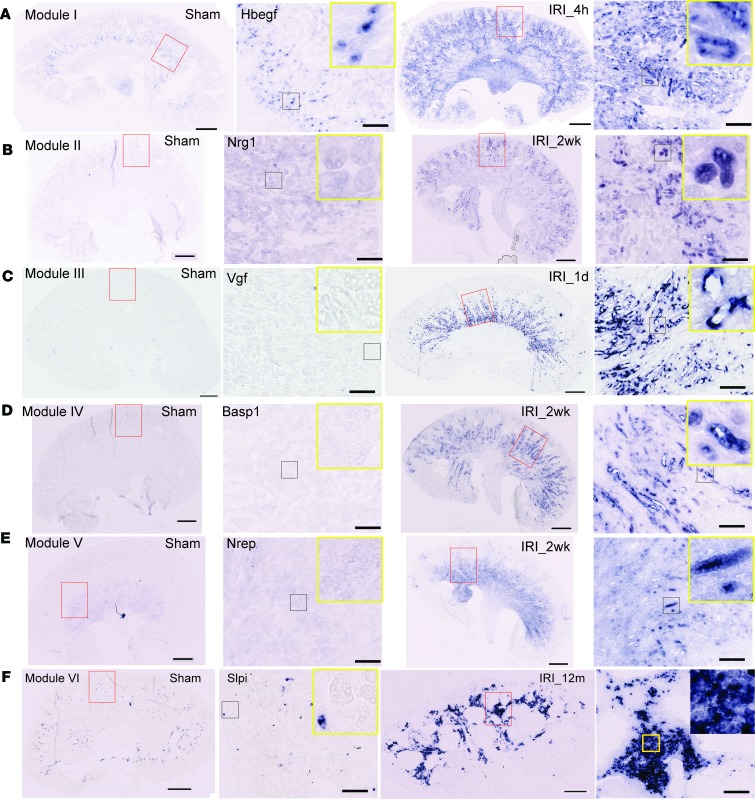
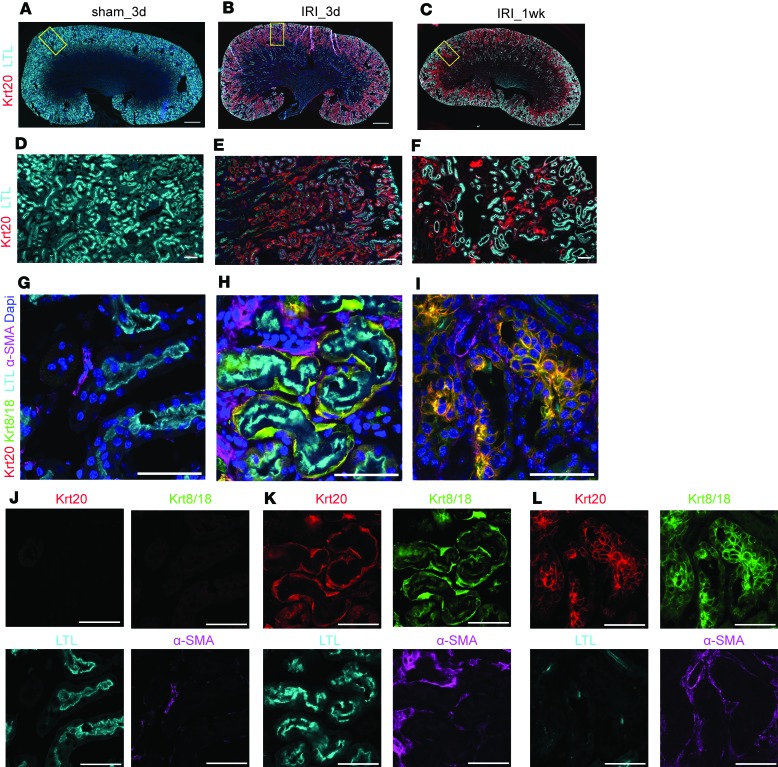
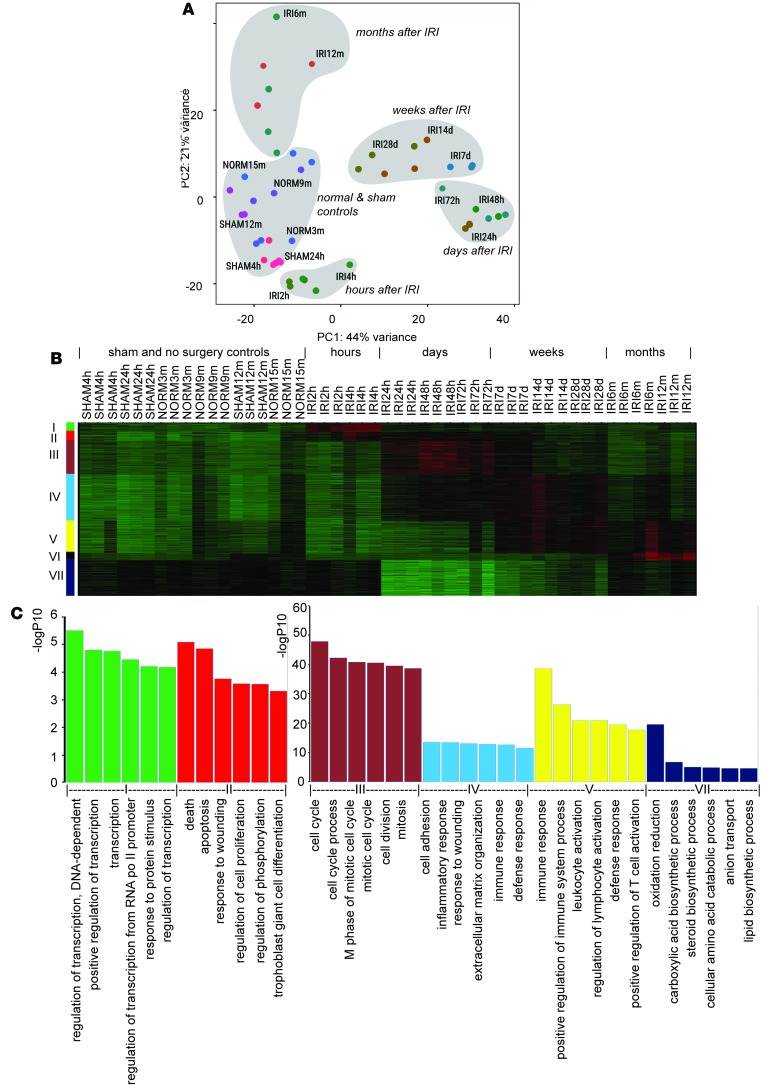
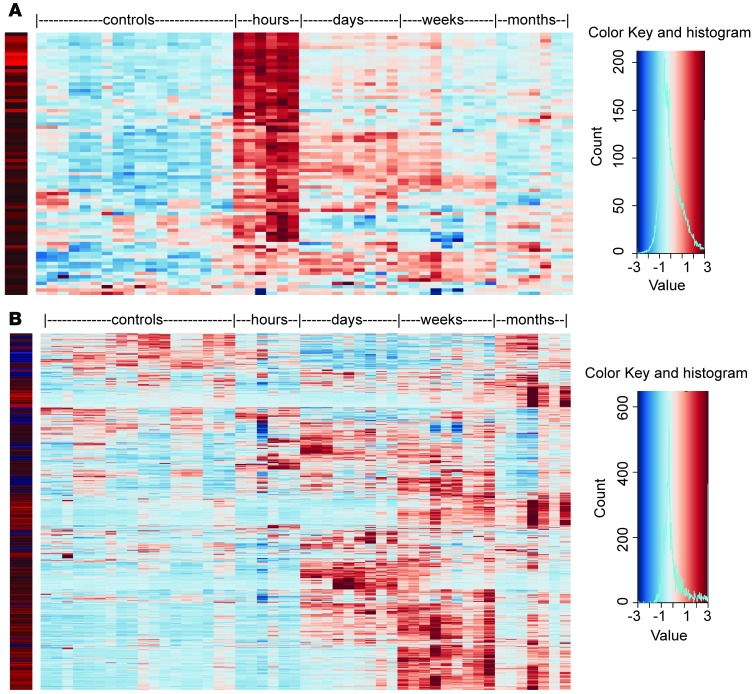
Though an acute kidney injury (AKI) episode is associated with an increased risk of chronic kidney disease (CKD), the mechanisms determining the transition from acute to irreversible chronic injury are not well understood. To extend our understanding of renal repair, and its limits, we performed a detailed molecular characterization of a murine ischemia/reperfusion injury (IRI) model for 12 months after injury. Together, the data comprising RNA-sequencing (RNA-seq) analysis at multiple time points, histological studies, and molecular and cellular characterization of targeted gene activity provide a comprehensive profile of injury, repair, and long-term maladaptive responses following IRI. Tubular atrophy, interstitial fibrosis, inflammation, and development of multiple renal cysts were major long-term outcomes of IRI. Progressive proximal tubular injury tracks with de novo activation of multiple Krt genes, including Krt20, a biomarker of renal tubule injury. RNA-seq analysis highlights a cascade of temporal-specific gene expression patterns related to tubular injury/repair, fibrosis, and innate and adaptive immunity. Intersection of these data with human kidney transplant expression profiles identified overlapping gene expression signatures correlating with different stages of the murine IRI response. The comprehensive characterization of incomplete recovery after ischemic AKI provides a valuable resource for determining the underlying pathophysiology of human CKD.
尽管急性肾损伤 (AKI) 发作与慢性肾脏病 (CKD) 的风险增加有关,但确定从急性到不可逆慢性损伤转变的机制尚不清楚。为了扩展我们对肾脏修复及其局限性的理解,我们对损伤后 12 个月的小鼠缺血/再灌注损伤 (IRI) 模型进行了详细的分子特征分析。综合包括 RNA 测序 (RNA-seq) 分析在内的多个时间点的数据分析、组织学研究以及靶向基因活性的分子和细胞特征,为 IRI 后的损伤、修复和长期适应性反应提供了全面的概况。肾小管萎缩、间质纤维化、炎症和多个肾囊肿的发展是 IRI 的主要长期后果。进行性近端肾小管损伤与多个 Krt 基因的新激活相关,包括 Krt20,这是肾小管损伤的生物标志物。RNA-seq 分析突出了与管状损伤/修复、纤维化以及先天和适应性免疫相关的一系列具有时间特异性的基因表达模式。将这些数据与人类肾移植表达谱交叉分析,确定了与小鼠 IRI 反应不同阶段相关的重叠基因表达特征。对缺血性 AKI 后不完全恢复的全面描述为确定人类 CKD 的潜在病理生理学提供了有价值的资源。