Wende Adam R, Brahma Manoja K, McGinnis Graham R, Young Martin E
Department of Pathology, University of Alabama at Birmingham, Birmingham, AL, USA.
Department of Medicine, University of Alabama at Birmingham, Birmingham, AL, USA.
JACC Basic Transl Sci. 2017 Jun;2(3):297-310. doi: 10.1016/j.jacbts.2016.11.009.
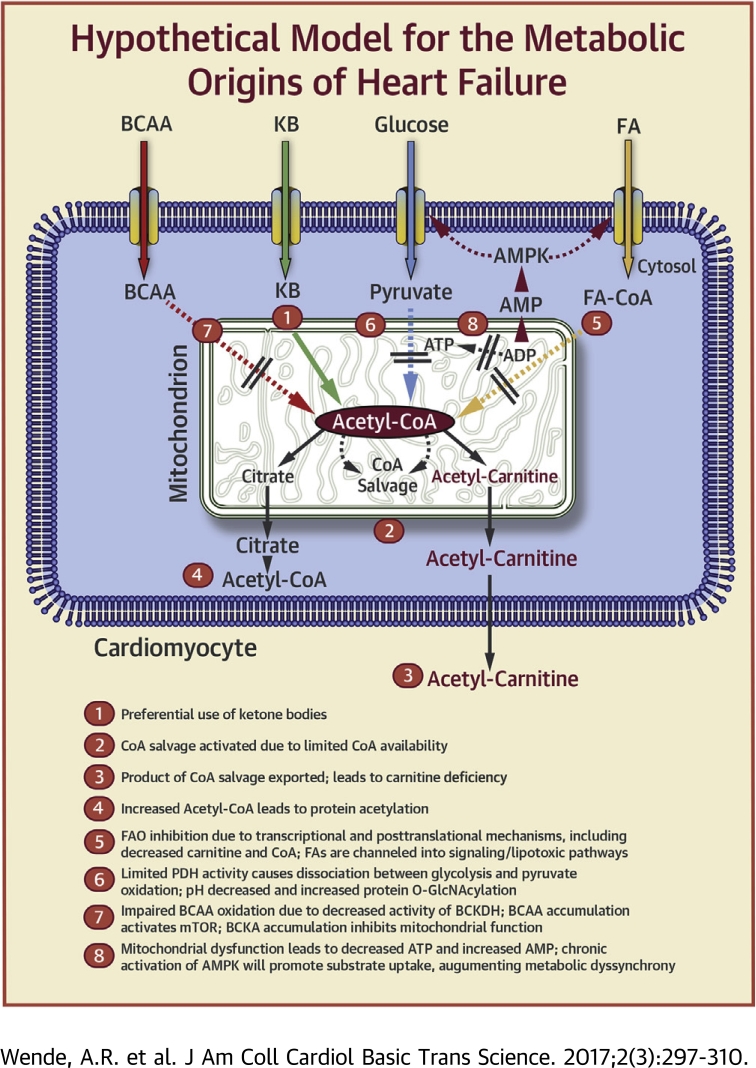
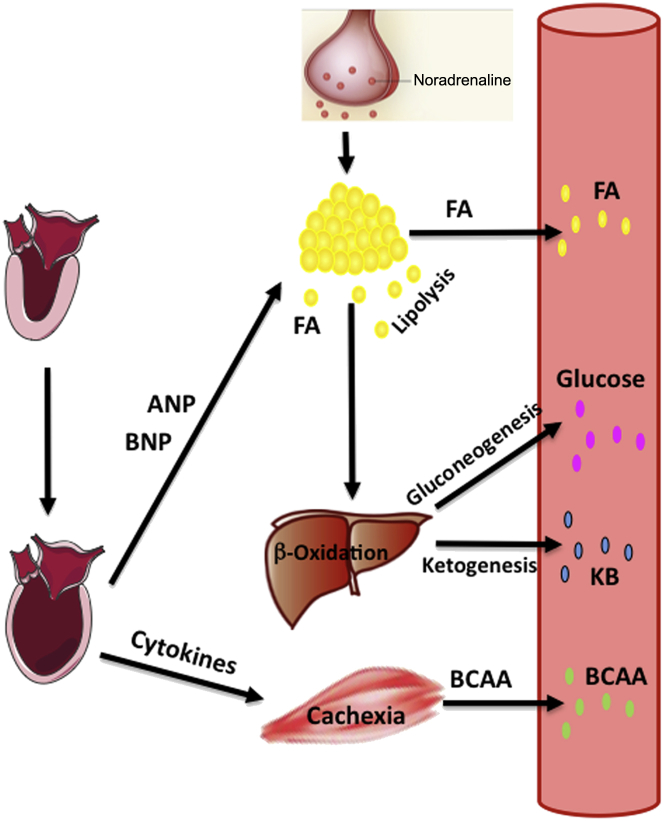
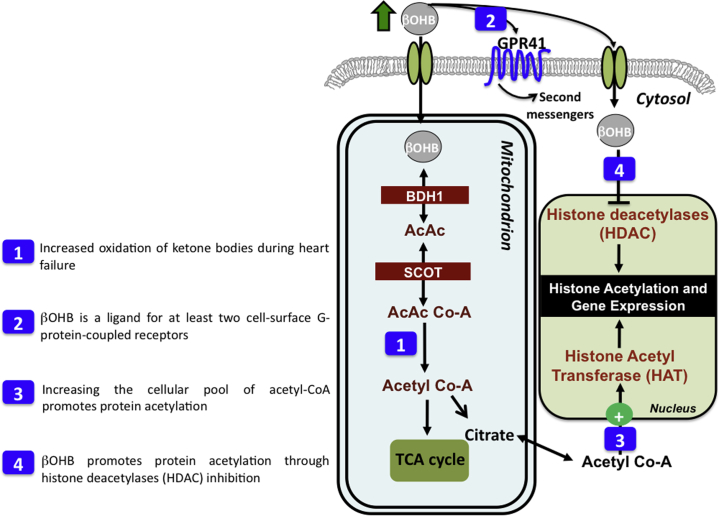
For more than half a century, metabolic perturbations have been explored in the failing myocardium, highlighting a reversion to a more fetal-like metabolic profile (characterized by depressed fatty acid oxidation and concomitant increased reliance on glucose utilization). More recently, alterations in ketone body and amino acid/protein metabolism have been described during heart failure, as well as mitochondrial dysfunction and perturbed metabolic signaling (e.g., acetylation, O-GlcNAcylation). Although numerous mechanisms are likely involved, the current review provides recent advances regarding the metabolic origins of heart failure, and their potential contribution toward contractile dysfunction of the heart.
半个多世纪以来,人们一直在研究衰竭心肌中的代谢紊乱,突出显示其向更类似胎儿的代谢模式转变(其特征为脂肪酸氧化降低以及对葡萄糖利用的依赖性增加)。最近,心力衰竭期间酮体和氨基酸/蛋白质代谢的改变、线粒体功能障碍以及代谢信号传导紊乱(如乙酰化、O-连接的N-乙酰葡糖胺化)也得到了描述。尽管可能涉及多种机制,但本综述介绍了心力衰竭代谢起源方面的最新进展,以及它们对心脏收缩功能障碍的潜在影响。