Koh Y-G, Son J, Kwon S-K, Kim H-J, Kwon O-R, Kang K-T
Joint Reconstruction Center, Department of Orthopaedic Surgery, Yonsei Sarang Hospital, 10 Hyoryeong-ro, Seocho-gu, Seoul 06698, South Korea.
Department of Mechanical Engineering, Yonsei University, 50 Yonsei-ro, Seodaemun-gu, Seoul, 03722, South Korea.
Bone Joint Res. 2017 Sep;6(9):557-565. doi: 10.1302/2046-3758.69.BJR-2016-0250.R1.
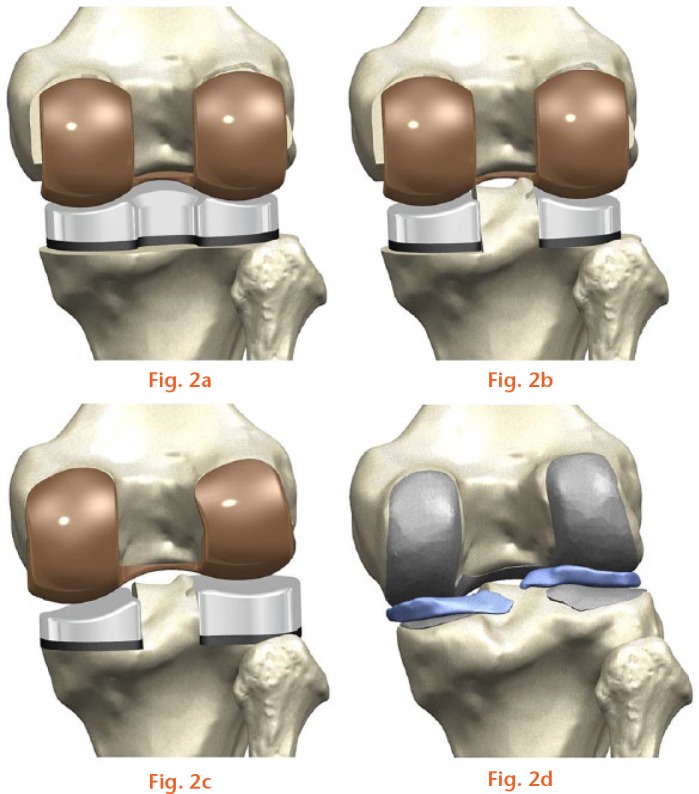
Preservation of both anterior and posterior cruciate ligaments in total knee arthroplasty (TKA) can lead to near-normal post-operative joint mechanics and improved knee function. We hypothesised that a patient-specific bicruciate-retaining prosthesis preserves near-normal kinematics better than standard off-the-shelf posterior cruciate-retaining and bicruciate-retaining prostheses in TKA.
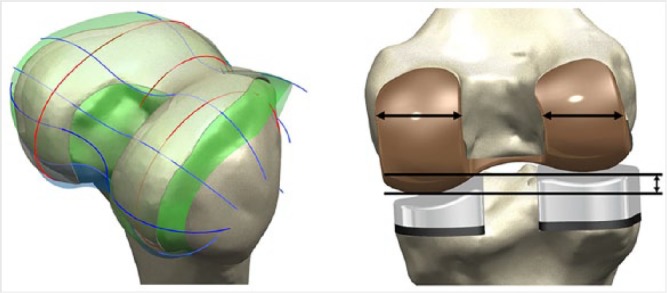
We developed the validated models to evaluate the post-operative kinematics in patient-specific bicruciate-retaining, standard off-the-shelf bicruciate-retaining and posterior cruciate-retaining TKA under gait and deep knee bend loading conditions using numerical simulation.
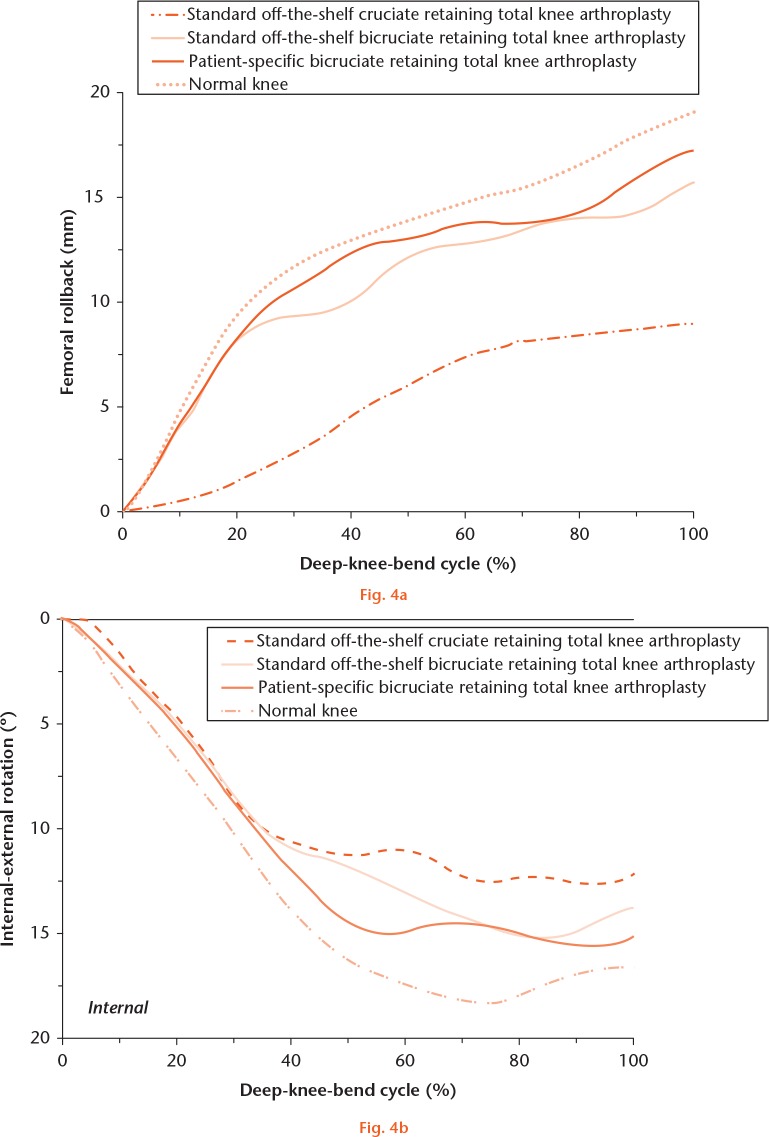
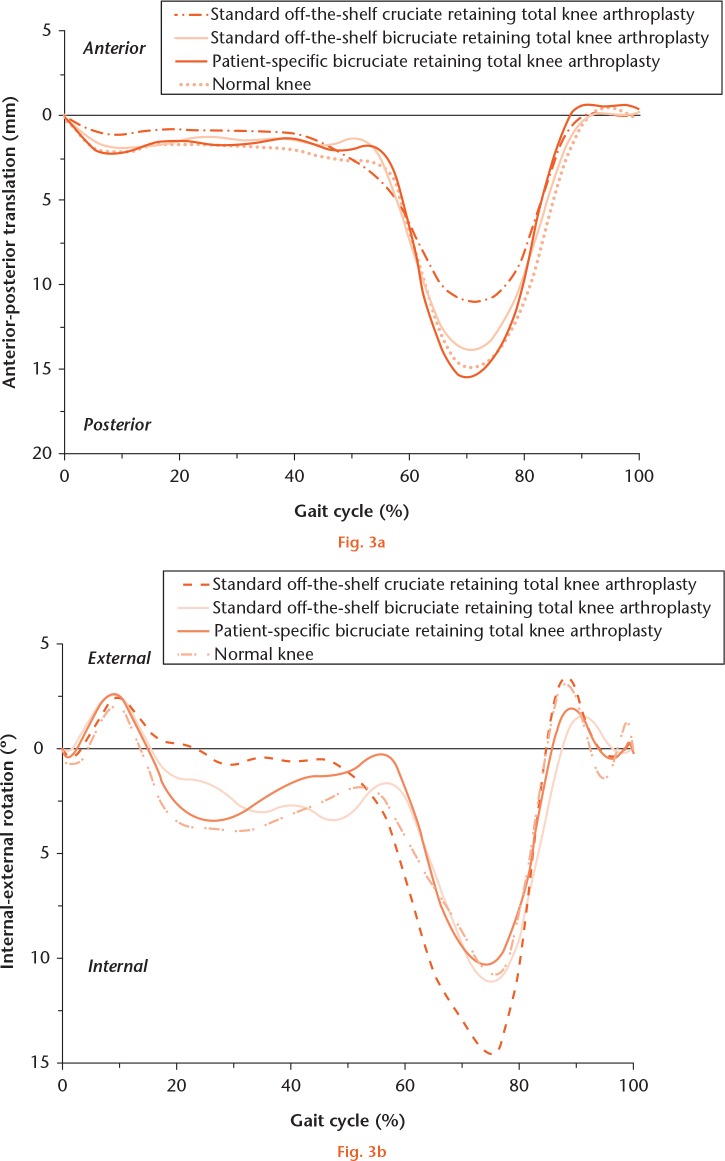
Tibial posterior translation and internal rotation in patient-specific bicruciate-retaining prostheses preserved near-normal kinematics better than other standard off-the-shelf prostheses under gait loading conditions. Differences from normal kinematics were minimised for femoral rollback and internal-external rotation in patient-specific bicruciate-retaining, followed by standard off-the-shelf bicruciate-retaining and posterior cruciate-retaining TKA under deep knee bend loading conditions. Moreover, the standard off-the-shelf posterior cruciate-retaining TKA in this study showed the most abnormal performance in kinematics under gait and deep knee bend loading conditions, whereas patient-specific bicruciate-retaining TKA led to near-normal kinematics.
This study showed that restoration of the normal geometry of the knee joint in patient-specific bicruciate-retaining TKA and preservation of the anterior cruciate ligament can lead to improvement in kinematics compared with the standard off-the-shelf posterior cruciate-retaining and bicruciate-retaining TKA.: Y-G. Koh, J. Son, S-K. Kwon, H-J. Kim, O-R. Kwon, K-T. Kang. Preservation of kinematics with posterior cruciate-, bicruciate- and patient-specific bicruciate-retaining prostheses in total knee arthroplasty by using computational simulation with normal knee model. 2017;6:557-565. DOI: 10.1302/2046-3758.69.BJR-2016-0250.R1.
在全膝关节置换术(TKA)中保留前后交叉韧带可使术后关节力学接近正常,并改善膝关节功能。我们假设,在TKA中,定制的双交叉韧带保留型假体比标准的现成后交叉韧带保留型和双交叉韧带保留型假体能更好地保留接近正常的运动学。
我们开发了经过验证的模型,通过数值模拟来评估定制的双交叉韧带保留型、标准的现成双交叉韧带保留型和后交叉韧带保留型TKA在步态和深屈膝负荷条件下的术后运动学。
在步态负荷条件下,定制的双交叉韧带保留型假体的胫骨后移和内旋比其他标准的现成假体能更好地保留接近正常的运动学。在深屈膝负荷条件下,定制的双交叉韧带保留型假体的股骨后滚和内外旋与正常运动学的差异最小,其次是标准的现成双交叉韧带保留型和后交叉韧带保留型TKA。此外,本研究中的标准现成后交叉韧带保留型TKA在步态和深屈膝负荷条件下的运动学表现最异常,而定制的双交叉韧带保留型TKA则能使运动学接近正常。
本研究表明,与标准的现成后交叉韧带保留型和双交叉韧带保留型TKA相比,定制的双交叉韧带保留型TKA恢复膝关节正常几何形状并保留前交叉韧带可改善运动学。:Y-G. Koh、J. Son、S-K. Kwon、H-J. Kim、O-R. Kwon、K-T. Kang。通过使用正常膝关节模型的计算模拟,在全膝关节置换术中使用后交叉韧带、双交叉韧带和定制双交叉韧带保留型假体保留运动学。2017;6:557-565。DOI:10.1302/2046-3758.69.BJR-2016-0250.R1。