The Reproductive Medicine Hospital of the First Hospital of Lanzhou University Lanzhou Gansu China.
The Key Laboratory for Reproductive Medicine and Embryo Lanzhou Gansu China.
Brain Behav. 2017 Aug 14;7(9):e00793. doi: 10.1002/brb3.793. eCollection 2017 Sep.
Neuroligins are postsynaptic cell adhesion molecules that interact with neurexins to regulate the fine balance between excitation and inhibition of synapses. Recently, accumulating evidence, involving mutation analysis, cellular assays, and mouse models, has suggested that neuroligin (NLGN) mutations affect synapse maturation and function. Previously, four missense variations [p.G426S (NLGN3), p.G84R (NLGN4X), p.Q162K (NLGN4X), and p.A283T (NLGN4X)] in four different unrelated patients have been identified by PCR and direct sequencing.
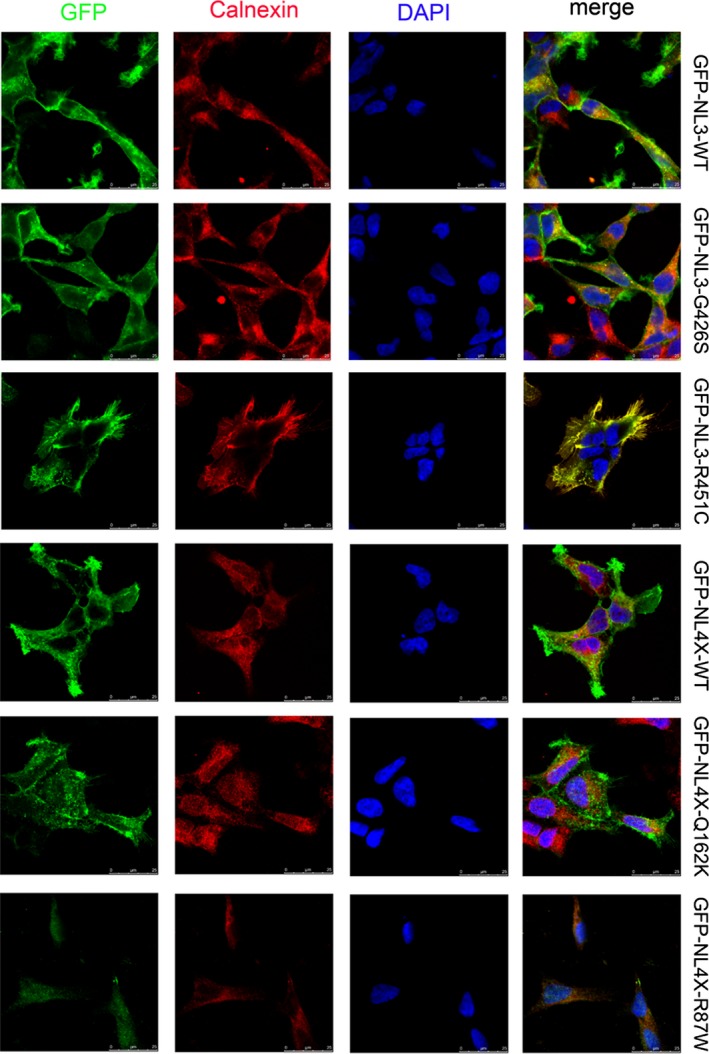
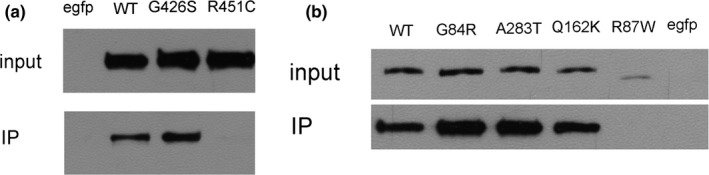
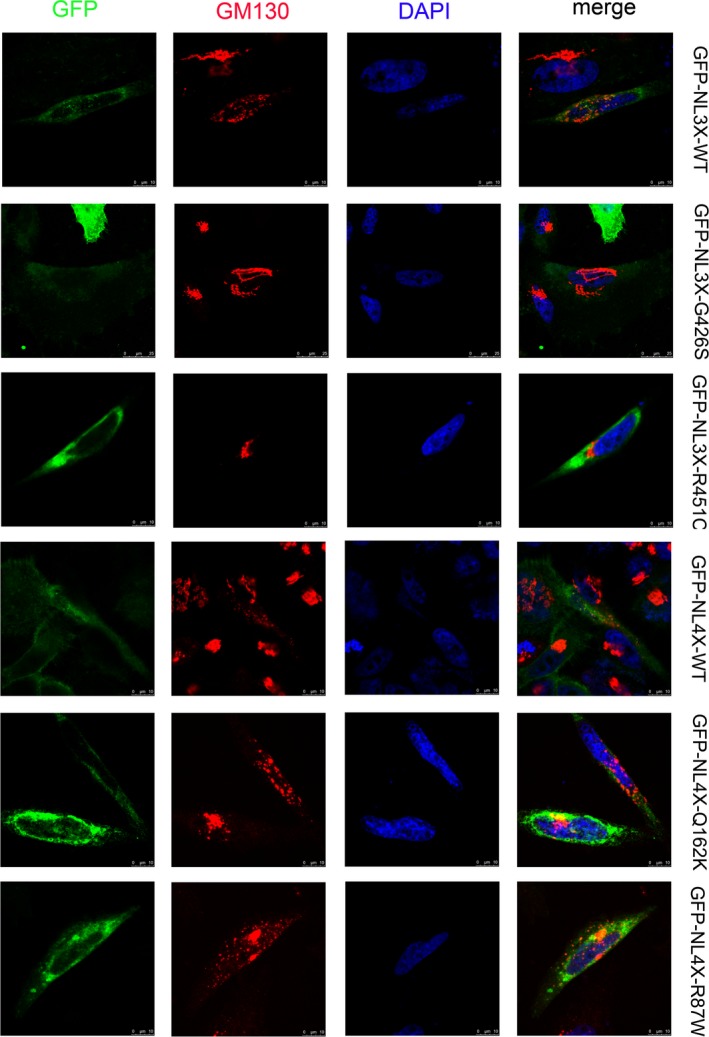
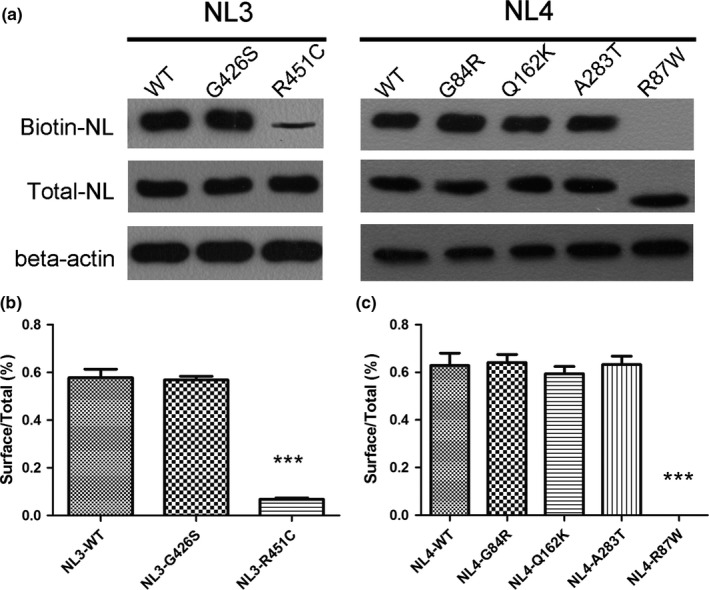
In this study, we analyzed the functional effect of these missense variations by in vitro experiment via the stable HEK293 cells expressing wild-type and mutant neuroligin.
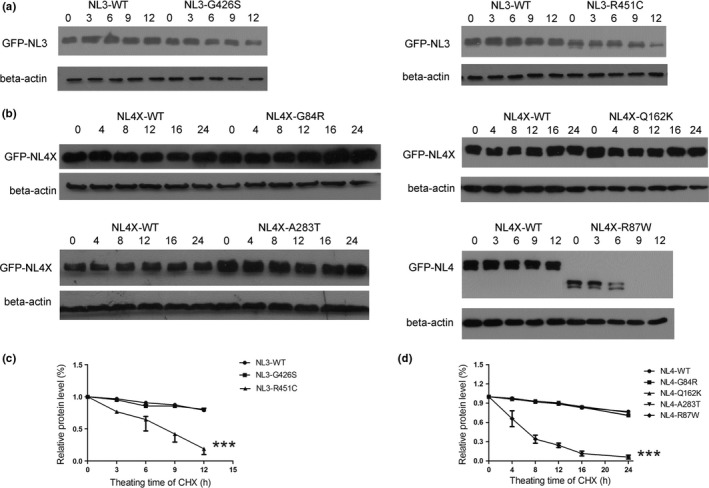
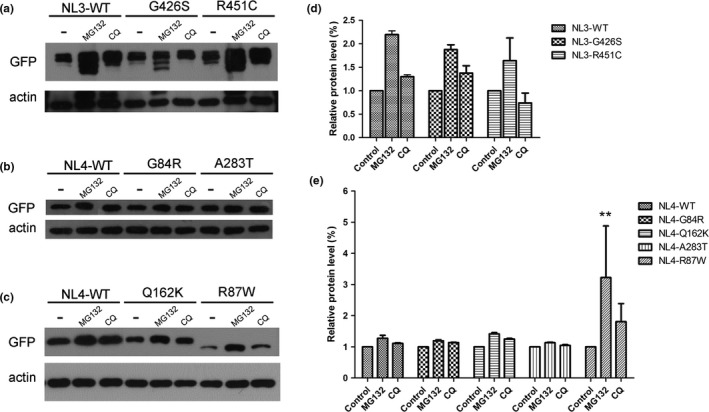
We found that the four mutations did not significantly impair the expression of neuroligin 3 and neuroligin 4X, and also did not measurably inhibit the neurexin 1-neuroligin interaction. These variants might play a modest role in the pathogenesis of autism or might simply be unreported infrequent polymorphisms.
Our data suggest that these four previously described neuroligin mutations are not primary risk factors for autism.
神经黏连蛋白是突触后细胞黏附分子,与神经连接蛋白相互作用,调节突触兴奋与抑制之间的精细平衡。最近,越来越多的证据(包括突变分析、细胞检测和小鼠模型)表明神经黏连蛋白(NLGN)突变会影响突触成熟和功能。此前,通过 PCR 和直接测序,在四名无关联的患者中发现了四个错义变异 [p.G426S(NLGN3)、p.G84R(NLGN4X)、p.Q162K(NLGN4X)和 p.A283T(NLGN4X)]。
本研究通过稳定表达野生型和突变型神经黏连蛋白的 HEK293 细胞进行体外实验,分析这些错义变异的功能影响。
我们发现这四种突变并没有显著影响神经黏连蛋白 3 和神经黏连蛋白 4X 的表达,也没有明显抑制神经连接蛋白 1-神经黏连蛋白的相互作用。这些变体可能在自闭症的发病机制中起次要作用,或者可能只是未被报道的罕见多态性。
我们的数据表明,这四种先前描述的神经黏连蛋白突变不是自闭症的主要危险因素。