Raoufi-Rad Newsha, McRobb Lucinda S, Lee Vivienne S, Bervini David, Grace Michael, Ukath Jaysree, Mchattan Joshua, Sreenivasan Varun K A, Duong T T Hong, Zhao Zhenjun, Stoodley Marcus A
Department of Clinical Medicine, Faculty of Medicine and Health Sciences, Macquarie University, Sydney, New South Wales, Australia.
Neurosurgery Department, Inselspital, University of Bern, Bern, Switzerland.
PLoS One. 2017 Sep 26;12(9):e0185393. doi: 10.1371/journal.pone.0185393. eCollection 2017.
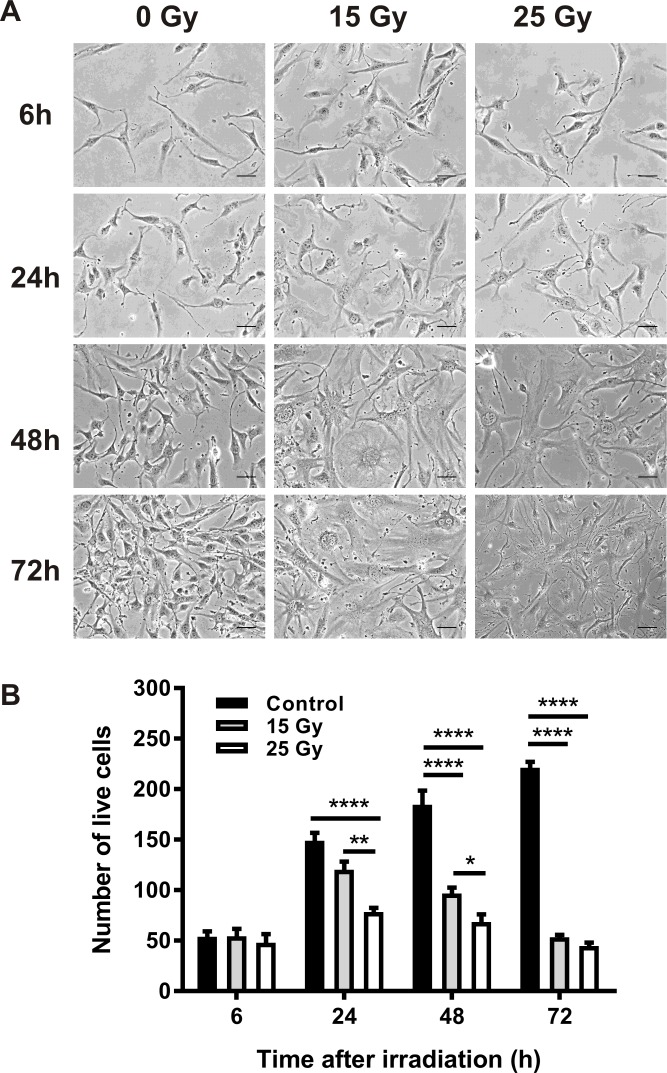
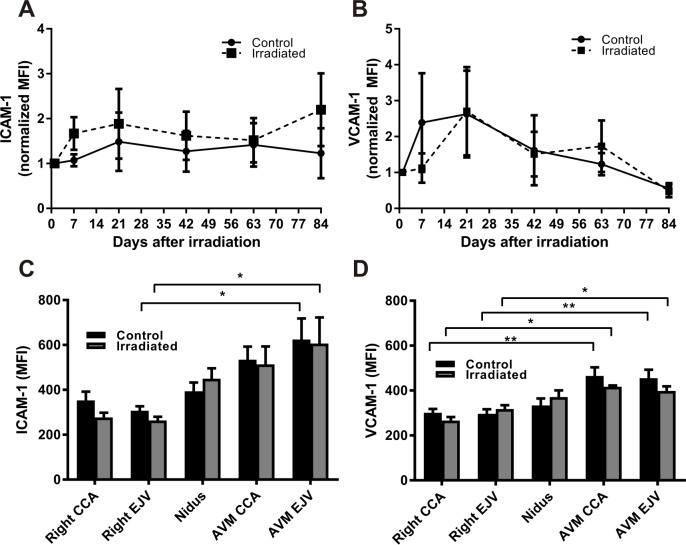
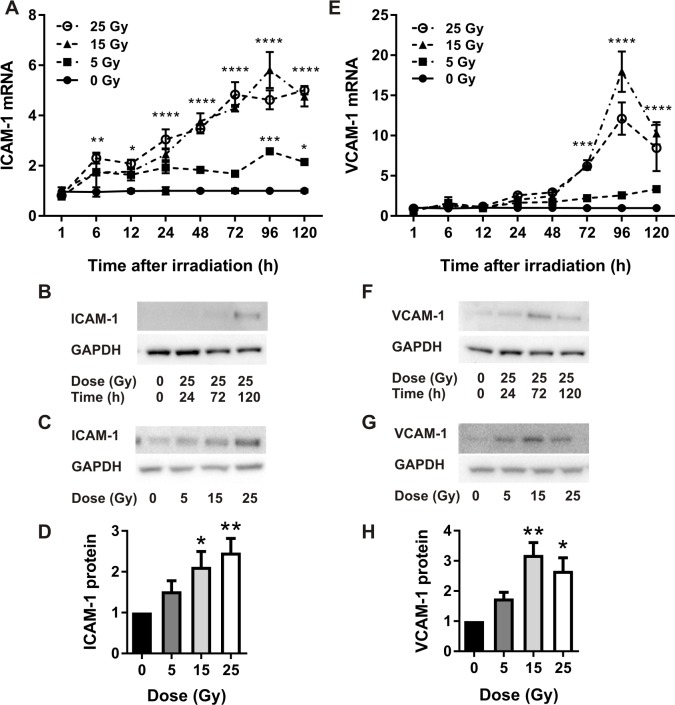
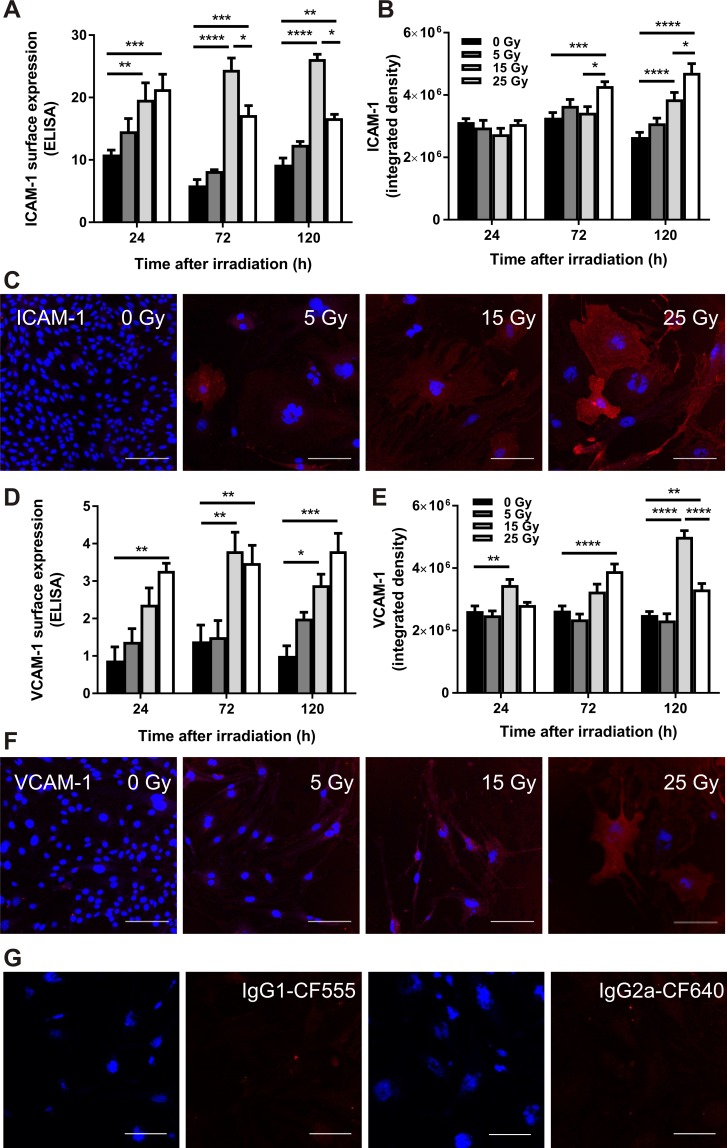
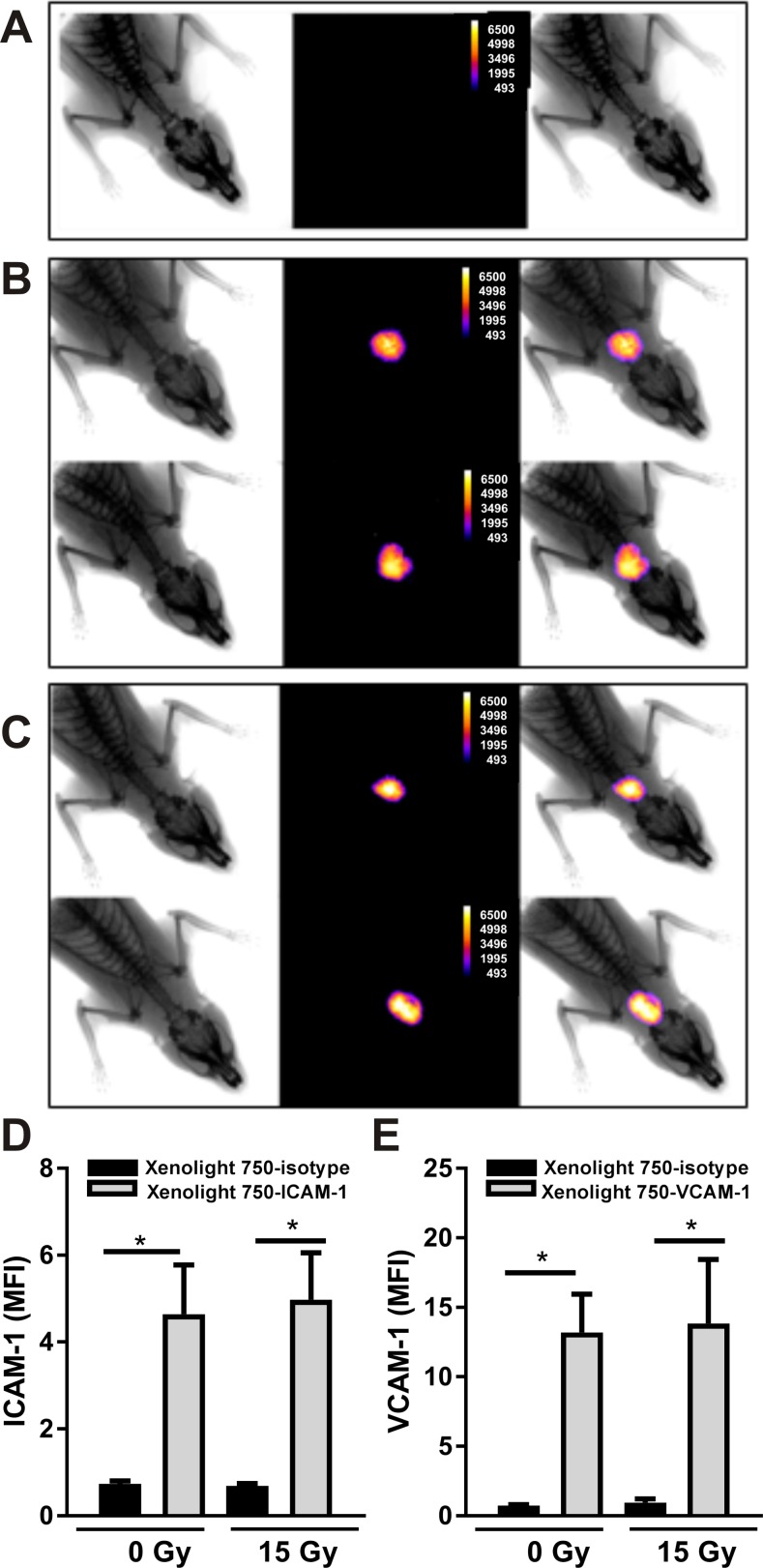
Focussed radiosurgery may provide a means of inducing molecular changes on the luminal surface of diseased endothelium to allow targeted delivery of novel therapeutic compounds. We investigated the potential of ionizing radiation to induce surface expression of intercellular adhesion molecule 1 (ICAM-1) and vascular cell adhesion molecule 1 (VCAM-1) on endothelial cells (EC) in vitro and in vivo, to assess their suitability as vascular targets in irradiated arteriovenous malformations (AVMs). Cultured brain microvascular EC were irradiated by linear accelerator at single doses of 0, 5, 15 or 25 Gy and expression of ICAM-1 and VCAM-1 measured by qRT-PCR, Western, ELISA and immunocytochemistry. In vivo, near-infrared (NIR) fluorescence optical imaging using Xenolight 750-conjugated ICAM-1 or VCAM-1 antibodies examined luminal biodistribution over 84 days in a rat AVM model after Gamma Knife surgery at a single 15 Gy dose. ICAM-1 and VCAM-1 were minimally expressed on untreated EC in vitro. Doses of 15 and 25 Gy stimulated expression equally; 5 Gy was not different from the unirradiated. In vivo, normal vessels did not bind or retain the fluorescent probes, however binding was significant in AVM vessels. No additive increases in probe binding were found in response to radiosurgery at a dose of 15 Gy. In summary, radiation induces adhesion molecule expression in vitro but elevated baseline levels in AVM vessels precludes further induction in vivo. These molecules may be suitable targets in irradiated vessels without hemodynamic derangement, but not AVMs. These findings demonstrate the importance of using flow-modulated, pre-clinical animal models for validating candidate proteins for vascular targeting in irradiated AVMs.
聚焦放射外科可能提供一种手段,可在病变内皮的管腔表面诱导分子变化,从而实现新型治疗化合物的靶向递送。我们研究了电离辐射在体外和体内诱导内皮细胞(EC)表面表达细胞间黏附分子1(ICAM-1)和血管细胞黏附分子1(VCAM-1)的潜力,以评估它们作为放射治疗的动静脉畸形(AVM)血管靶点的适用性。用直线加速器对培养的脑微血管内皮细胞进行0、5、15或25 Gy单剂量照射,通过qRT-PCR、Western、ELISA和免疫细胞化学法检测ICAM-1和VCAM-1的表达。在体内,使用与Xenolight 750偶联的ICAM-1或VCAM-1抗体进行近红外(NIR)荧光光学成像,在大鼠AVM模型中,单次15 Gy伽玛刀手术后84天内检测管腔生物分布。ICAM-1和VCAM-1在体外未处理的内皮细胞上表达极少。15和25 Gy剂量同等程度地刺激了表达;5 Gy与未照射组无差异。在体内,正常血管不结合或保留荧光探针,但在AVM血管中结合显著。在15 Gy剂量的放射外科治疗后,未发现探针结合有额外增加。总之,辐射在体外诱导黏附分子表达,但AVM血管中基线水平升高,排除了体内进一步诱导的可能性。这些分子可能是没有血流动力学紊乱的照射血管的合适靶点,但不适用于AVM。这些发现证明了使用血流调节的临床前动物模型来验证放射治疗AVM中血管靶向候选蛋白的重要性。