Poling Brigid Chiyoko, Price Alexander M, Luftig Micah A, Cullen Bryan R
Department of Molecular Genetics & Microbiology and Center for Virology, Duke University Medical Center, Durham, NC, USA.
Virology. 2017 Dec;512:113-123. doi: 10.1016/j.virol.2017.09.015.
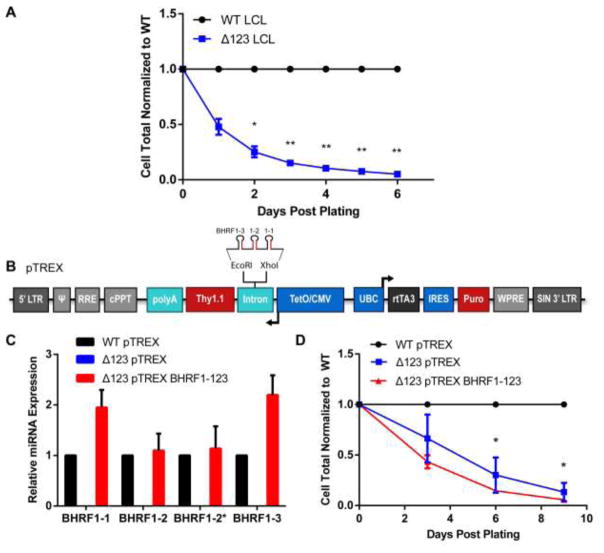
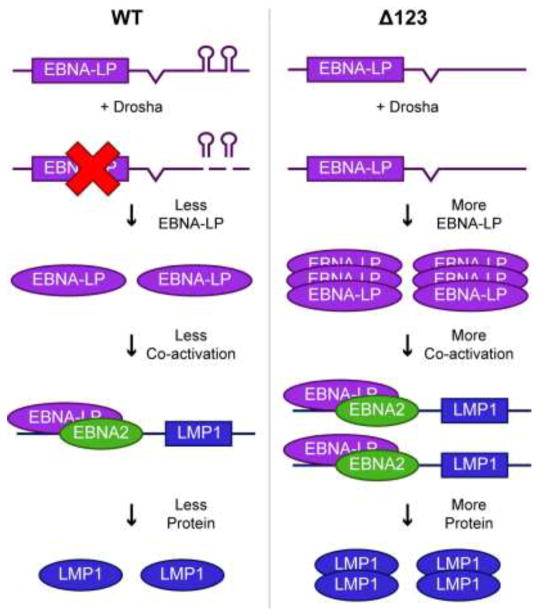
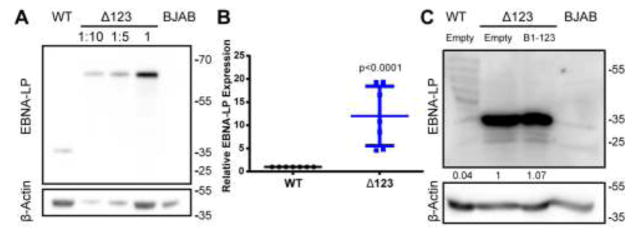
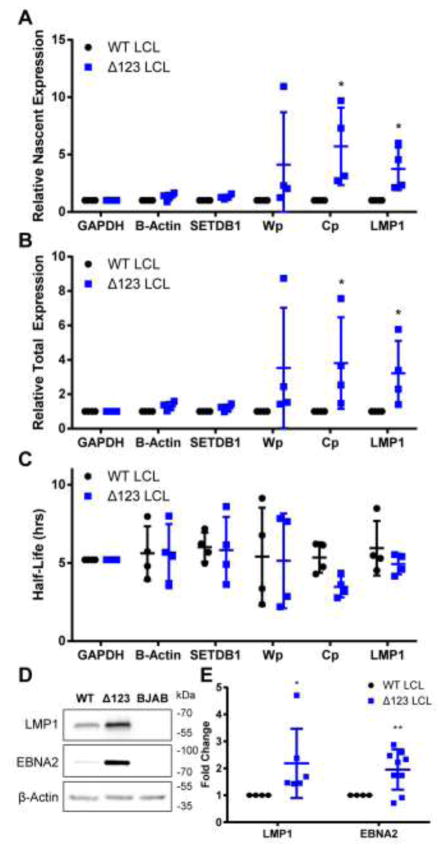
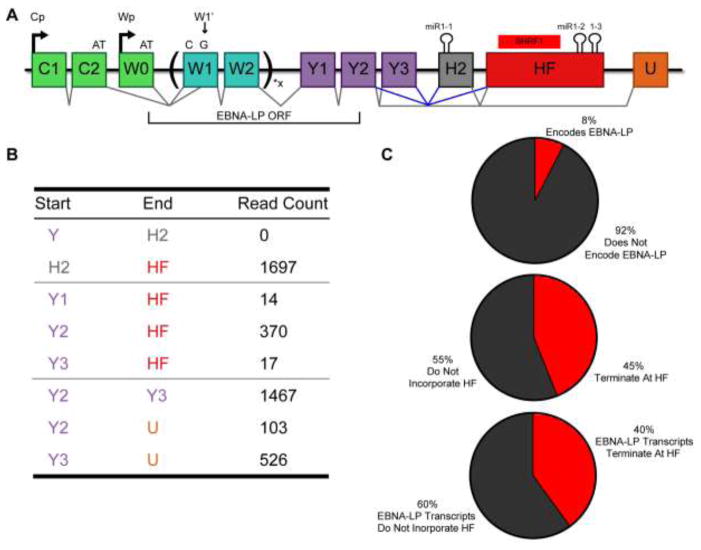
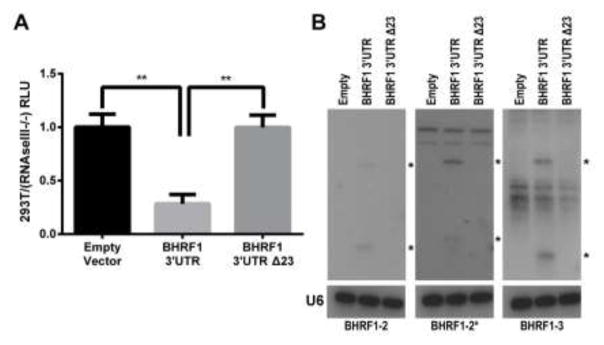
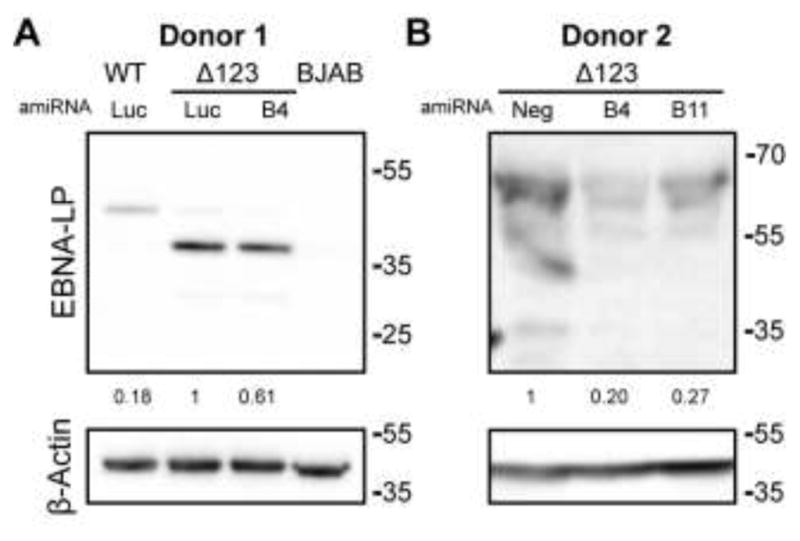
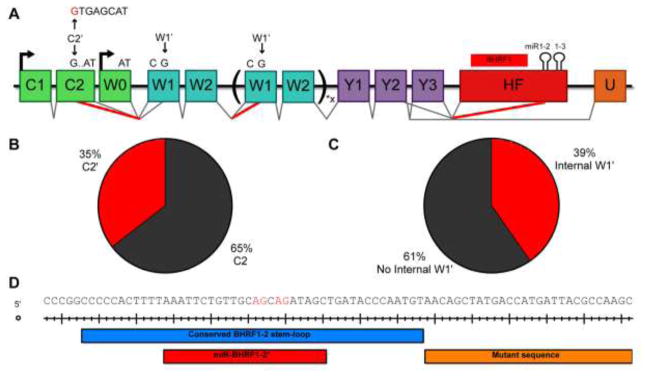
The Epstein-Barr virus (EBV) miR-BHRF1 microRNA (miRNA) cluster has been shown to facilitate B-cell transformation and promote the rapid growth of the resultant lymphoblastoid cell lines (LCLs). However, we find that expression of physiological levels of the miR-BHRF1 miRNAs in LCLs transformed with a miR-BHRF1 null mutant (∆123) fails to increase their growth rate. We demonstrate that the pri-miR-BHRF1-2 and 1-3 stem-loops are present in the 3'UTR of transcripts encoding EBNA-LP and that excision of pre-miR-BHRF1-2 and 1-3 by Drosha destabilizes these mRNAs and reduces expression of the encoded protein. Therefore, mutational inactivation of pri-miR-BHRF1-2 and 1-3 in the ∆123 mutant upregulates the expression of not only EBNA-LP but also EBNA-LP-regulated mRNAs and proteins, including LMP1. We hypothesize that this overexpression causes the reduced transformation capacity of the ∆123 EBV mutant. Thus, in addition to regulating cellular mRNAs in trans, miR-BHRF1-2 and 1-3 also regulate EBNA-LP mRNA expression in cis.
爱泼斯坦-巴尔病毒(EBV)的miR-BHRF1微小RNA(miRNA)簇已被证明有助于B细胞转化,并促进由此产生的淋巴母细胞系(LCL)的快速生长。然而,我们发现,在用miR-BHRF1无效突变体(∆123)转化的LCL中,miR-BHRF1 miRNA的生理水平表达并不能提高其生长速率。我们证明,pri-miR-BHRF1-2和1-3茎环存在于编码EBNA-LP的转录本的3'UTR中,并且Drosha对pre-miR-BHRF1-2和1-3的切除会使这些mRNA不稳定,并降低编码蛋白的表达。因此,∆123突变体中pri-miR-BHRF1-2和1-3的突变失活不仅上调了EBNA-LP的表达,还上调了EBNA-LP调控的mRNA和蛋白的表达,包括LMP1。我们推测这种过表达导致了∆123 EBV突变体转化能力的降低。因此,除了反式调节细胞mRNA外,miR-BHRF1-2和1-3还顺式调节EBNA-LP mRNA的表达。