Turner David A, Girgin Mehmet, Alonso-Crisostomo Luz, Trivedi Vikas, Baillie-Johnson Peter, Glodowski Cherise R, Hayward Penelope C, Collignon Jérôme, Gustavsen Carsten, Serup Palle, Steventon Benjamin, P Lutolf Matthias, Arias Alfonso Martinez
Department of Genetics, University of Cambridge, Downing Street, Cambridge CB2 3EH, UK
Laboratory of Stem Cell Bioengineering, Institute of Bioengineering, School of Life Sciences and School of Engineering, École Polytechnique Fédérale de Lausanne, 1015 Lausanne, Switzerland.
Development. 2017 Nov 1;144(21):3894-3906. doi: 10.1242/dev.150391. Epub 2017 Sep 26.
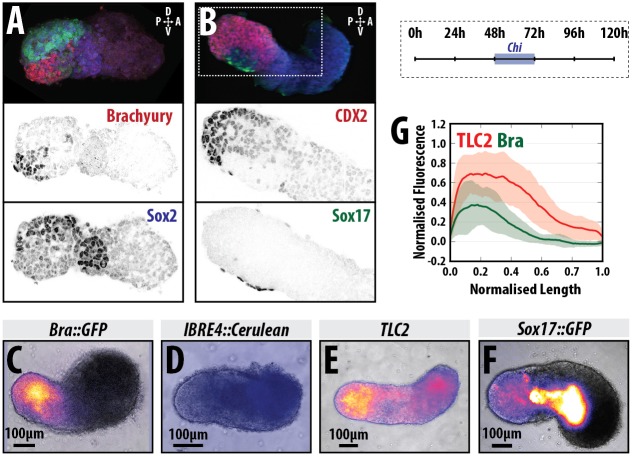
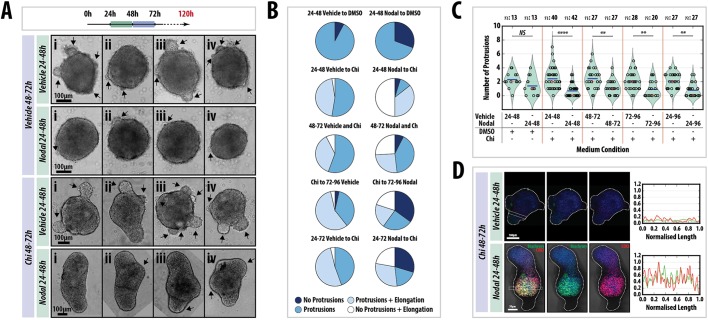
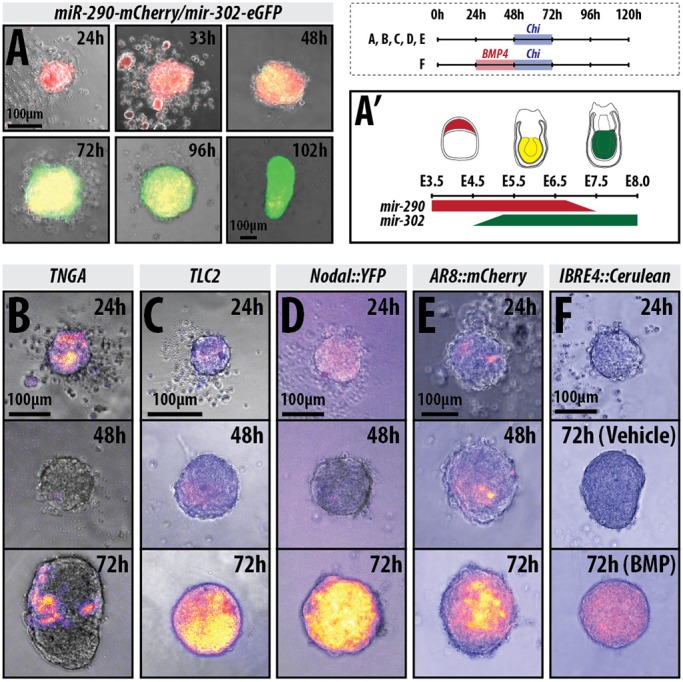
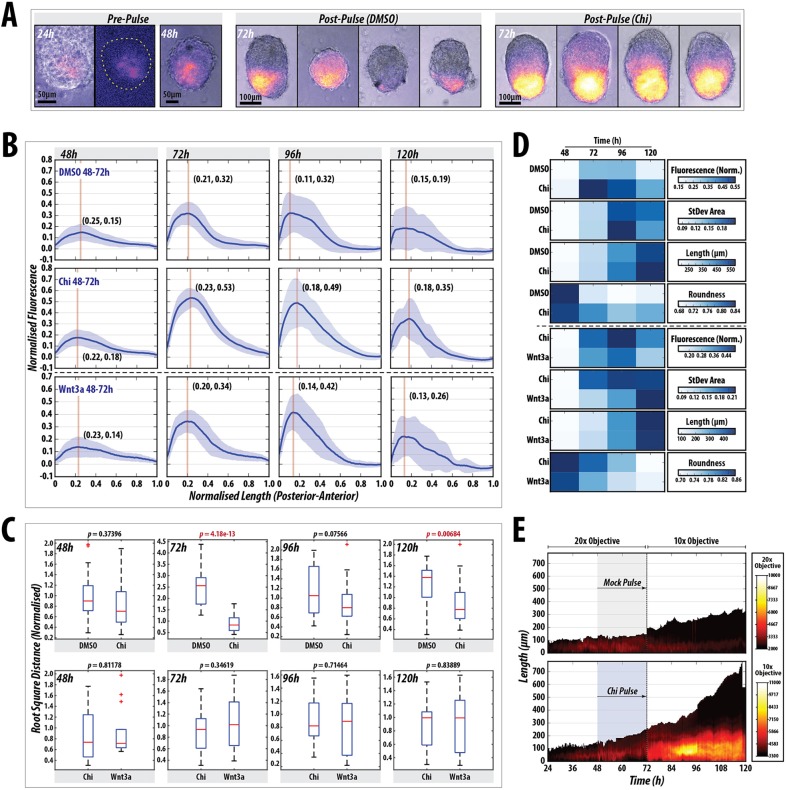
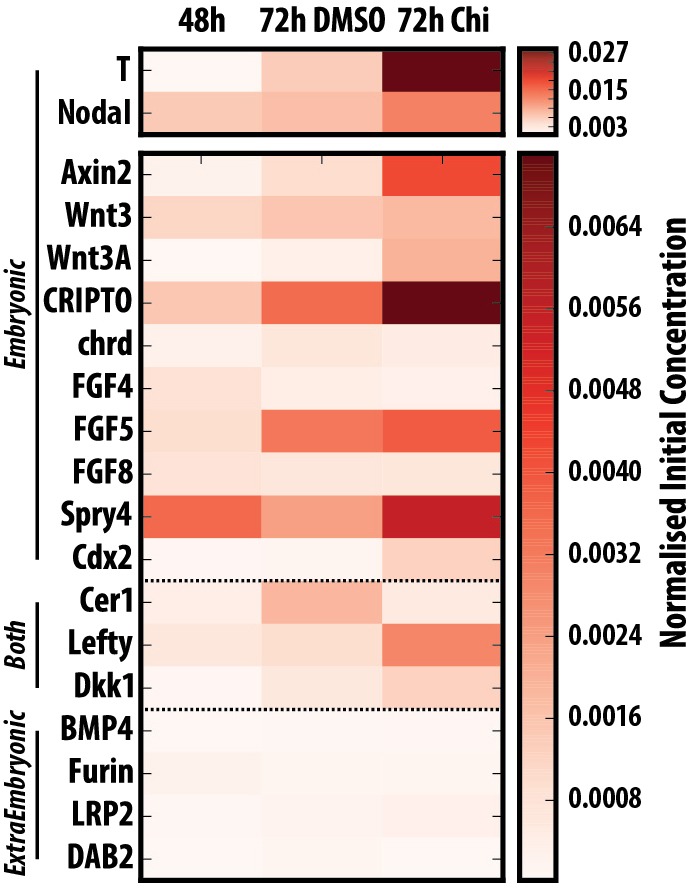
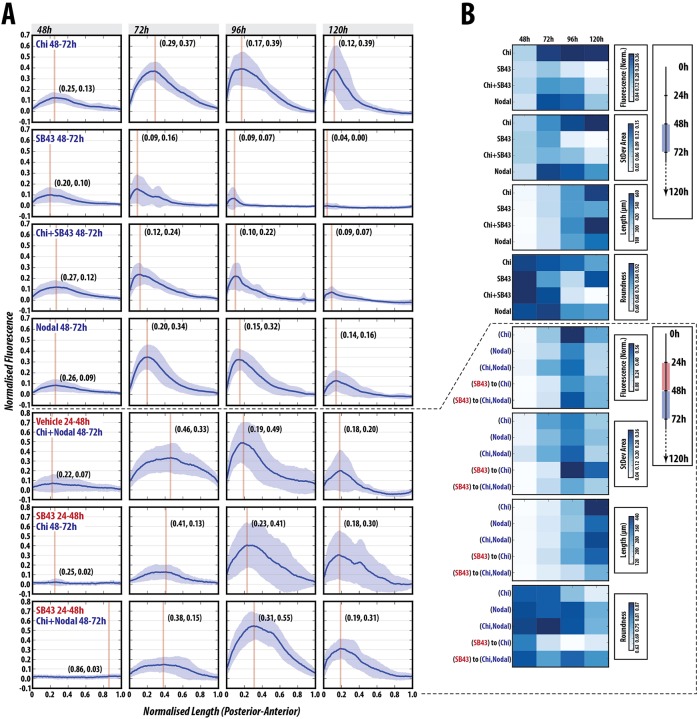
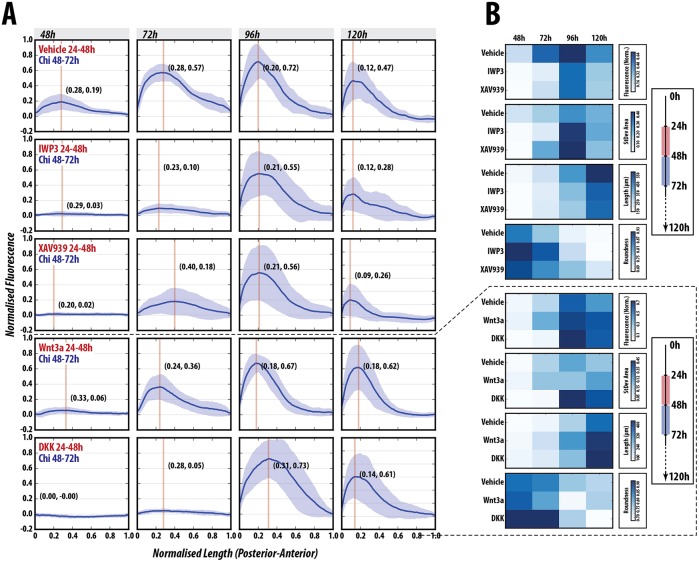
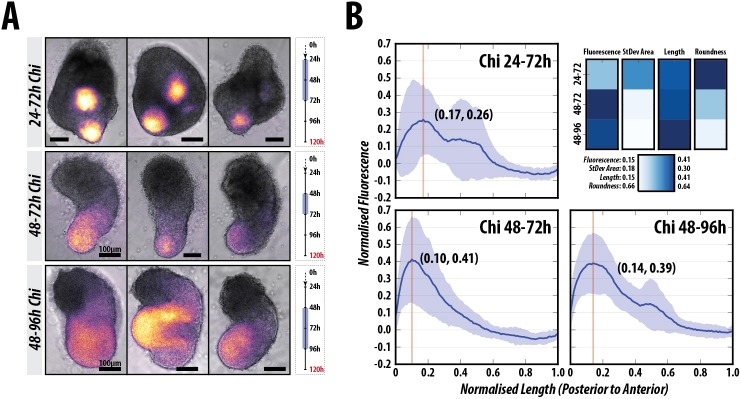
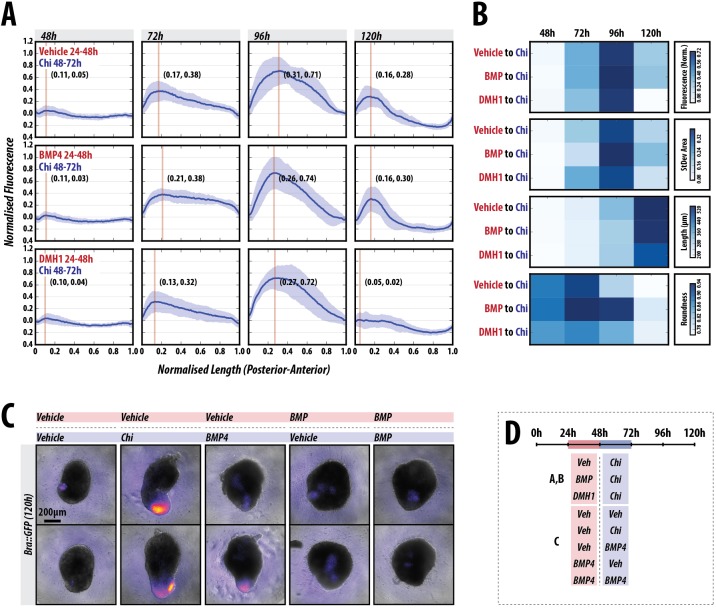
The establishment of the anteroposterior (AP) axis is a crucial step during animal embryo development. In mammals, genetic studies have shown that this process relies on signals spatiotemporally deployed in the extra-embryonic tissues that locate the position of the head and the onset of gastrulation, marked by T/Brachyury () at the posterior of the embryo. Here, we use gastruloids, mESC-based organoids, as a model system with which to study this process. We find that gastruloids localise expression to one end and undergo elongation similar to the posterior region of the embryo, suggesting that they develop an AP axis. This process relies on precisely timed interactions between Wnt/β-catenin and Nodal signalling, whereas BMP signalling is dispensable. Additionally, polarised expression occurs in the absence of extra-embryonic tissues or localised sources of signals. We suggest that the role of extra-embryonic tissues in the mammalian embryo might not be to induce the axes but to bias an intrinsic ability of the embryo to initially break symmetry. Furthermore, we suggest that Wnt signalling has a separable activity involved in the elongation of the axis.
前后轴(AP轴)的建立是动物胚胎发育过程中的关键步骤。在哺乳动物中,遗传学研究表明,这一过程依赖于在胚外组织中时空分布的信号,这些信号确定了头部的位置以及原肠胚形成的起始点,原肠胚形成起始点以胚胎后部的T/短尾基因(T/Brachyury)为标志。在此,我们使用类原肠胚,即基于小鼠胚胎干细胞的类器官,作为研究这一过程的模型系统。我们发现类原肠胚将T/Brachyury的表达定位在一端,并经历类似于胚胎后部区域的伸长过程,这表明它们发育出了一条前后轴。这一过程依赖于Wnt/β-连环蛋白信号通路和Nodal信号通路之间精确的定时相互作用,而骨形态发生蛋白(BMP)信号通路则是可有可无的。此外,在没有胚外组织或局部信号源的情况下,T/Brachyury也会出现极化表达。我们认为,胚外组织在哺乳动物胚胎中的作用可能不是诱导轴的形成,而是使胚胎最初打破对称性的内在能力产生偏向。此外,我们认为Wnt信号通路在轴的伸长过程中具有一种可分离的活性。