Pittmann Timo, Steinmetz Heidrun
TBF + Partner AG, Herrenberger Strasse 14, 71032 Boeblingen, Germany.
Department of Resource Efficient Wastewater Technology, University of Kaiserslautern, Paul-Ehrlich-Str. 14, 67663 Kaiserslautern, Germany.
Bioengineering (Basel). 2017 Jun 6;4(2):54. doi: 10.3390/bioengineering4020054.
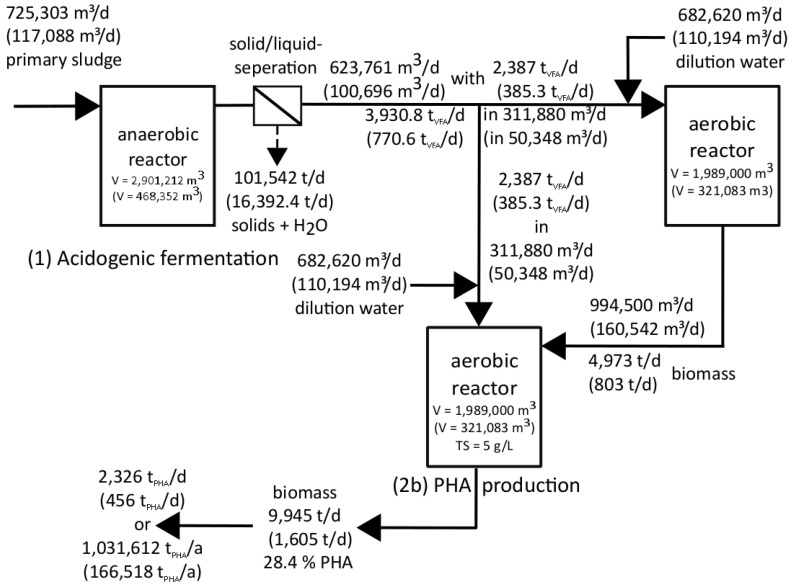
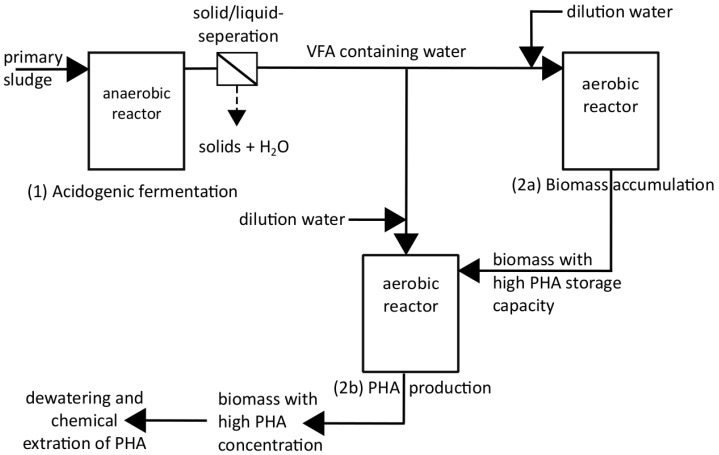
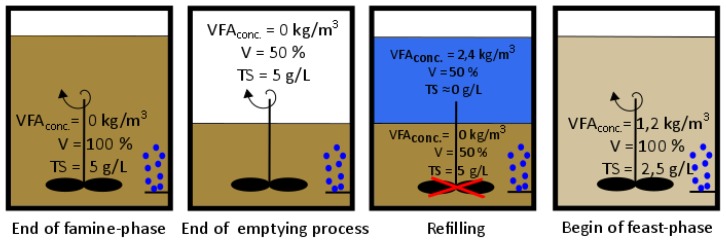
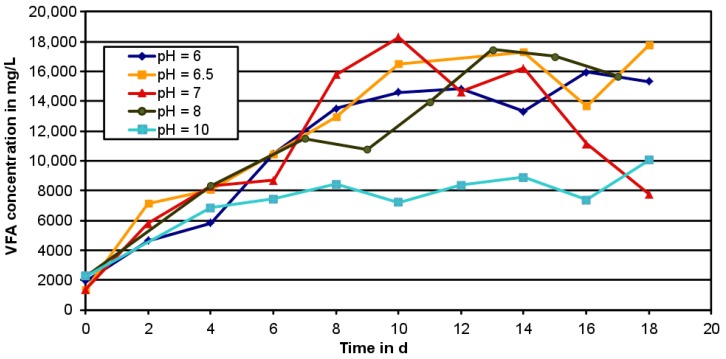
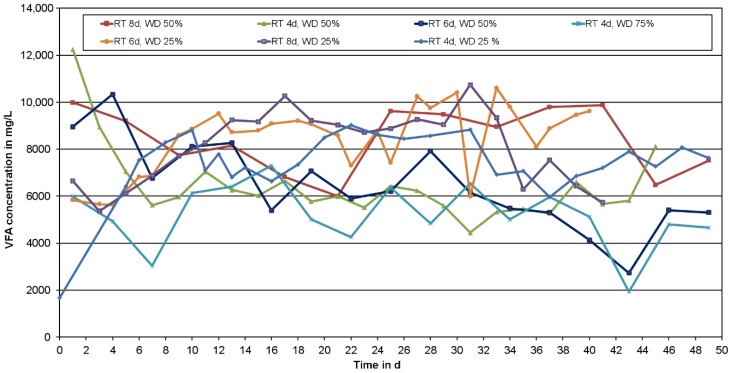
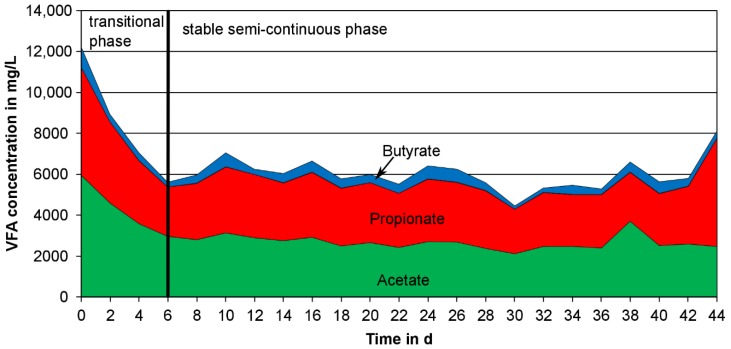
This work describes the production of polyhydroxyalkanoates (PHA) as a side stream process on a municipal waste water treatment plant (WWTP) and a subsequent analysis of the production potential in Germany and the European Union (EU). Therefore, tests with different types of sludge from a WWTP were investigated regarding their volatile fatty acids (VFA) production-potential. Afterwards, primary sludge was used as substrate to test a series of operating conditions (temperature, pH, retention time (RT) and withdrawal (WD)) in order to find suitable settings for a high and stable VFA production. In a second step, various tests regarding a high PHA production and stable PHA composition to determine the influence of substrate concentration, temperature, pH and cycle time of an installed feast/famine-regime were conducted. Experiments with a semi-continuous reactor operation showed that a short RT of 4 days and a small WD of 25% at pH = 6 and around 30 °C is preferable for a high VFA production rate (PR) of 1913 mgVFA/(L×d) and a stable VFA composition. A high PHA production up to 28.4% of cell dry weight (CDW) was reached at lower substrate concentration, 20 °C, neutral pH-value and a 24 h cycle time. A final step a potential analysis, based on the results and detailed data from German waste water treatment plants, showed that the theoretically possible production of biopolymers in Germany amounts to more than 19% of the 2016 worldwide biopolymer production. In addition, a profound estimation regarding the EU showed that in theory about 120% of the worldwide biopolymer production (in 2016) could be produced on European waste water treatment plants.
这项工作描述了在城市污水处理厂(WWTP)中将聚羟基脂肪酸酯(PHA)作为副流工艺进行生产,以及随后对德国和欧盟(EU)生产潜力的分析。因此,对来自污水处理厂的不同类型污泥的挥发性脂肪酸(VFA)生产潜力进行了测试。之后,以初沉污泥为底物,测试了一系列操作条件(温度、pH值、停留时间(RT)和出料量(WD)),以找到适合高且稳定的VFA生产的设置。第二步,进行了各种关于高PHA产量和稳定PHA组成的测试,以确定底物浓度、温度、pH值和已安装的 feast/famine 模式的循环时间的影响。半连续反应器操作实验表明,对于1913 mgVFA/(L×d)的高VFA产率(PR)和稳定的VFA组成,在pH = 6和30℃左右时,4天的短停留时间和25%的小出料量是优选的。在较低底物浓度、20℃、中性pH值和24小时循环时间下,PHA产量高达细胞干重(CDW)的28.4%。最后一步,根据德国污水处理厂的结果和详细数据进行潜力分析,结果表明德国生物聚合物的理论可能产量超过2016年全球生物聚合物产量的19%。此外,对欧盟的深入估计表明,理论上欧洲污水处理厂可以生产约为全球生物聚合物产量(2016年)120%的产品。