Balu Darrick, Ouyang Jiangyong, Parakhia Rahulkumar A, Pitake Saumitra, Ochs Raymond S
Dept. Psychiatry, McLean Hospital, MRC I 114, 115 Mill St., Belmont, MA 02478, USA.
Department of Pharmacology, New York University School of Medicine, 550 1st Ave, New York, NY 10016, USA.
Biochem Biophys Rep. 2016 Jan 13;5:365-373. doi: 10.1016/j.bbrep.2016.01.007. eCollection 2016 Mar.
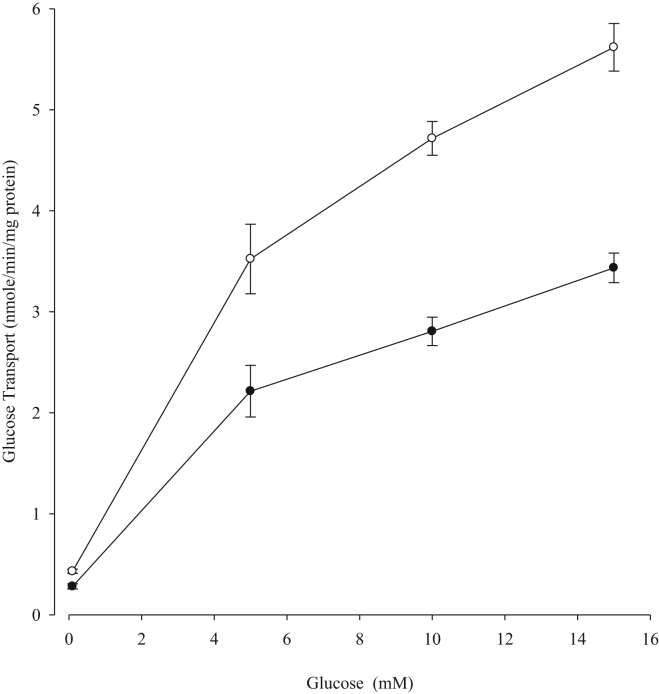
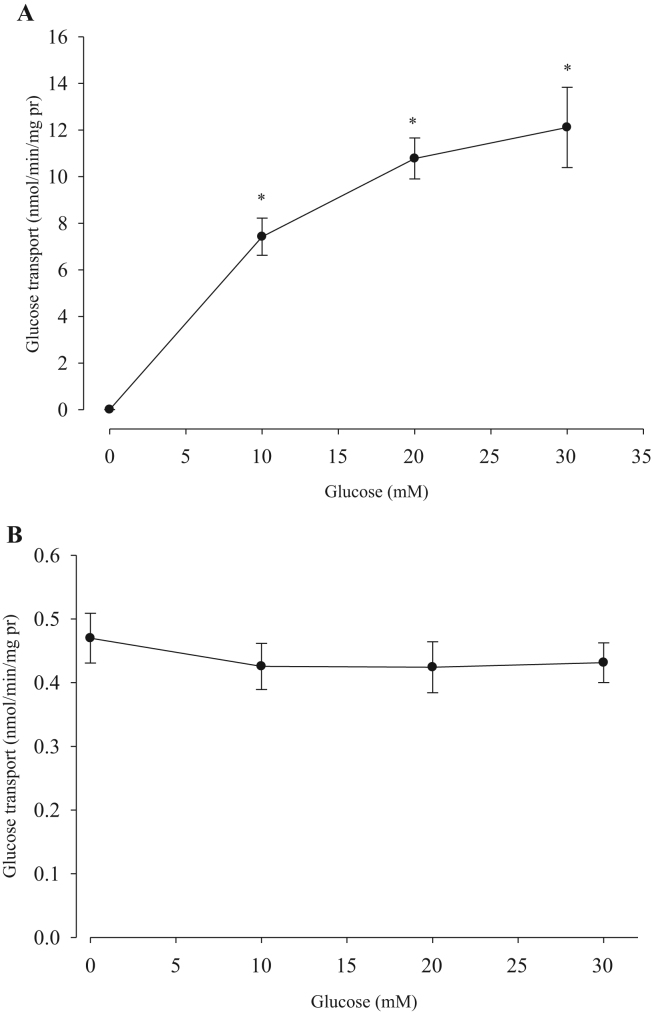
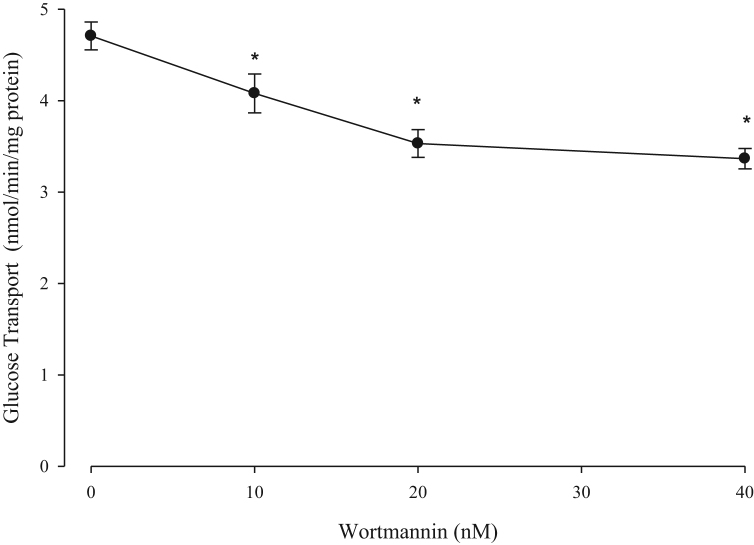
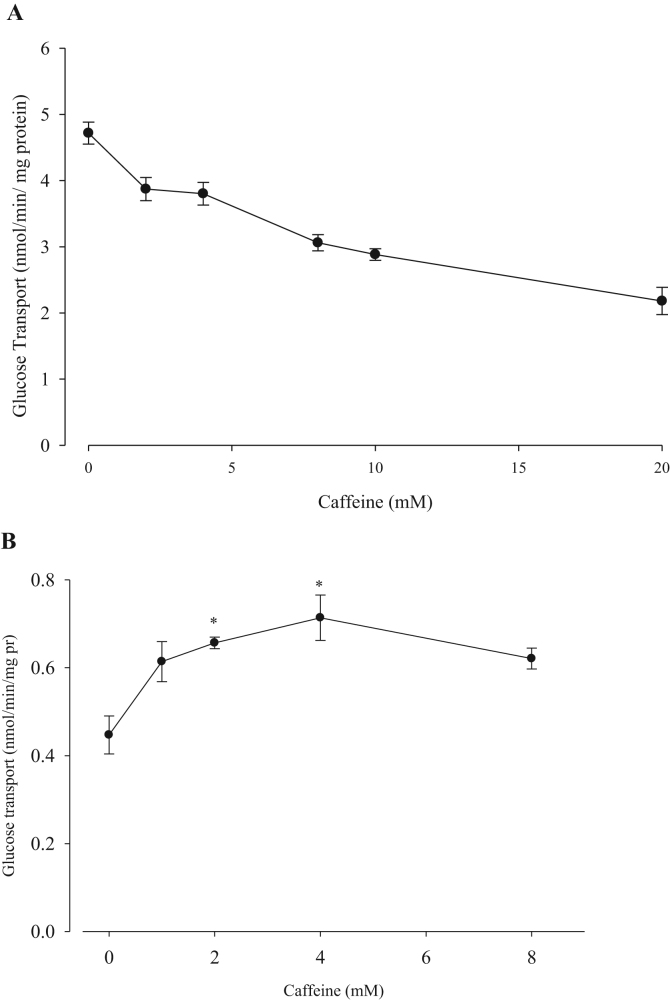
We examined the effect of Ca on skeletal muscle glucose transport and fatty acid oxidation using L6 cell cultures. Ca stimulation of glucose transport is controversial. We found that caffeine (a Ca secretagogue) stimulation of glucose transport was only evident in a two-part incubation protocol ("post-incubation"). Caffeine was present in the first incubation, the media removed, and labeled glucose added for the second. Caffeine elicited a rise in Ca in the first incubation that was dissipated by the second. This post-incubation procedure was insensitive to glucose concentrations in the first incubation. With a single, direct incubation system (all components present together) caffeine caused a slight inhibition of glucose transport. This was likely due to caffeine induced inhibition of phosphatidylinositol 3-kinase (PI3K), since nanomolar concentrations of wortmannin, a selective PI3K inhibitor, also inhibited glucose transport, and previous investigators have also found this action. We did find a Ca stimulation (using either caffeine or ionomycin) of fatty acid oxidation. This was observed in the absence (but not the presence) of added glucose. We conclude that Ca stimulates fatty acid oxidation at a mitochondrial site, secondary to malonyl CoA inhibition (represented by the presence of glucose in our experiments). In summary, the experiments resolve a controversy on Ca stimulation of glucose transport by skeletal muscle, introduce an important experimental consideration for the measurement of glucose transport, and uncover a new site of action for Ca stimulation of fatty acid oxidation.
我们使用L6细胞培养物研究了钙对骨骼肌葡萄糖转运和脂肪酸氧化的影响。钙对葡萄糖转运的刺激作用存在争议。我们发现,咖啡因(一种钙分泌剂)对葡萄糖转运的刺激作用仅在两阶段孵育方案(“孵育后”)中明显。在第一次孵育时加入咖啡因,去除培养基,然后在第二次孵育时加入标记的葡萄糖。咖啡因在第一次孵育时引起钙升高,而在第二次孵育时钙升高消散。这种孵育后程序对第一次孵育中的葡萄糖浓度不敏感。在单一的直接孵育系统(所有成分一起存在)中,咖啡因对葡萄糖转运有轻微抑制作用。这可能是由于咖啡因诱导的磷脂酰肌醇3激酶(PI3K)抑制,因为纳摩尔浓度的渥曼青霉素(一种选择性PI3K抑制剂)也抑制葡萄糖转运,并且先前的研究人员也发现了这种作用。我们确实发现钙(使用咖啡因或离子霉素)对脂肪酸氧化有刺激作用。在未添加葡萄糖(但添加葡萄糖时未观察到)的情况下观察到了这种现象。我们得出结论,钙在线粒体部位刺激脂肪酸氧化,这是丙二酰辅酶A抑制(在我们的实验中由葡萄糖的存在表示)的继发效应。总之,这些实验解决了关于骨骼肌钙刺激葡萄糖转运的争议,引入了测量葡萄糖转运的重要实验考虑因素,并揭示了钙刺激脂肪酸氧化的新作用位点。