Tang Hengyong, Li Wei
Department of Neurology, Fengcheng Hospital in Fengxian District, Shanghai, P.R. China.
Department of Neurology, Shanghai Ninth People's Hospital, Shanghai, P.R. China.
Exp Ther Med. 2017 Sep;14(3):2424-2430. doi: 10.3892/etm.2017.4837. Epub 2017 Jul 25.
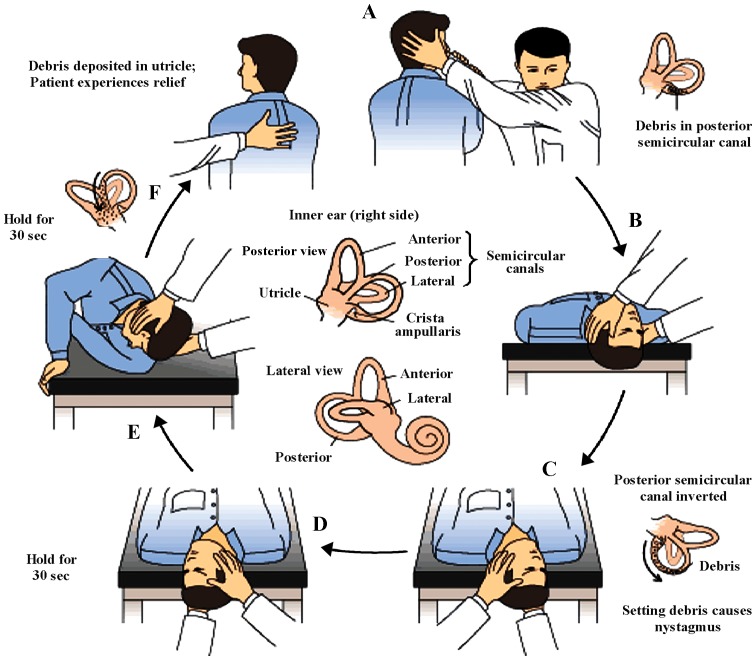
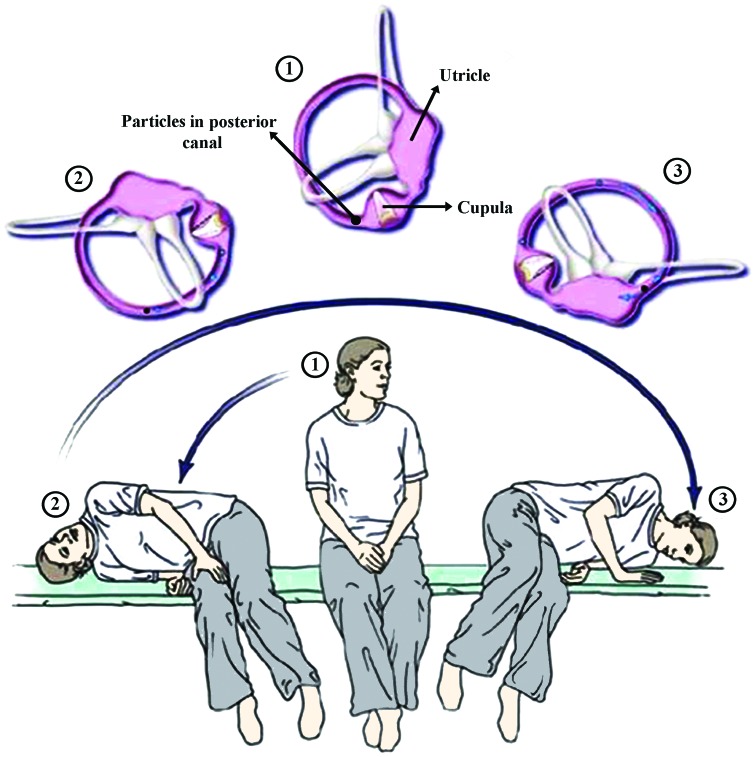
Benign paroxysmal positional vertigo (BPPV) (otolith disease) is the most common neurological and position change related vertigo, accounting for 17-20% of peripheral vertigo. BPPV occur in the elderly. The high incidence age for BPPC was 50 to 70 years and mostly in female. According to the different parts of the lesions, it is divided into anterior canal BPPV (AC-BPPV), posterior canal BPPV (PC-BPPV), horizontal canal BPPV (HC-BPPV). Studies have shown that the incidence of PC-BPPV was 86.36%, the incidence of HC-BPPV was 11.37%, the incidence rate of AC-BPPV was 2.27%. Treatment for PC-BPPV includes manual reduction, drug treatment, psychological treatment, and surgical treatment. Repositioning is the preferred method for the treatment of PC-BPPV with high effective rate and low risk. The mechanism is through the different changes of head position to make the otolith back to utricle. Many manual reduction methods have been reported in clinical treatment of PC-BPPV. With the increasing emphasis on the BPPV, a variety of new methods are being developed and designed.
良性阵发性位置性眩晕(BPPV)(耳石症)是最常见的与神经及位置变化相关的眩晕,占周围性眩晕的17%-20%。BPPV多见于老年人。BPPV的高发年龄为50至70岁,且多见于女性。根据病变部位不同,可分为前半规管BPPV(AC-BPPV)、后半规管BPPV(PC-BPPV)、水平半规管BPPV(HC-BPPV)。研究表明,PC-BPPV的发生率为86.36%,HC-BPPV的发生率为11.37%,AC-BPPV的发生率为2.27%。PC-BPPV的治疗方法包括手法复位、药物治疗、心理治疗和手术治疗。复位是治疗PC-BPPV的首选方法,有效率高且风险低。其机制是通过头部位置的不同变化使耳石回到椭圆囊。临床治疗PC-BPPV有多种手法复位方法报道。随着对BPPV的日益重视,各种新方法正在被开发和设计。